How to Cook Pizza in a Pan
Cook pizza in a pan by oiling the pan, stretching the dough to fit, adding toppings lightly, and baking until the crust is browned and the center is cooked. Use a hot oven and let the pizza rest before slicing.
On this page (8 sections)
Here's how to cook pizza in a pan: oil the pan, fit the dough evenly, add a light layer of sauce and toppings, then bake until the crust is browned and the center is fully set. If you don't have a pan, see pizza without a pan.
Let the pizza rest for a few minutes before cutting so the cheese and sauce can settle.
The pan changes the result. A shallow pan supports a thinner crust, while a deeper dish gives the dough room to rise and hold more toppings.
For a quick comparison, see pan pizza vs thin crust.
What pan works best for homemade pizza?
The best pan depends on the crust you want. Use a flat round pizza pan for a broad, thinner pie, or use a deeper oven-safe dish for a thicker pizza with a softer interior.
A perforated pan has openings that let some moisture escape beneath the dough. Read how to use a perforated pizza pan if you want more help with dough placement and airflow.
A glass baking dish works well for a deeper pizza, but it needs a fully preheated oven and careful handling. Do not place a glass baking dish on a stovetop burner.
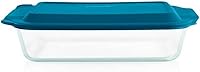
The Pyrex Deep is rectangular, so shape the dough to the dish rather than expecting a round pizza. Its glass construction is preheated-oven safe, and the plastic lid is useful for storing leftovers after the dish has cooled.
Choose it when you want a deep rectangular pizza or enough room for a thicker dough layer. A round pizza pan is a better fit if you want round slices or a broad, flat crust.
The GoodCook AirPerfect Pizza Pan has a 15.75 in round diameter, cutting guides, and molded feet that keep the hot pan raised from the counter. Its nonstick carbon steel surface is oven safe and dishwasher safe, though hand-washing is recommended for longer-lasting results.
Choose this pan for a large round pizza with a crispier bottom. Its shallow shape is less suitable for a deep, high-sided crust.
The GoodCook AirPerfect Nonstick 16” Pizza Pan set includes 2 round pizza pans. Both have cutting guides, raised bottoms, nonstick carbon steel construction, and perforations designed to reduce moisture while baking.
Choose the set if you regularly bake 2 pizzas or want a spare pan. If you only make one pizza at a time, a single pan takes less storage space.
How do you prepare the pan and dough?
Coat the pan, let the dough relax, and stretch it gradually to the pan's shape. Rushing the dough can make it shrink back or leave thin spots that burn before the thicker areas finish.
For a deep rectangular dish, spread oil across the base and a little up the sides. For a shallow nonstick pizza pan, use a light coating unless your dough recipe calls for more oil.
Place the dough in the center and press outward with your fingertips. If it springs back, wait 5 to 10 minutes and try again.
This short rest lets the dough relax without forcing it.
A simple easy pan pizza dough recipe can help if you want a dough designed for this style. For a taller, airier crust, compare a sicilian pizza dough recipe before shaping.
Do not stretch the dough so thin that it becomes transparent in the center. Thin areas can dry out or burn while the outer edge is still rising.
How should you add sauce, cheese, and toppings?
Use a thin sauce layer and distribute toppings evenly. Too much sauce or a pile of wet ingredients can leave the middle soft even when the edge looks finished.
Spread sauce almost to the edge, leaving a narrow border for the crust. Add cheese in an even layer, then use small pieces of meat or vegetables so the toppings cook at a similar pace.
Drain watery vegetables and use cooked toppings when needed. Large raw pieces can release moisture and slow the center of the pizza.
For a deep pizza, keep the topping layers moderate. A thick crust needs time to cook through, so a heavy topping load can brown the surface before the dough is ready.
If you want to compare thicker styles, read pan pizza vs deep dish. For a more specific regional method, see how to make Detroit style pizza and browse these Detroit style pizza ideas.
How hot should the oven be?
Preheat the oven fully before baking the pizza. A cold or partly heated oven can delay crust browning and leave the dough dense in the center.
Use the temperature in your dough recipe, often between 425°F and 500°F. Put the pan on a stable oven rack with enough space for hot air to circulate around it.
A shallow perforated pan may bake faster than a deep glass dish. Start checking near the recipe's earliest suggested time, then look for a browned underside, set center, and melted cheese.
Use oven mitts when removing the pan. Keep hot pans away from wet countertops, and place them on a heat-safe surface.
How do you know pan pizza is done?
The pizza is ready when the crust is browned, the center is firm, and the cheese is melted. Lift an edge carefully if possible and check that the bottom is not pale and wet.
If the top browns too quickly, move the pan to a lower rack or reduce the oven temperature slightly while allowing more time. If the bottom darkens before the center sets, the pan may be too close to the lower heating element.
Let the pizza rest for 3 to 5 minutes before slicing. This makes it easier to cut and reduces the chance of hot sauce sliding across the crust.
For food safety, cook meat toppings fully and follow USDA guidance on safe minimum internal temperatures.
How can you get a crispier bottom?
Use less sauce, avoid wet toppings, and choose a perforated pan when bottom moisture is your main problem. Oil also helps the bottom brown, especially for a thicker pan pizza.
Do not cover the pizza while it bakes. Steam trapped under a cover can soften the crust.
A perforated pan can help air and heat reach more of the underside. It won't fix dough that is too thick, overloaded, or underbaked, so keep the dough layer even.
For a crisp thick crust, see can homemade thick crust pizza be crispy. If you do not have an oven, how to cook pizza without an oven covers other cooking methods.
What should you do after baking?
Cool the pan enough to handle safely, then remove the pizza and clean the pan according to its material. Cut the pizza on a board or serving surface instead of using a sharp knife directly on a nonstick coating.
For nonstick carbon steel pans, hand-washing can help preserve the surface even when the pan is dishwasher safe. Avoid harsh scrubbing and dry the pan fully before storing it.
For glass bakeware, let the dish cool before washing and avoid sudden temperature changes. Store leftovers in a covered container or use the Pyrex lid after the dish has cooled.
If you want a different bread-style use for pizza equipment, see how to cook bread in a pizza oven and what you need to cook bread in a pizza oven. For a fried option, compare this pizza fritta recipe.
Which pan should you choose?
Choose a deep glass dish for thick rectangular pizza, a single perforated pan for one crisp round pizza, or the 2-pack when you bake multiple pizzas. The right choice depends on the shape, crust depth, and number of pizzas you plan to make.
The Pyrex Deep suits a thicker pizza with room for generous layers. The GoodCook AirPerfect Pizza Pan suits one large round pizza with cutting guides and a perforated base.
The GoodCook 2-pack suits households that want 2 full-size pans.
Whichever pan you use, keep the dough even, control moisture, and bake until the center is firm. Those three choices matter more than adding extra toppings or using a more complicated method.
Frequently asked questions
Can you cook pizza in a regular pan?
Yes, you can cook pizza in a regular oven-safe pan. Choose a pan that gives the dough room to spread, coat it with oil, and adjust the baking time for the crust thickness.
A deeper pan suits thick pizza, while a flat perforated pan helps moisture escape.
Should I oil the pan before making pizza?
Yes, lightly oil the pan before adding the dough. Oil helps reduce sticking and adds flavor to the bottom crust.
Use less oil for a thin pizza and more for a thicker pan pizza, then spread the dough evenly so it bakes at a similar thickness.
What temperature should I cook pizza in a pan?
Bake pizza in a pan at the temperature your dough recipe recommends, often around 425°F to 500°F. A hotter oven helps the crust set before the toppings release too much moisture.
Check the center and underside instead of relying only on the clock.
How do you keep pan pizza from getting soggy?
Keep the sauce layer light, avoid piling on wet toppings, and bake until the center is firm. A perforated pizza pan can reduce moisture under the crust, while a deep pan works best when the dough and toppings are balanced so the thicker center has time to cook.