How to Use a Perforated Pizza Pan
Place the dough directly on a lightly greased perforated pizza pan, add toppings, then bake it on a stable oven rack or sheet pan. The holes let moisture escape, which can help the crust bake crisp; check the bottom early because it may brown faster.
On this page (10 sections)
- How do you use a perforated pizza pan?
- Should dough sit directly on the holes?
- Where should the pan sit in the oven?
- How long should pizza bake on a perforated pan?
- How do you handle toppings and drips?
- Which pans help with perforated-pan baking?
- What changes when you use a perforated pan?
- How do you clean and store the pan?
- What should you do if the crust is soggy or uneven?
- How to use a perforated pizza pan for your next bake
Place pizza dough directly on a lightly greased perforated pizza pan, top it, and bake it on a stable oven rack or sheet pan. The holes let moisture escape, which can help the bottom crisp; start checking early because thinner dough may brown quickly.
A perforated pan works for homemade dough, frozen pizza, and reheating slices. If you do not have a pan, see pizza without a pan.
For a broader walkthrough of how to cook pizza in a pan, see the separate pan-baking guide.
How do you use a perforated pizza pan?
Grease the pan lightly if needed, center the dough, add toppings, then bake according to your recipe. Keep the dough intact over the holes so cheese and sauce do not drip through.
- Check the pan's care instructions and confirm it suits your oven.
- Set the pan on a level work surface.
- Lightly grease it if it is not nonstick, or if its instructions call for greasing.
- Shape the dough to fit, keeping it centered over the perforations.
- Add a moderate layer of sauce, cheese, and toppings.
- Place the pan on a stable oven rack or baking sheet.
- Bake and check the underside before the recipe's full time is up.
Use the recipe or package temperature as your starting point. The best timing depends on dough thickness, toppings, oven temperature, and how quickly your oven heats.
Should dough sit directly on the holes?
Yes, the dough usually sits directly on the pan, with its surface spanning the perforations. This lets hot air reach more of the crust's underside.
Stretch or roll the dough to the pan's shape before adding toppings. Don't press hard enough to push it into the holes, since that can make it harder to lift after baking.
If the dough is too soft to move safely, shape it on parchment and slide the paper and dough onto the pan. Parchment blocks some airflow, so the bottom may not crisp in quite the same way.
An easy pan pizza dough recipe can help you plan dough thickness and handling. A thicker pan-style crust may need a different bake than a thin crust; compare pan pizza vs thin crust when choosing a texture.
How do you keep dough from sticking?
Use a thin, even layer of oil only when the pan's instructions allow it. Too much oil can collect near the holes and make the base greasy.
Nonstick perforated pans may release dough without extra grease, but avoid cutting directly on their coated surface. Use a broad spatula or peel to lift the pizza and a cutting board for slicing.
Don't dust heavily with flour to compensate for sticking. Excess flour can scorch, and loose flour may fall through the openings.
Where should the pan sit in the oven?
Place the pan on a level middle rack unless your recipe or oven instructions call for another position. A baking sheet under it can catch drips and make a flexible pan easier to handle.
A perforated pan lets air move below the crust, so a preheated stone or steel beneath it may change browning and timing. Follow the recipe's setup if it specifies one, and avoid balancing a small pan on an unstable surface.
If you use a sheet pan as support, keep it flat and large enough to hold the pizza pan securely. Do not place a plastic lid or other non-oven-safe item in the oven.
Can you put the pan directly on an oven rack?
You can if the pan is stable and its manufacturer permits it. A rimmed pan with a firm base is easier to slide in and out than a very flexible one.
Use oven mitts and pull the rack out only as far as needed. If the pan bends under the weight of toppings, set it on a baking sheet before loading it.
People using a countertop pizza oven should check its manual for pan clearance and material guidance. Learn what a pizza oven is and how it works before choosing cookware for a compact oven.
How long should pizza bake on a perforated pan?
Follow the recipe or package time, then inspect the bottom a few minutes early. Perforations change airflow, and a thinner crust can finish before a thick one.
Look for a browned underside and fully melted toppings. If the top is ready while the bottom needs more color, move the pan lower only if your oven instructions and recipe allow it.
Avoid opening the oven repeatedly, since heat loss can slow the bake. Use a timer as a reminder, but rely on the crust's appearance to decide when it is done.
How do you handle toppings and drips?
Use a moderate amount of sauce and toppings so the dough stays supported over the holes. Watery vegetables and excess sauce can make the center soggy even when air reaches the bottom.
Drain wet ingredients and keep sauce away from the edge. Leave a small border so melted cheese and sauce are less likely to run over the pan.
If a topping slips through a perforation, avoid scraping it while the pan is hot. Let the pan cool, then clean it according to its care instructions.
Which pans help with perforated-pan baking?
Choose a perforated pizza pan for a direct bake, and use another dish only when the recipe calls for a deeper container. For a thicker dough style, try the Sicilian pizza dough recipe.
These options cover different tasks rather than replacing one another.
The GoodCook AirPerfect Pizza Pan with Cutting Guides is a 16 in perforated, nonstick carbon steel pan with cutting guides and feet that hold the hot pan above the counter.
Its nonstick coating supports release, but use a board and suitable cutter to protect the surface. The maker describes the feet as keeping the hot pa raised off the countertop.
The GoodCook AirPerfect Nonstick 16” Pizza Pan comes as a set of 2, with 15.75 in baking surfaces, perforations, cutting guides, and molded feet.
Choose the pair if you want two pans for separate pizzas or batches. The pans are nonstick carbon steel, so check their care guidance and avoid sharp cutting directly on the surface.
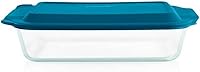
Pyrex Deep is a 9 x 13 in glass baking dish with a 2.75 in depth and a BPA-free plastic lid. It is suited to deeper baked dishes and storing food, rather than crisping a pizza base through perforations.
Pyrex says the glass dish is safe for a preheated oven, microwave, and freezer; the plastic lid is not for oven use. For a skillet-based alternative, see the cast iron skillet guide.
What changes when you use a perforated pan?
Expect more airflow beneath the dough and potentially less moisture at the crust's base. The result still depends on dough, toppings, oven heat, and pan placement.
A solid pan supports more of the dough and can suit a softer, more pan-like base. A perforated pan exposes more of the underside to circulating heat, which can favor a drier, crisper bottom.
A thick homemade crust can still crisp with the right dough and bake; see crispy thick crust.
For style differences, read pan pizza vs deep dish. Neither style is defined by the pan alone; dough thickness, depth, and topping amount also matter.
How do you clean and store the pan?
Let the pan cool fully before cleaning, then follow its care instructions. Avoid cutting or scraping a nonstick surface with sharp tools.
Wipe away loose crumbs and soak stuck food if the pan's instructions allow it. Dry the pan before storing so water does not sit in the holes or between stacked pans.
If the pan has molded feet, take care not to bend or damage them when stacking. Store it where the perforated surface will not rub against sharp cookware.
What should you do if the crust is soggy or uneven?
Reduce wet toppings and check that the pan sits level. A crowded center, uneven oven heat, or dough pushed into holes can affect the bake.
If the bottom is pale, give it a little more time and check again rather than raising the temperature sharply. If the edge browns too fast, use the recipe's guidance to adjust rack position or temperature on the next bake.
For frozen pizza, follow the package directions first and check the underside before the stated finish time. Different pizzas vary in thickness and topping load, so one timing may not suit every pie.
How to use a perforated pizza pan for your next bake
For a crisp base, center the dough over the holes, keep toppings moderate, and check the underside early. Use parchment for easier transfer when needed, knowing it covers some openings.
Pick a single GoodCook pan for regular pizza baking, or the 2-pack if you want two pans at once. Use the Pyrex dish for deeper recipes, and compare pan pizza vs deep dish to choose the style that fits your meal.
Frequently asked questions
Do you put pizza dough directly on a perforated pan?
Yes, place the dough directly on the pan after lightly greasing it or following the pan's care instructions. Keep the dough centered and press it outward without forcing it through the holes.
If the dough is very soft, shape it on parchment and transfer it carefully.
Do you grease a perforated pizza pan?
A light coating of oil can help dough release from an uncoated pan, but follow the pan's care instructions, especially if it has a nonstick finish. Avoid excess oil, which can pool in the holes or make the crust greasy.
A small amount spread evenly is enough.
Can you use parchment paper on a perforated pizza pan?
Yes, parchment can make transferring soft dough easier, but it covers some of the holes and may reduce airflow beneath the crust. Check the parchment package for its temperature limit and keep it trimmed so it cannot touch an oven element or flame.
What temperature should you use for a perforated pizza pan?
Use the temperature in your dough recipe or the frozen pizza directions, and check that it falls within the pan maker's oven guidance. Since ovens and pans vary, begin checking the crust a few minutes before the suggested finish time and adjust from there.