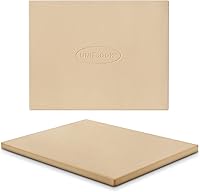
Which Pizza Stone Material Should You Choose?
Cordierite is the best pizza stone material for most home ovens and grills because it combines strong heat resistance, porous moisture absorption and useful durability. Choose a stone size that fits your oven with clearance on every side.
On this page (8 sections)
- What is the best pizza stone material for home pizza?
- What is a pizza stone made out of?
- How do stone materials compare for heat retention?
- Which cordierite pizza stone fits your baking routine?
- How should you choose between stone and tile formats?
- How do you care for a porous pizza stone?
- Is a pizza stone better than a pizza pan?
- Which pizza stone material should you choose?
Cordierite is the best pizza stone material for most home pizza ovens, kitchen ovens and grills. It holds heat well, draws moisture away from dough and puts up with the high temperatures that help a crust turn crisp.
That sounds simple, but material is only one part of the decision. Thickness changes how long the stone stores heat, shape decides whether it fits your oven, and a porous surface asks for care that a metal pan does not.
Cordierite suits home cooks who make pizza often enough to want a dedicated baking surface. It also suits bread, calzone and pastry, where steady heat from below and a drier surface help the base set quickly.
It is less about chasing a perfect crust in one bake and more about having a repeatable tool. Once preheated, the stone gives dough direct heat instead of relying only on hot air around it.
That direct heat is why the same dough can feel soft on a tray and firmer on a stone. The surface begins cooking the base right away, while the porous structure takes in some moisture that would otherwise keep the underside pale.
Porosity is also the trade-off. The stone can stain, it needs gentle cleaning and it should not be soaked or washed with harsh products that settle into the surface.
Thickness matters next. A thinner stone heats faster and is easier to lift, while a thicker one keeps heat longer once hot, which can help when toppings and cold dough land on it.
Shape matters just as much in a real kitchen. A rectangle uses oven space well, but only if the oven has room around it for air to move and for you to get a peel underneath.
So treat cordierite as a strong default, then check size, thickness and care before you commit. The material will do its job best when the stone fits the appliance and matches the way you cook.
What is the best pizza stone material for home pizza?
The best pizza stone material is cordierite when you want a reusable baking surface for pizza, bread and other dough-based foods. It is commonly formed into rectangular or round stones and made in thicknesses that balance heat storage with manageable weight.
Cordierite stones are porous. That surface can draw excess moisture away from the dough as the crust cooks, which helps reduce a soft or soggy base.
Heat resistance matters because pizza baking uses strong, direct heat. The products in this guide use cordierite, but their temperature ratings and included tools differ.
A pizza stone is not the same as a pizza pan. A pan gives you a shaped metal surface that can be easier to move and clean, while a stone is designed to store heat and bake the dough from underneath.
What is a pizza stone made out of?
A pizza stone can be made from cordierite, ceramic, clay, soapstone or another heat-resistant stone blend. The phrase “pizza stone made out of stone” does not always describe one exact material, so check the material type and care instructions before you buy.
Cordierite is a mineral-based ceramic material often used for baking stones. Its value comes from its combination of heat resistance and resistance to thermal shock compared with some more fragile ceramic formats.
Clay and ceramic stones can also bake pizza well, but they may be more sensitive to sudden temperature changes. Do not move a cold stone into a hot oven or place a hot stone on a cold, wet surface.
Some cooks use unglazed quarry tiles as pizza tiles. Only use tiles clearly intended for food contact and high-heat cooking.
Decorative or building tiles may contain glazes, sealants or materials that are not suitable for food preparation.
How do stone materials compare for heat retention?
Thicker stone formats generally hold more heat, while thinner stones usually heat faster and weigh less. A 0.6 in cordierite stone is a practical middle ground for many home ovens because it provides a substantial baking surface without becoming as heavy as a much thicker slab.
Heat retention helps when cold dough or toppings meet the baking surface. A stone that has been fully preheated can transfer heat into the base more steadily than a room-temperature surface.
Stone thickness does not guarantee a better crust by itself. Your oven temperature, preheat time, dough moisture and topping load also affect the result.
For readers comparing material with a different high-heat surface, our guide to How Do You Choose Between Pizza Stone or Pizza Steel? explains the main trade-offs.
Which cordierite pizza stone fits your baking routine?
The best product depends on whether you want a peel, a scraper, a higher heat rating or a simple rectangular stone. These three options all use cordierite, so the useful differences are size, included tool and stated temperature limit.
Hans Grill Pizza Stone PRO XL
The Hans Grill Pizza Stone PRO XL suits cooks who want a rectangular stone and a peel in one set. Its stated heat resistance reaches 1112°F, and the stone is made for pizza, pies, pastry, frozen pizza, calzone and artisan bread.
The included perforated aluminium peel has a turned beechwood handle. The perforations let excess flour fall away before launching and allow steam to escape from the underside after cooking.
That peel makes this set useful when you want to move pizza without adding a separate tool. Measure your oven or grill first, then leave the required clearance around the stone.
Use hand washing for the set. Staining is normal for this stone and does not mean it has stopped working.
Unicook 15 x 12 Inch Rectangular Pizza
The Unicook suits buyers who want the highest stated heat limit among these three options. It weighs about 6.8 lb and is sized for personal pizzas up to 11 in in diameter, while larger pizzas need a larger model.
Its reversible smooth surface can be used on both sides. The porous cordierite surface is intended to absorb excess moisture, and the stone can also be used for bread, rolls, cookies and frozen pizza.
The plastic scraper helps remove dough residue after the stone cools. Hand wash with warm water and do not use detergent.
Check for 1 to 2 in of clearance on every side inside your oven or grill. If you want more thickness for heat storage, compare the options in our best thick pizza stone guide.
Hans Grill Rectangular Pizza Stone with Peel
The Hans Grill Rectangular Pizza Stone with Peel suits cooks who want a simple stone and peel combination for indoor or outdoor baking. Its stated heat resistance is 1112°F, and the stone measures about 15 x 12 in.
The set is designed for pizza, bread, pastry, frozen pizza and calzone. The included wooden peel gives you a basic way to move dough onto the stone and retrieve the finished pizza.
Its dimensions are close to the Hans Grill PRO XL, but the included peel format differs. Choose this set when a wooden peel meets your needs and you do not need the perforated aluminium peel in the PRO XL.
Hand wash the stone with warm water only. Dark marks and stains can develop during normal use without affecting the stone's function.
For more options from this country of manufacture, see our guide to the best pizza stone made in USA.
How should you choose between stone and tile formats?
Choose a manufactured pizza stone when you want clear material information, a stated heat limit and a shape made for baking. That clarity helps you match the stone to your oven, your grill and the temperature you actually plan to use.
Tiles can look like an easy shortcut. A plain tile may be flat and simple to place on a rack, but flat alone does not prove it is safe for food.
Some tiles are made for building or flooring, and their finish, backing or sealant may not be intended for direct food contact. Even a food safe tile still needs a stated heat limit and care instructions before it belongs in a pizza routine.
A manufactured stone removes some guesswork. Cordierite stones in this guide have defined dimensions, material type and temperature limits, so you can judge fit and use without relying on what a tile might tolerate.
Rectangular formats tend to suit home ovens because they use the available width. Stretched dough can take a longer shape, and the stone can sit across a rack that would waste space with a round surface.
A round stone can still work well for round pizzas, especially in a grill with a round cooking area. The downside is unused space at the edges, which can leave room for uneven heating around the rim.
Thickness links baking and handling in a direct way. A thicker stone usually stores more heat and drops less in temperature when cold dough goes on, but it also takes longer to preheat and is harder to move safely.
A thinner stone reaches temperature sooner and feels lighter in daily use. That can suit smaller ovens, quicker bakes and cooks who lift the stone in and out often.
Fit inside the appliance is non negotiable. Leave clearance on every side so air can circulate, the stone does not touch heating elements and you can slide a peel under the pizza.
Never wedge a stone tightly against oven walls. Tight fit can block vents, interfere with the door seal and make removal awkward when the stone is hot and heavy.
Check the rack position as well. The stone should sit level, fully supported and clear of burners, with enough headroom above for cheese to bubble without touching a hot element.
How do you care for a porous pizza stone?
Let the stone cool completely before you clean it. A hot stone and cold water create a sudden change in temperature, and that shock can stress the material and lead to cracking.
Once cool, scrape away baked on cheese, flour and sauce with a stiff brush, cloth or scraper. Most residue lifts more easily when the stone is dry, so start there before you add any water.
Use only a small amount of warm water when needed. Wipe or brush the surface, then let the stone dry fully before storage or the next bake.
Avoid soaking a porous stone in a sink or tub. Cordierite can absorb water like an unglazed tile, and a wet stone may feel heavy, smell musty or take a long time to dry inside.
Do not use detergent as part of routine cleaning. Porous material can hold soap in its pores, and that residue may carry into later bakes through heat and steam.
That is why plain warm water is usually enough. The goal is to remove food residue, not to make the stone look new or to scrub away every mark.
Do not oil the stone to clean or season it. Oil can soak in, darken patches and leave a surface that feels greasy under the next dough.
Stains are normal for this kind of stone. Flour scorch, sauce spots and cheese marks can deepen with use, and discoloration on its own does not mean the stone has failed.
A well used look can even be a sign that the stone has been preheated and baked on often. Focus on cracks, deep chips or lingering food residue instead of colour alone.
Store the stone dry, flat and away from damp corners. If it lives in the oven, make sure it does not block heat flow on every bake and can be lifted without twisting it off the rack.
Handle the stone with oven mitts even when it has been sitting out for a while. Cordierite holds heat for a long time after baking, so a stone that looks cool may still be hot enough to burn.
Is a pizza stone better than a pizza pan?
A pizza stone is usually better for a dry, crisp base, while a pizza pan is easier to handle and often simpler to clean. Choose the stone when heat retention and moisture control matter most, and choose the pan when convenience and easy removal matter more.
That split shows up in the first minutes of baking. A preheated stone transfers heat straight into the dough, so the base starts setting before the top is fully cooked.
A pan still bakes from below through its metal surface, but it stores less heat than a thick stone. The crust can cook well, especially in a hot oven, yet it may stay softer when the dough is wet or the toppings are heavy.
Handling is where the pan pulls ahead. You can slide a pan in, turn it, lift it out and set it down with one hand and a mitt.
A stone asks for more care. It needs time to preheat, room to sit on a rack and a peel or wide spatula to move pizza on and off without dragging it across the surface.
Soft dough is easier to shape on a pan because the metal gives it a rim and a base. On a stone, the dough must hold its shape during the launch, which takes practice if the dough is slack or overproofed.
Easy clean up also favours the pan. Cheese and sauce can be washed off smooth metal, while a porous stone stains and cannot be scrubbed with the same products.
Oven space decides more than many people expect. A stone that nearly fills the oven leaves little room for air movement, and a pan may slide in and out with less fuss in a compact oven.
Frozen pizza is a good middle ground. Either surface can work, but a stone will usually give a firmer base if it has been preheated properly and the pizza is not overloaded.
If you want a direct comparison before buying, read Pizza Stone vs Pan: Which Should You Use?. The best choice is the one you will preheat, load and clean without hassle on a normal weeknight.
Which pizza stone material should you choose?
Pick cordierite if you want a dependable material for repeated oven or grill baking. It gives you heat storage, a porous surface and a format that works for pizza, bread and other dough based foods.
Then narrow the choice by tool and temperature. A thinner rectangular stone is easier to handle, a thicker stone stores more heat and a set with a peel makes launching and retrieving pizza safer.
For the highest stated temperature rating here, choose the Unicook. Its 1450°F limit suits cooks who bake hot and often, and the plastic scraper helps clear residue after the stone cools.
Size needs a quick check before you order the Unicook. It is made for personal pizzas up to about 11 in, so larger pizzas need a larger model and the oven still needs 1 to 2 in of clearance on every side.
For a cordierite stone with an aluminium peel, choose the Hans Grill Pizza Stone PRO XL. The perforated peel lets excess flour fall away before a launch and lets steam escape from the underside after cooking, which helps the crust stay crisp.
That set suits cooks who want stone and peel together in one purchase. The beechwood handle gives a steadier grip, while hand washing and normal staining are part of everyday care.
For a cordierite stone with a wooden peel, choose the Hans Grill Rectangular Pizza Stone with Peel. It covers the same rectangular oven and BBQ use with a simpler peel format for moving dough and finished pizza.
Pick between the two Hans Grill sets by peel style, not by the stone alone. Both stones rate to 1112°F, so fit, peel style and care routine matter more than a small difference on paper.
If you are still comparing stone with steel, continue with Which Is Better Pizza Stone or Pizza Steel?. The best pizza stone material is the one that fits your appliance, cooking temperature, cleaning routine and preferred way to launch pizza.
Frequently asked questions
What is the best pizza stone material?
Cordierite is the best pizza stone material for most home cooks because it handles high heat, retains heat well and has a porous surface that can absorb moisture from dough. Choose the thickness, shape and size based on your oven or grill, since a good material still needs a safe fit.
What is a pizza stone made out of?
A pizza stone can be made from cordierite, ceramic, clay or another heat-resistant stone blend. Cordierite is a common choice because it is designed for repeated high-heat baking and its porous surface helps draw moisture from the dough.
Is a pizza stone made out of stone better than ceramic?
A natural or stone-based pizza stone can retain heat well, while ceramic may offer a lighter or more decorative format. The better choice depends on heat resistance, thickness, size, care needs and whether the material is intended for oven or grill use.
Are pizza tiles as good as pizza stones?
Pizza tiles can work when they are made from food-safe, heat-resistant material and fit your oven safely. Check the tile's intended use before baking, because ordinary construction tiles may contain finishes or materials that are not suitable for cooking.