9 Best Rectangular Pizza Stones (November 2026)
The best rectangular pizza stones include the Hans Grill Pizza Stone PRO XL for a complete 15 x 12 in setup, the Unicook 15 x 12 Inch Rectangular Pizza for personal-size pizzas, and the Hans Grill Rectangular Pizza Stone with Peel for indoor and outdoor baking.
On this page (5 sections)
The best rectangular pizza stone for most home ovens is the Hans Grill Pizza Stone PRO XL, because it combines a useful 15 x 12 in cordierite surface with a perforated aluminium peel. That pairing suits buyers who want the stone and the launch tool in one purchase, without needing to add a separate peel later.
If you need a pizza stone large rectangle for several pizzas, the Unicook 20 x 16 Inch Extra Large gives you the most cooking area in this group. It is a better fit for bigger ovens and for cooking when you want more than one item on the surface at once.
A rectangular stone can make better use of a wide oven rack than a round model. The shape also gives you more room for long dough shapes, bread, calzone and smaller items placed side by side.
That extra length matters when you bake something other than pizza. A calzone, a loaf or a tray of rolls can sit more naturally on a rectangle than on a round surface that leaves corners unused.
Before choosing, compare the stone's length, width and thickness with your oven rack or grill. A stone that is only slightly too large can be awkward to centre, hard to remove and risky to use close to heating elements.
For more options, start with our pizza bakeware buying guide and read the best pizza stone and peel set roundup if you want a complete launch setup. Those guides help you decide whether you need a stone alone or a stone with tools included.
Think about how you will store the stone as well as how you will cook on it. A large rectangular slab needs a flat, dry place where it will not be knocked or stacked under heavy pans.
It also helps to think about weight before you buy. A thicker or larger stone holds heat well, but you will need to lift it in and out while it is cool, so choose a size you can handle comfortably.
Our picks at a glance
-
1

-
2
 Best for personal-size pizzas
Unicook 15 x 12 Inch Rectangular Pizza
9.6/10 our score
See it on Amazon -
3
 Best for indoor and outdoor baking
Hans Grill Rectangular Pizza Stone with Peel
9.5/10 our score
See it on Amazon
- 4
 Check it
Unicook 20 x 16 Inch Extra Large
Best for multiple pizzas - 5
 Best for an extra-large 20 x 14 in stoneCheck it
- 6
 Check it
Old Stone Pizza Kitchen Rectangular Pizza Stone
Best for a simple stoneware design - 7
 Check it
Culinary Couture Large Pizza Stone for Oven
Best for a tool bundle - 8
 Check it
Gyreuni 15''Pizza Stone for Oven and Grill
Best for the most included accessories - 9
 Best for a compact high-heat optionCheck it
Which rectangular pizza stone is best for each use?
The best choice depends on the cooking area, the tools you want included and the clearance available in your oven or grill. A 15 x 12 in stone is easier to fit, while a 20 in large rectangular pizza stone needs more planning but offers more working room.
The Hans Grill Pizza Stone PRO XL leads this group for buyers who want a balanced rectangular stone and peel combination. For a broader comparison of pizza stone materials, see our guide.
Its cordierite stone measures 14.9 x 11.8 x 0.6 in, and the included 12 in perforated aluminium peel is designed for launching and retrieving pizza. The peel is anodised aluminium with a turned beechwood handle, which gives a firmer grip for moving dough without a long wooden blade.
The holes in the peel allow excess flour to fall away before launching, while the same perforations let steam escape from the cooked base. That venting can help the underside stay crisper when you slice and serve, rather than steaming soft in its own moisture.
The stone is rated to 1112 °F and can also be used for pies, pastry, frozen pizza, calzone and artisan bread. This makes the set useful beyond pizza night, especially if you already bake bread or pastry at home and want one surface for several jobs.
Its cordierite absorbs heat and cooks the base from underneath, in a way similar to a pizza oven. That direct bottom heat is the main reason a stone can firm up a base that might stay pale or soft on a thin pan.
This set suits cooks who want a ready to use launch setup from the start. If you already own a peel you like, you may prefer a stone only model and save the storage space.
Staining is treated as normal for this stone and does not affect performance. Many cooks prefer a well used stone, so light marks after the first few bakes are not a sign that you have done anything wrong.
Hans Grill Pizza Stone PRO XL: Best for a complete 15 x 12 in setup
- 15 x 12 in rectangular cordierite stone
- Heat resistant to 1112 °F
- Perforated aluminium peel
- Turned beechwood handle
This rectangular cordierite stone pairs with a perforated aluminium peel for launching and serving pizza. Its 15 x 12 in size fits buyers who want a useful baking area without moving to an extra-large stone.
Pros
- Includes a perforated peel
- Cordierite construction
- Works with ovens and grills
Cons
- Lower heat limit than several larger stones
- Peel adds another piece to store
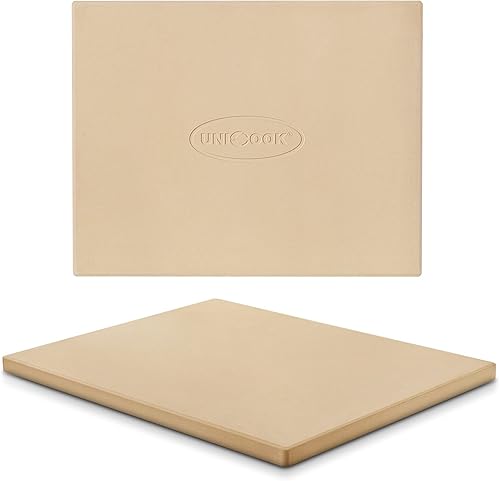
The Unicook 15 x 12 Inch Rectangular Pizza is a good fit for personal pizzas up to 11 in in diameter. Its 0.6 in cordierite surface is rated to 1450 °F, and the reversible smooth surface gives you two usable sides.
The included plastic scraper can cut dough or remove residue after the stone cools. Leave 1 to 2 in of clearance on every side inside the oven or grill, and choose a larger model for 12 in or larger pizzas.
Unicook 15 x 12 Inch Rectangular Pizza: Best for personal-size pizzas
- 15 x 12 x 0.6 in cordierite stone
- About 6.8 lb
- Heat resistant to 1450 °F
- Includes plastic dough scraper
The Unicook 15 x 12 in stone is sized for personal pizzas up to 11 in in diameter. Its reversible surface and plastic scraper suit cooks who want a simple stone for ovens and grills.
Pros
- High stated heat limit
- Reversible smooth surface
- Scraper included
Cons
- Not intended for 12 in or larger pizzas
- Needs 1 to 2 in clearance on all sides
The Hans Grill Rectangular Pizza Stone with Peel suits indoor and outdoor cooking. Its 15 x 12 in cordierite stone is rated to 1112 °F, and the set includes a wooden peel for moving pizza from the cooking surface.
It can be used for pizza, bread, pastry and calzone in an oven or on a BBQ grill. Warm-water hand washing is the stated care method, and staining is normal for this type of stone.
Hans Grill Rectangular Pizza Stone with Peel: Best for indoor and outdoor baking
- 15 x 12 in cordierite stone
- Heat resistant to 1112 °F
- Includes wooden peel
- Works in ovens and on BBQ grills
This Hans Grill set combines a 15 x 12 in rectangular stone with a wooden peel. It fits buyers who want to move between indoor oven baking and outdoor BBQ cooking.
Pros
- Wooden peel included
- Oven and BBQ use
- Supports pizza, bread, pastry and calzone
Cons
- Lower heat limit than 1450 °F models
- The peel needs separate storage
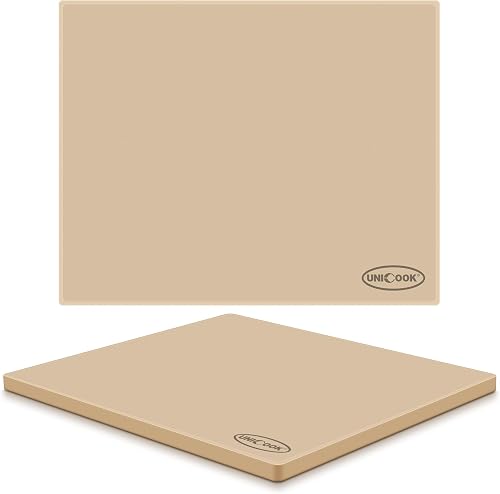
The Unicook 20 x 16 Inch Extra Large is the strongest choice when you need the largest surface in this roundup. Its 20 x 16 x 0.6 in cordierite body weighs about 15.8 lb and is described for 2 to 3 pizzas or loaves at a time.
This pizza stone large rectangle option needs a 1 in gap around the stone for fit and heat flow. It includes a plastic dough cutter, and its reversible surface can be used for pizza, bread, pies, rolls and cookies.
Unicook 20 x 16 Inch Extra Large: Best for multiple pizzas
- 20 x 16 x 0.6 in cordierite stone
- About 15.8 lb
- Heat resistant to 1450 °F
- Includes plastic dough cutter
The 20 x 16 in surface gives room for 2 to 3 pizzas or loaves at a time. It is the largest option here, so measure the oven or grill and plan for its 15.8 lb weight.
Pros
- Largest surface in this roundup
- Reversible cooking surface
- High stated heat limit
Cons
- Heavy at about 15.8 lb
- Needs a 1 in gap around the stone
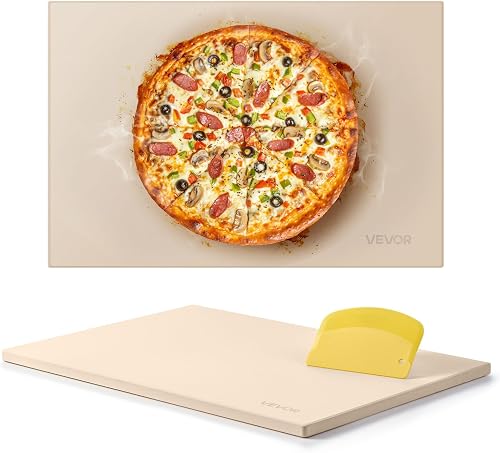
The VEVOR Pizza Stone gives you a 20 x 14 in surface with a thicker 0.67 in cordierite body. It weighs about 12.1 lb, handles temperatures up to 1450 °F and includes a PP plastic scraper.
Use it in an oven, BBQ grill, barbecue or stone oven after checking the interior dimensions. VEVOR specifies 0.8 to 2 in of clearance on all sides, so this extra-large option needs more space than a 15 x 12 in stone.
VEVOR Pizza Stone: Best for an extra-large 20 x 14 in stone
- 20 x 14 x 0.67 in cordierite stone
- Heat resistant to 1450 °F
- Includes PP plastic scraper
- About 12.1 lb
This VEVOR stone provides a 20 x 14 in baking area with a 0.67 in thickness. Its extra-large footprint suits ovens, BBQ grills and stone ovens that can provide 0.8 to 2 in of clearance on every side.
Pros
- Large cooking area
- Thick 0.67 in construction
- Scraper included
Cons
- Requires careful fit checking
- Heavier than the 15 x 12 in choices
The Old Stone Pizza Kitchen Rectangular Pizza Stone keeps the setup simple with one 14 x 16 in stoneware baking surface. It is rated to 1450 °F and is intended for residential ovens, pizza ovens and grills.
Choose it if you want a rectangular stone without a peel, cutter or scraper. The stone also works for bread, pastries and vegetables, and its stated care is to wipe it with a damp cloth.
Old Stone Pizza Kitchen Rectangular Pizza Stone: Best for a simple stoneware design
- 14 x 16 in rectangular stone
- Stoneware construction
- Heat resistant to 1450 °F
- Works in residential ovens, pizza ovens and grills
The Old Stone Pizza Kitchen model offers a 14 x 16 in stoneware surface without extra tools. It suits buyers who want a rectangular baking stone for pizza, bread, pastries and vegetables.
Pros
- 1450 °F stated heat limit
- Works in ovens and grills
- Simple one-piece setup
Cons
- No peel or scraper included
- Thinner than many cordierite picks
The Culinary Couture Large Pizza Stone for Oven is a 3-piece set with a 15 x 12 in rectangular cordierite stone, wooden peel and cutter. Its 0.4 in stone is rated to 1000 °F and is designed for oven and grill use.
This set makes sense when included tools matter more than maximum heat capacity. Rinse with warm water, avoid soap, and let the stone dry fully before storing or heating it again.
Culinary Couture Large Pizza Stone for Oven: Best for a tool bundle
- 15 x 12 in rectangular cordierite stone
- 0.4 in thickness
- Heat resistant to 1000 °F
- Includes wooden peel and cutter
This Culinary Couture set adds a wooden peel and cutter to a 15 x 12 in cordierite stone. It is a practical choice if you want serving tools included and do not need the highest heat limit.
Pros
- Three-piece setup
- Peel and cutter included
- Warm-water care
Cons
- 1000 °F heat limit
- Thinner 0.4 in stone
The Gyreuni 15''Pizza Stone for Oven and Grill is the most accessory-heavy option here. The 15 x 12 in cordierite stone comes with an oak peel, a steel pizza cutter and 10 sheets of kitchen parchment paper.
Its stated heat limit is 1472 °F, and the set also suits flatbread, sourdough, scones, biscuits and reheating pizza. Clean the cooled stone with warm water and a brush, and do not use soap or detergent.
Gyreuni 15''Pizza Stone for Oven and Grill: Best for the most included accessories
- 15 x 12 x 0.4 in cordierite stone
- Heat safe to 1472 °F
- Includes oak peel and cutter
- Includes 10 sheets of kitchen parchment paper
Gyreuni gives you a 15 x 12 in stone plus an oak peel, cutter and 10 parchment sheets. The set suits a first setup where you want several basic pizza tools together.
Pros
- Four-piece set
- Highest stated heat limit here
- Parchment included
Cons
- 0.4 in stone thickness
- More pieces to clean and store
The VEVOR Pizza Stone is a compact high-heat choice with a 15 x 12 x 0.6 in cordierite surface. It weighs about 7 lb, handles temperatures up to 1450 °F and includes a PP plastic scraper.
It works with kitchen ovens, BBQ grills, barbecues and stone ovens. Check for 0.8 to 2 in of clearance around the stone, clean it with water after cooling and heat it gradually during first use.
VEVOR Pizza Stone: Best for a compact high-heat option
- 15 x 12 x 0.6 in cordierite stone
- Heat resistant to 1450 °F
- About 7 lb
- Includes PP plastic scraper
This VEVOR model keeps the familiar 15 x 12 in footprint while using 0.6 in cordierite and a plastic scraper. It suits buyers who want a straightforward stone for an oven, BBQ grill or stone oven.
Pros
- 1450 °F stated heat limit
- Scraper included
- About 7 lb
Cons
- No peel included
- Needs 0.8 to 2 in clearance on all sides
How should you choose a large rectangular pizza stone?
Choose the largest rectangular pizza stone that leaves enough clearance for airflow and safe handling. A 20 x 16 in surface can support several pizzas or loaves, but a 15 x 12 in stone is easier to fit in a standard home setup.
Measure the rack or grill surface from side to side and front to back. Include the stone's thickness in your check, especially if the rack sits close to a heating element or the oven door.
Clearance matters for more than fit. Heat needs room to move around the stone, and you need space to slide a peel in without scraping the oven wall or the grill lid.
A large stone also weighs more. The Unicook 20 x 16 Inch Extra Large weighs about 15.8 lb, while the VEVOR 20 x 14 in model weighs about 12.1 lb, so plan how you will place and remove it while cool.
That weight is manageable for most adults, but it changes how you work. You will want a clear counter space, oven mitts and a steady grip before you lift a hot stone out of the oven.
If your main goal is one large pizza, compare the usable dough area with your preferred pizza size. A rectangular surface does not mean every inch can be used if the oven walls, rack rails or grill lid reduce the working space.
A 15 x 12 in stone is often described for personal pizzas up to about 11 in in diameter. That leaves a margin around the dough, which helps you launch and turn the pizza without the crust catching an edge.
For a different shape, compare these picks with our best round pizza stone guide. If you cook in a recreational vehicle, the best pizza stone for an RV oven guide focuses on tighter installation limits.
In a smaller oven, a thinner stone may sit lower and leave more headroom. In a larger oven, a thicker stone can help even out heat, but only if it still fits with the clearance the maker asks for.
Storage should be part of the decision too. A 20 in stone needs a cupboard or shelf with a flat space at least that long, and it should not be stored where it can be chipped by other bakeware.
How do you use and care for a rectangular baking stone?
Preheat the stone gradually in the oven or grill, then place the prepared dough on the hot surface. The porous stone materials in these products are intended to absorb moisture from dough, which can help create a firmer base.
Preheating is not just about temperature. A stone that has been in the oven while it heats will carry heat through its thickness, so the base starts cooking as soon as the dough lands.
Do not move a hot stone directly onto a cold or wet surface. Let it cool fully before cleaning, since sudden temperature changes can stress stoneware or cordierite.
That cooling rule also protects your counter and your hands. A hot stone can be heavy and awkward, so it is safer to leave it in the oven until it has cooled.
Remove baked residue with the included scraper when one is supplied. Water-only care is specified for several models here, so avoid soap or detergent unless the product's own care instructions clearly allow it.
A scraper works best once the stone has cooled and any burnt bits are dry. Light scraping is usually enough, and harsh scrubbing is rarely needed for normal pizza use.
Stains are normal on many baking stones and do not automatically mean the stone is no longer useful. The Hans Grill and Gyreuni products both state that marks from cooking do not affect the stone's function.
Use parchment only when it fits your cooking method and the instructions for your setup. Gyreuni includes 10 parchment sheets, while the other products may require you to supply any paper or launch tools separately.
Parchment can make launching easier, but it can also change how the base crisps if it sits between dough and stone. Use it when it helps your workflow, and follow the heat limits for the paper you choose.
A peel can make a bigger difference than another inch of stone width when you regularly launch shaped dough. The Hans Grill PRO XL includes a perforated aluminium peel, while the Hans Grill Rectangular Pizza Stone includes a wooden peel.
A perforated peel lets flour fall away before launch, which can help dough slide off more cleanly. A wooden peel gives a smooth, wide surface that some cooks find easier for stretching and moving dough.
Store the stone dry and let it dry fully after washing. Remaining moisture can turn to steam when the stone is heated again, so a full dry before the next bake is a sensible habit.
Rectangular pizza stone versus pizza pan
A rectangular pizza stone is better suited to dry, direct heat and moisture control, while a pizza pan gives you a more contained surface for shaping and handling dough. Compare that surface with a pizza screen versus stone before choosing.
Your choice depends on the crust texture and workflow you want. A stone rewards preheating and gives strong bottom heat, while a pan is more forgiving when you want to assemble and move the pizza in one piece.
Stone surfaces need preheating and careful cooling. Pans are often easier for beginners who want to assemble, move and cut the pizza in one container.
That container aspect is real. With a pan, you can shape the dough in the pan, add toppings and carry it to the oven without a separate launch step.
With a stone, you usually shape and top the pizza on a peel or board, then launch it onto the hot surface. That extra step can feel more fiddly at first, but it can also give a crisper base.
A pizza pan can also be useful for doughs that are very wet or loose. The raised sides hold the shape while the pizza is still soft, which a flat stone does not do.
On the other hand, a stone can handle bread, calzone and reheating in ways a pan may not match. Its porous surface and stored heat help dry out the underside rather than trapping steam.
Read our pizza pan vs pizza stone comparison before choosing between the two. It explains the trade-offs without assuming that one bakeware type suits every oven or dough style.
If you bake often and like a crisp base, a stone is likely to earn its space. If you want the simplest workflow and easy handling, a pan may suit you better.
Final verdict on the best rectangular pizza stone
Choose the Hans Grill Pizza Stone PRO XL if you want the best balance of a 15 x 12 in rectangular stone and an included peel. Choose the Unicook 20 x 16 Inch Extra Large for multiple pizzas or loaves, provided your oven has the needed clearance.
Pick the Unicook 15 x 12 Inch Rectangular Pizza for personal-size pizzas and a scraper, or choose the Gyreuni if you want a peel, cutter and parchment in one set. For a simple one-piece design, the Old Stone Pizza Kitchen model keeps the setup focused on the stone itself.
If your main need is a larger cooking surface, compare the 20 x 14 and 20 x 16 in options carefully against your rack and storage space. The larger stone will not help if it is hard to lift, hard to store or too close to the oven walls.
If you want easier launching, prioritize a set with a peel, then use our guide to the best pizza oven brush for large pizzas for cleanup around the cooking area. A peel matters most when you make fresh dough on a regular basis.
Heat limits are worth a final check before you decide. Some models here are rated to 1450 °F, while others are rated lower, so match the stone to how hot you actually cook.
Thickness is another practical trade-off. A thicker stone can hold and spread heat, but it also adds weight and takes up more vertical space in the oven.
For most home cooks, the middle ground is the easiest choice. A 15 x 12 in stone fits more ovens, handles personal and medium pizzas, and still leaves room for bread or calzone.
Choose the large rectangle only when you have a clear use for the extra area. Two pizzas at once, a large loaf or a party bake can justify the size, but only if the fit and weight work in your kitchen.
Whichever stone you pick, measure first and preheat properly. That simple routine will do more for your crust than buying a larger stone that barely fits.
Our top 3 picks at a glance
-
1
-
2
Best for personal-size pizzas
Unicook 15 x 12 Inch Rectangular Pizza
9.6/10 our score
See it on Amazon -
3
Best for indoor and outdoor baking
Hans Grill Rectangular Pizza Stone with Peel
9.5/10 our score
See it on Amazon
Frequently asked questions
What is the best rectangular pizza stone?
The Hans Grill Pizza Stone PRO XL is the best rectangular pizza stone for most buyers who want a 15 x 12 in surface and an included aluminium peel. Choose the Unicook 20 x 16 Inch Extra Large when you need room for multiple pizzas or loaves, but measure your oven first.
Why choose a rectangular pizza stone instead of a round one?
A rectangular pizza stone uses more of the oven rack's available width and depth. That extra surface can help with larger dough shapes, bread or several smaller items, but the stone still needs clearance around every side for fit and airflow.
What size rectangular pizza stone should you buy?
Choose a 15 x 12 in stone for personal pizzas and smaller ovens. Move to a 20 x 14 or 20 x 16 in large rectangle pizza stone when your oven or grill has enough room and you want to bake multiple pizzas or loaves.
How do you clean a rectangular pizza stone?
Let the rectangular pizza stone cool fully before cleaning. Scrape away residue, then use warm water or a damp cloth as the product instructions allow, and avoid soap or detergent on models that specify water-only care.
Can a rectangular pizza stone go on a grill?
Yes, several picks here are made for oven and grill use, including the Hans Grill, Unicook and VEVOR models. Measure the grill first and leave the clearance stated for the stone so heat can move around it.


