Can Homemade Thick Crust Pizza Be Crispy?
Yes, homemade thick crust pizza can be crispy. Use a well-heated pan, manage dough moisture, and bake long enough for the thicker center to cook without leaving the bottom pale or soft.
On this page (9 sections)
- Why can homemade thick crust pizza be crispy?
- Does the pan affect thick crust pizza crispness?
- Can a deep glass dish make crispy thick crust pizza?
- How should you prepare the dough for a crisp bottom?
- What baking steps help thick crust pizza stay crisp?
- Is a 2-pack useful for baking thick crust pizza?
- Should you use a pizza stone or steel?
- What should you do if the crust is soft?
- So, is homemade pizza thick crust crispy?
Yes, homemade thick crust pizza can be crispy. The key is balancing a crisp bottom with enough baking time for the thicker dough to cook through.
Thick dough holds more moisture than a thin crust, so the pan and baking method matter. A dark metal pan, a perforated surface, or a well-heated baking vessel can help the bottom brown, while lighter toppings reduce the chance of a soft center.
Why can homemade thick crust pizza be crispy?
Homemade thick crust pizza can be crispy when the dough makes firm contact with a hot baking surface. Heat must reach the bottom while the top stays in the oven long enough for moisture to leave the dough.
A thick crust is not automatically soft. Its texture depends on dough hydration, oil, pan material, topping weight, oven heat, and baking time.
Thicker dough usually needs more time than thin dough. If you remove the pizza as soon as the cheese melts, the top may look finished while the center and bottom still need more heat.
For a deeper look at the texture difference, compare pan pizza vs thin crust. Pan pizza usually gives you more room for a tall, airy edge, while thin crust reaches a crisp texture faster.
Does the pan affect thick crust pizza crispness?
Yes, the pan affects how quickly the bottom heats and how much moisture can escape. Metal pans are often useful for crisp bottoms, while deeper glass bakeware suits pizzas that need more room for dough and toppings.
A shallow metal pan places the dough close to the oven's heat and can help the base brown. A perforated pan adds openings beneath the dough, allowing steam to move away from the bottom during baking.
A deep glass dish can hold a thicker pizza with generous toppings, but glass does not behave exactly like metal. Watch the center carefully and allow enough time for the dough to set.
The GoodCook AirPerfect Pizza Pan with Cutting Guides, 16-Inch, Gray has a 16-inch round design, perforated edge, nonstick carbon steel construction, and cutting guides. Its molded feet keep the hot pa raised from the countertop after baking.
This type of pan suits a cook who wants a full-size pizza surface and a perforated base. The trade-off is that perforations may allow some oil or sauce to reach the oven if the dough has gaps or the toppings are especially wet, so use a sound dough layer and check the pan's position before baking.
For more detail on this pan style, read how to use a perforated pizza pan.
Can a deep glass dish make crispy thick crust pizza?
A deep glass dish can make a well-baked thick pizza, but crispness depends more heavily on heat, moisture, and timing. Its depth gives dough and toppings room, while the glass shape helps contain the pizza during baking.
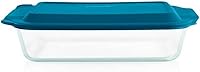
The Pyrex Deep is a 9 x 13 in glass baking dish with a 2.75 in depth and a BPA-free plastic lid. The dish has a 4.5-quart capacity and is designed for preheated oven, microwave, and freezer use.
Use this kind of dish when you want a deeper, more contained pizza rather than a thin, open crust. A glass dish may be especially useful when the dough rises high or when you prefer a rectangular shape for serving.
The lid is for storage rather than baking. Let the dish cool before using the BPA-free plastic lid, and follow safe handling practices when moving hot glass bakeware.
If you don't have a conventional oven, how to cook pizza without an oven explains other ways to apply heat, though thick dough still needs enough time to cook through.
How should you prepare the dough for a crisp bottom?
Keep the dough evenly spread and avoid leaving a thick wet layer in the middle. Press it into the pan so the base has consistent contact with the baking surface.
Let the dough rest as needed for shaping, then check the thickness from edge to center. A very thick middle may need more baking time than the edges, especially when the pizza carries a heavy amount of sauce or cheese.
Use toppings in moderate layers. Fresh vegetables, extra sauce, and other wet ingredients release steam as they bake, which can soften the crust even when the pan is hot.
Oil can improve browning and help the dough release from some pans, but too much oil can make the bottom feel greasy instead of crisp. Spread it lightly and keep the dough layer even.
What baking steps help thick crust pizza stay crisp?
Preheat the oven and pan according to the recipe, bake until the center is set, and move the pizza off the hot pan after baking. These steps reduce underbaking and trapped steam.
A preheated surface gives the dough an immediate heat source. If the pizza starts in a cold pan, the dough may warm slowly while the toppings release moisture.
Look at the bottom and edge rather than judging only by melted cheese. The crust should hold its shape when lifted, and the center should not look wet or collapse after a short rest.
Let the pizza cool briefly on a dry surface or rack. Leaving it in a hot pan can trap steam beneath the crust and soften the bottom you worked to brown.
Is a 2-pack useful for baking thick crust pizza?
A 2-pack helps when you bake more than one pizza or want a spare pan for another batch. It also lets you prepare one pizza while another pan is cooling or being cleaned.
The GoodCook AirPerfect Nonstick 16” Pizza Pan - Set of 2 includes 2 round, 15.75-inch pizza pans. Each pan has a perforated design, nonstick carbon steel construction, cutting guides, and molded feet.
This set suits households that bake multiple pizzas or want two matching full-size surfaces. It takes more storage space than one pan, and the pans still need enough oven room for air to circulate around them.
Both pans are dishwasher safe, though hand-washing is recommended for longer-lasting results. Avoid cutting directly on the nonstick surface, and allow hot pans to cool before handling them.
Should you use a pizza stone or steel?
A pizza stone or steel can help create a strong heat source, but it is not required for every thick crust pizza. These surfaces are often more useful when the dough is shaped to fit them and the pizza can be transferred without losing its form.
A thick, heavily topped pizza may be easier to manage in a pan. A stone or steel can make loading and removing a deep pizza more difficult if the dough is soft or the toppings are heavy.
For thinner dough, see Best Pizza Stone For Thin Crust Pizza and Best Pizza Steel For Thin Crust Pizza. Those tools focus on fast heat transfer for thin-crust baking, while thick pan pizza often benefits from the support of a rimmed vessel.
What should you do if the crust is soft?
Return the pizza to the oven if the center or bottom is still soft, then check it again after a few minutes. Use a lower topping load next time if the top finishes before the dough.
If the top is browning too quickly, protect it only as needed while the crust continues baking. Keep the pizza in the pan until the dough is firm enough to move, then transfer it to a dry surface.
If the pizza sticks, let it cool briefly and loosen the edge with a suitable utensil. A nonstick pan may release more easily, but a nonstick surface still benefits from gentle handling.
For a simple pan method from start to finish, follow how to cook pizza in a pan. It can help you match pan depth, dough thickness, and baking time.
So, is homemade pizza thick crust crispy?
Yes, homemade thick crust pizza can be crispy when the pan is hot, the dough is evenly spread, the toppings are not too wet, and the bake lasts long enough. For another thick, pan-baked style, browse Detroit-style pizza ideas.
Choose a perforated carbon steel pan when bottom moisture is your main concern. Choose the Pyrex Deep when you want a deeper rectangular pizza with more room for dough and toppings.
Choose the GoodCook 2-pack when baking multiple pizzas makes the extra pan useful.
The decision is simple: use a supported pan for thick dough, control moisture, and judge doneness by the crust as well as the cheese.
Frequently asked questions
Can homemade thick crust pizza be crispy?
Yes. Thick crust pizza can have a crisp bottom and browned edges when the pan is heated well, excess moisture is controlled, and the pizza stays in the oven long enough for the center to bake.
A thinner layer of wet toppings also helps the crust firm up.
Is a metal pan better than glass for crispy thick crust pizza?
A metal pan is often the more direct choice when crispness is the main goal because it transfers heat quickly to the dough. Glass can work for deep pizza, but the crust may need careful baking time and moisture control to avoid a soft center.
Does a perforated pizza pan make thick crust crispy?
Perforations can help moisture escape from the bottom of the pizza, which may support a crisper crust. They don't replace a hot oven, a suitable dough thickness, or proper baking time, and very wet toppings can still soften the surface.
How do you keep thick crust pizza from getting soggy?
Use a pan that suits the dough, avoid overloading it with wet toppings, and bake until the center is fully set. Let the pizza rest briefly on a dry surface after baking so steam can escape instead of softening the bottom.