How to Choose an Indoor Gas Pizza Oven
Choose an indoor gas pizza oven only if the exact model is approved for indoor use and your home meets its fuel, ventilation, clearance, and installation requirements. Then compare its usable cooking area with the pizzas you plan to make.
On this page (8 sections)
- What makes an indoor gas pizza oven safe to install?
- How does an indoor gas oven differ from an outdoor model?
- How should you assess installation and fuel needs?
- How much cooking capacity do you need?
- Which alternatives fit specific cooking setups?
- What else should you compare before choosing?
- What common buying mistakes should you avoid?
- How do you choose an indoor gas pizza oven?
Choose an indoor gas pizza oven only when the exact model is approved for indoor use and your home can meet its installation requirements. Check the fuel connection, ventilation, clearances, and cooking surface before comparing heat settings or accessories.
The phrase “gas pizza oven indoor” can describe either an indoor-rated appliance or an outdoor oven that accepts a gas burner. Those are different categories: an outdoor-rated oven does not become suitable for kitchen use just because it can run on gas.
If you are still deciding where you want to cook, compare the trade-offs in How Do You Choose Between Indoor or Outdoor Pizza Oven?. That choice should come before shopping by temperature, size, or fuel.
What makes an indoor gas pizza oven safe to install?
An indoor gas pizza oven must be specifically approved for indoor use by its manufacturer. Fuel type alone does not show where an appliance can operate safely.
Before buying, find the exact model's manual and confirm:
- The oven is rated for indoor operation.
- Which gas it uses and how it connects to the supply.
- Whether it needs a vent, hood, or other exhaust system.
- Required spacing from walls, cabinets, and other surfaces.
- Whether it also needs an electrical outlet.
- Whether installation requires a licensed professional or inspection.
Local building and fire rules may add requirements. Check with your local authority or a qualified installer if the manual or rules are unclear.
Don't rely on a kitchen range hood as proof of suitability. The instructions must specify the ventilation system the oven requires, and your installation must meet that requirement.
Are indoor gas pizza oven reviews enough to confirm safety?
Reviews can help you spot setup questions and recurring buyer concerns, but they cannot confirm whether an oven is approved for your home. Use the model's manual and manufacturer guidance for indoor-use approval and installation requirements.
Searches for “indoor gas pizza oven reviews” may return outdoor models with gas burners. Read the model number and fuel configuration carefully, then verify the intended location before weighing buyer feedback.
How does an indoor gas oven differ from an outdoor model?
An indoor model is designed and approved for indoor operation under its stated installation conditions. An outdoor model is intended for outdoor use, even if it offers a gas burner or reaches high cooking temperatures.
The distinction matters because gas appliances need the right setup for combustion and exhaust. Indoor use depends on the full appliance design and installation, not just the heat source or the oven's size.
Some searches for “indoor pizza oven gas” can surface small countertop ovens. Confirm whether a particular unit is electric or gas-powered, and whether its manufacturer approves indoor use.
| What to compare | Indoor-rated model | Outdoor-rated model |
|---|---|---|
| Intended location | Indoor use under stated conditions | Outdoor use |
| Installation | Follow indoor clearance, fuel, and ventilation instructions | Set up outdoors as directed |
| Fuel connection | Confirm approved gas type and connection | Confirm burner type and outdoor setup |
| Cooking capacity | Match usable surface to your usual pizza size | Match cooking surface to pizza size and outdoor space |
| Key check | Indoor approval for the exact model | Never infer indoor approval from fuel options |
“Commercial-style” does not automatically mean suitable for a home kitchen. For restaurant-scale equipment, see commercial pizza ovens for restaurants.
For ovens sold for home cooking, see Best Commercial Pizza Oven For Home Use and confirm each model's intended location before choosing.
How should you assess installation and fuel needs?
Start with the manual's installation requirements, then decide whether your home can meet them as written. Fuel supply, ventilation, clearances, electrical access, and local rules all affect whether an oven is a practical fit.
Use this checklist before you buy:
- Fuel: Verify the approved gas type and connection. Don't assume a burner designed for a portable cylinder can connect to a household supply.
- Ventilation: Identify the specified exhaust setup and check whether your kitchen can support it.
- Clearance: Measure the space around the oven, including overhead cabinets and nearby walls.
- Power: Check whether ignition, controls, or other functions also need an electrical outlet.
- Installation help: Find out whether the instructions call for a qualified gas fitter or another professional.
- Local approval: Check whether permits, inspections, or other local rules apply.
If installation requires changes to your gas line or exhaust system, ask a qualified professional to assess the work before ordering. A model that cannot be installed as directed is not a suitable indoor choice.
Don't plan around an improvised hose, adapter, or vent arrangement. The oven must use the approved fuel connection and exhaust setup for that model.
How much cooking capacity do you need?
Choose capacity based on the pizza diameter you make most often and how many you want to cook in a session. A large advertised temperature does not tell you whether your pizza will fit or whether the oven will suit your kitchen.
Compare the cooking surface and opening with your usual pizza size. Then check the oven's outside dimensions and required clearances against your counter or floor space.
A pizza may fit on the stone but still need room for a peel and turning. Check the opening and usable cooking area, along with instructions about pizza size and loading.
Think about the pace of your cooking, too. If you expect to make several pizzas back to back, look for manufacturer guidance about preheating and the recommended cooking routine.
What should indoor gas pizza oven reviews tell you about capacity?
Use reviews to look for recurring comments about loading, turning, and fitting the oven into a kitchen. Treat those as buyer experiences, not a substitute for the maker's dimensions or installation instructions.
Compare the exact model and burner configuration being discussed. A separately sold attachment or a different oven size can change the setup and cooking area.
Which alternatives fit specific cooking setups?
The examples below cover an indoor electric countertop oven and two outdoor ovens with gas-related features. Only consider an outdoor model for outdoor cooking unless its manufacturer approves indoor use for that exact configuration.
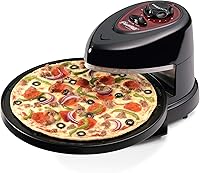
The WISCO Industries 421 is not a gas oven, so it does not meet a strict gas-only requirement. For another indoor electric option, read the Breville Smart Oven Pizzaiolo review.
It suits a buyer who wants a countertop appliance and is comfortable using electricity instead of a gas connection. For higher-volume electric options, compare commercial electric pizza ovens.
Its thermostat adjusts from 150°F to 500°F in 25-degree increments, and a one-touch setting runs at 450°F for 10 minutes. The removable clean-out tray and flip-up handle are useful details for routine cleanup and storage.
Choose it when an indoor countertop option matters more than gas fuel. Skip it if you specifically want a gas-powered oven or need the high-heat cooking approach of a dedicated pizza oven.
The BIG HORN 12" is an outdoor oven that uses wood pellets in its base configuration. For outdoor gas alternatives, compare natural gas pizza ovens.
Gas and electric burner attachments are sold separately, so include the correct attachment in your plan and use the oven only in an approved outdoor setup.
The 12-inch cooking surface makes it a better fit for smaller pizzas and outdoor cooking than for someone seeking a built-in indoor appliance. It suits buyers who want a portable outdoor oven and are open to pellet cooking or sourcing a compatible burner attachment.
Skip it if indoor installation is the priority, if you want a gas burner included, or if a 12-inch surface is too small for your usual pizzas. For pellet mode, use natural hardwood pellets and keep them in an airtight container so moisture does not affect their burn.
The HALO Versa 16 is a propane-powered outdoor oven with a 16-inch motorized stone that rotates. Compare it with other rotating pizza ovens.
It suits outdoor cooks who want a larger cooking surface and do not want to turn each pizza manually.
Its size and 43.5 lb weight make it a substantial choice for a patio or a planned tailgate setup. It can use 20 lb LP tanks or 1 lb canisters, according to HALO's product information.
Choose it for outdoor cooking where a 16-inch pizza surface and rotating stone are priorities. For another outdoor gas oven comparison, see Gozney Arc vs Arc Lite.
Skip it if you need an indoor appliance, a compact countertop unit, or an oven intended for a permanent kitchen installation.
For a gas-focused comparison, see Best Commercial Gas Pizza Ovens. For another outdoor option, read VEVOR Pizza Oven Reviews.
What else should you compare before choosing?
Compare the installation plan and cooking surface before focusing on maximum temperature or cooking speed. Those headline details do not tell you whether the oven fits your kitchen or can be installed safely.
Use these points to narrow the options:
- Cooking area: Confirm the usable surface and opening fit the pizza size you make.
- Controls: Check how the oven sets and adjusts heat.
- Heat source: Confirm the gas type and whether electricity is also required.
- Cleaning: Look for a removable tray or other specific care features.
- Space: Measure the oven's outside dimensions and required clearances.
- Support: Make sure you can find the manual and installation guidance for the exact model.
Care requirements also depend on the oven design. Follow its manual, let hot parts cool before handling them, and use only the cleaning methods it permits.
For readers considering an outdoor cooking setup, Which Is Better Indoor or Outdoor Pizza Oven? covers the location trade-off. If you are comparing stove-top tools for pizza components, see Best Cast Iron Griddles for Stove Tops.
What common buying mistakes should you avoid?
The most costly mistake is treating a gas burner as proof that an oven can run indoors. Verify indoor approval for the exact model and configuration before comparing any other feature.
Avoid these shortcuts:
- Assuming a hood solves ventilation: Follow the oven's stated exhaust requirements.
- Confusing fuel with location: Gas, electric, or pellet capability does not guarantee indoor approval.
- Buying before measuring: Account for the oven, clearances, opening, and room to work with a peel.
- Assuming every gas connection is interchangeable: Confirm the approved gas type and connection.
- Choosing by maximum temperature alone: Compare the cooking surface, heat controls, setup needs, and intended location.
- Overlooking separately sold parts: Check whether the burner or other required component is included.
These checks make it easier to compare ovens that genuinely fit your cooking space. If a detail cannot be confirmed in the manual, ask the manufacturer or a qualified installer before buying.
How do you choose an indoor gas pizza oven?
Choose an indoor gas pizza oven only when the exact model is approved for indoor use and your installation meets its fuel, ventilation, clearance, and local requirements. Then match the usable cooking area to your usual pizza size and cooking volume.
If indoor approval is unclear or your home cannot meet the installation instructions, do not treat an outdoor gas oven as a workaround. Consider an indoor electric countertop oven instead, or choose an outdoor-rated model for outdoor cooking.
For a different pizza style and oven comparison, see Best Commercial Pizza Oven For Neapolitan Pizza.
Frequently asked questions
Can a gas pizza oven be used indoors?
Only use a gas pizza oven indoors if its manufacturer explicitly approves that exact model and configuration for indoor operation, and the installation meets local requirements. Outdoor ovens need outdoor ventilation, even if they can use a gas burner.
Check the manual and local code before buying.
What should I check before installing an indoor gas pizza oven?
Check the approved fuel type, gas connection, ventilation or exhaust needs, clearances, electrical needs, and whether installation requires a qualified professional. Confirm the exact model's manual and local requirements.
A kitchen hood does not mean an outdoor-rated oven is safe for indoor use.
How much cooking capacity do I need?
Start with the pizza diameter you usually make and how many pizzas you want to cook in one session. Compare the usable cooking surface and opening, not just the oven's outside dimensions.
A larger opening may make loading easier, but it also takes more counter or floor space.
Are countertop pizza ovens gas powered?
Some countertop pizza ovens use electricity rather than gas. The WISCO Industries 421 uses a 120 V electrical connection and has a 1,500 W rating, making it an indoor countertop alternative to research, not a gas oven.