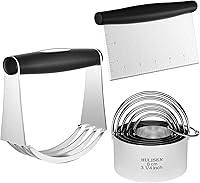
How to Use a Pizza Dough Docker
Use a pizza dough docker to make shallow, evenly spaced holes across dough before baking. Dock the center more than the edge, and adjust the pattern for the pizza style.
On this page (10 sections)
- What is a pizza dough docker?
- How do you use a pizza dough docker?
- Which pizza styles need docking?
- Should you dock canned pizza dough?
- How do you prepare dough before docking?
- What can you use instead of a pizza dough docker?
- How do you dock dough without damaging it?
- How does docking affect crispy pizza?
- How do you clean and store a pizza dough docker?
- What is the best way to use a pizza dough docker?
Use a pizza dough docker to make shallow, evenly spaced holes across the center of pizza dough before baking. The holes help release steam and can reduce large bubbles, but you should leave the outer rim mostly untouched when you want a raised crust.
A docker is a spiked wheel or roller made for piercing dough. If you don't have one, a fork can make small holes, but it takes longer and is harder to space evenly.
What is a pizza dough docker?
A pizza dough docker is a hand tool that punctures dough with a row or pattern of small points. It helps control how the dough expands during baking.
The tool is most useful when you want a flatter, more even surface. It can also make topping placement easier because the center is less likely to balloon into a large pocket.
Docking is one part of dough preparation. For help choosing a container for fermentation, see this guide to a dough proofing container.
For flour, hydration, and crust choices, compare these types of pizza dough.
How do you use a pizza dough docker?
Use a pizza dough docker after shaping the dough and before adding toppings. Roll or press the tool across the center with even pressure, then check that the holes are spaced across the surface.
- Shape the dough on a lightly floured work surface.
- Transfer it to a prepared pan, peel, or baking surface.
- Hold the dough steady with one hand.
- Press the docker across the center in straight passes.
- Overlap the passes slightly so large undocked areas don't remain.
- Leave the outer rim clear if you want it to puff.
- Add sauce and toppings, then bake according to your recipe.
The goal is a pattern of small punctures, not deep cuts. If the dough sticks to the tool, use less pressure and a light dusting of flour.
How deep should a pizza dough docker press?
A pizza dough docker should make clear holes through the upper surface without shredding the dough. Press until the points reach the dough below, then lift the tool straight up.
Don't drag a spiked tool sideways through soft dough. Dragging can stretch the surface and create irregular tears instead of clean docking holes.
Dock the center more heavily than the edge when making a traditional rim. A completely pierced dough sheet will bake flatter and may not give you the border you want.
Which pizza styles need docking?
Thin, flat pizza styles usually benefit most from docking. Thick doughs and pizzas with a high, airy rim often need less docking or no docking at all.
Docking is a good match for:
- Thin-crust pizza
- Flatbread-style pizza
- Cracker-thin pizza
- Sheet-pan pizza with a flatter center
- Dough that forms large bubbles during baking
Use less docking for:
- Neapolitan-style pizza
- Naturally leavened dough with an airy rim
- Pizza where a puffy center is part of the style
- Dough that already bakes flat and evenly
When the edge matters, keep a clear border around it. The center can release steam while the rim stays available for expansion.
Should you dock canned pizza dough?
You can dock canned pizza dough when you want a flatter crust with fewer large bubbles. Let the dough relax after opening and shaping it, then pierce the center just before topping.
Canned dough can be softer and more elastic than a firm dough ball. Work gently so the docker doesn't pull the dough out of shape.
This guide to a can of pizza dough covers shaping and baking considerations for that type of dough.
If the dough keeps shrinking, give it more resting time before docking. Pressing harder won't solve dough that is too tight.
How do you prepare dough before docking?
Prepare dough by shaping it evenly, placing it on its baking surface, and checking the thickness before you pierce it. A consistent center makes it easier to create a consistent docking pattern.
Use a bowl large enough for the dough's rise and mixing stage. The FineDine Stainless Steel Mixing Bowls Set includes 6 stainless steel bowls in ½, 1, 2, 3, 4, and 5 quart sizes, with nesting storage and dishwasher-safe care.
Choose a bowl that leaves room for the dough to expand during proofing. For purpose-built options, see the best pizza dough proofing containers.
A small bowl can make handling harder, while an oversized bowl can make a small dough portion difficult to inspect.
For a dough made specifically for high-heat baking, see How to Make Pizza Dough for a Pizza Oven?. If you're building your supplies, this guide explains What Do You Need to Make Pizza Dough for a Pizza Oven?.
What can you use instead of a pizza dough docker?
A fork can replace a docker for small batches, but it takes more passes and can create uneven spacing. A dough cutter can help prepare and portion dough, though it isn't a substitute for a dedicated piercing tool.
The Dexter-Russell Sani-Safe 6" x 3" Dough Cutter has a rectangular carbon steel blade, a textured polypropylene grip, and an NSF certification. Its stated uses include cutting, dividing, and scraping dough, flour, and debris.
Use a bench scraper to divide dough without pulling it. Keep the blade flat against the work surface, and wash this tool by hand as directed.
The Rachael Ray Tools and Gadgets Stainless Steel Pastry Scraper / Bench Scrape / Kitchen Tool for Baking and Cooking / Dishwasher Safe, Purple is a stainless steel bench scraper with a ribbed composite handle. It is a pack of 1 and measures 6 in L x 5 in W.
Pick the Dexter-Russell tool if you want a 6 in x 3 in dough cutter with an ergonomic polypropylene grip and hand-wash care. Pick the Rachael Ray tool if dishwasher-safe care and a wider 6 in x 5 in scraper suit your prep space.
How do you dock dough without damaging it?
Dock dough without damaging it by using light, even pressure and lifting the tool straight up after each pass. Stop if the dough tears, bunches, or sticks to the points.
Keep the center pattern fairly regular. Large gaps can leave one area free to inflate, while excessive puncturing can flatten the crust more than intended.
Avoid docking dough that is extremely wet unless you can handle it without dragging. If the surface is sticky, a small amount of flour on the tool or dough can help, but too much flour can affect the crust surface.
A silicone pastry mat can make shaping and cleanup easier. Before buying one, see Are Silicone Pastry Mats Made in the USA? for a focused look at that question.
How does docking affect crispy pizza?
Docking can support a flatter, crisper center by reducing large steam pockets. It does not replace the right dough thickness, baking temperature, surface, or bake time.
For a crisp crust, shape the dough evenly and avoid leaving a thick center. This guide to how to make crispy pizza dough covers the broader choices that affect texture.
Don't dock the rim if you want a light, raised edge. A crisp center and a puffy border can work together when the punctures stay inside the main topping area.
How do you clean and store a pizza dough docker?
Clean the docker soon after use so dried dough doesn't harden around the points. Follow the tool's care instructions, wash away flour and dough residue, and dry it fully before storage.
Store it where the spikes won't damage other tools or catch on towels. Check the points before the next use, especially if dough has dried between them.
A docker should stay sharp and clean enough to make consistent holes. Replace or stop using it if the handle, roller, or points become damaged.
What is the best way to use a pizza dough docker?
The best method is to dock only the center of a shaped pizza, use even pressure, and leave the rim clear when you want it to rise. Thin and flat pizzas usually need more docking than airy, raised-crust styles.
Use the Dexter-Russell dough cutter or Rachael Ray bench scraper to portion and move dough, then use a dedicated docker or fork for the holes. Keep the FineDine bowls for mixing and proofing, and adjust the docking pattern to the crust style rather than piercing every pizza the same way.
Frequently asked questions
What does a pizza dough docker do?
A pizza dough docker makes small holes across pizza dough before baking. Those holes let trapped steam escape from the dough's surface, which can help reduce large bubbles and uneven puffing.
Docking is most useful for thin, flat pizza styles and may be unnecessary when you want a puffy, airy rim.
How deep should you dock pizza dough?
Press the docker firmly enough to make clear holes through the upper surface, but don't crush the dough or tear the edge. Work across the center in an even pattern, leaving the outer rim mostly undocked when you want that edge to rise.
When should you dock pizza dough?
Dock pizza dough after it has been shaped and placed on its baking surface, just before adding toppings or baking. If the dough is very soft or sticky, chill it briefly or use light flouring so the tool can make clean holes without dragging the dough.
Do you need to dock every pizza dough?
No. Docking suits thin crusts, cracker-style bases, flatbreads, and doughs that tend to form large bubbles.
Neapolitan-style and other pizzas with a raised, airy rim are usually shaped to keep gas in the edge, so docking the rim works against that goal.