Which Marble Pastry Board Size Should You Choose?
A marble pastry board 24 x 16 is the best starting size for most home bakers. It gives you useful rolling space without taking over a standard counter, while larger boards suit big dough batches and dedicated work areas.
On this page (8 sections)
- What size marble pastry board should you choose?
- How do the common marble board sizes compare?
- How much counter space does each size need?
- Which size suits your dough batch?
- What tools help on a marble pastry board?
- How should you set up and care for the board?
- Is a 24 x 36 marble pastry board worth it?
- What is the best marble pastry board size for you?
A marble pastry board 24 x 16 is the best all-purpose size for many home kitchens. It gives you a useful rolling area for pie dough, biscuits and smaller pastry batches without requiring the dedicated counter space of a 24 x 36 board.
The shape suits bakers who roll in a straight line from front to back. The width also leaves room to turn dough and check its edges without it hanging over the stone.
This size often fits a standard counter in a way that larger boards do not. A 24 x 36 board can feel generous on an island, yet it may crowd a smaller run of cabinets.
Your counter layout and largest dough batch matter more than the biggest board you can fit. Measure the working surface, storage spot and path to the counter before choosing.
Think about where bowls will sit while you work. A board that leaves no side space can force you to keep moving tools, which slows down simple tasks.
Storage matters as much as rolling space. A stone board is heavy enough that you need a shelf you can reach without lifting it over other cookware.
For a broader look at stone options, see our guide to best marble pastry boards.
If your dough needs controlled rising as well as rolling, a dough proofing container can help with the next step.
A proofing container keeps dough portions organized while one piece is being rolled. That helps when a batch needs time between shaping and baking.
The 24 x 16 size also works well for bakers who alternate between pastry and bread dough. It offers a clean surface for dividing and shaping without needing a separate station.
Choose this size when you want one board to cover most everyday work. It is a practical middle ground between a small board and a full worktable surface.
What size marble pastry board should you choose?
Choose a 24 x 16 board for general home baking, a 16 x 20 board when your counter favors a deeper rectangle, an 18 x 24 board for larger pastry sheets, or a 24 x 36 board for frequent high-volume work.
| Board size | Best fit | Main trade-off |
|---|---|---|
| 16 x 20 in | Narrow counters with more front-to-back depth | Less side-to-side room |
| 24 x 16 in | Everyday pastry and dough work | May need to be stored after use |
| 18 x 24 in | Larger pie crusts and broad pastry sheets | Takes more counter depth |
| 24 x 36 in | Large batches and dedicated baking areas | Heavy, bulky and space-demanding |
The surface area is only part of the decision. A board needs clear space around it for a rolling pin, flour, bowls and your hands.
Is a marble pastry board 24 x 16 large enough?
A marble pastry board 24 x 16 gives you 384 square inches of work area. That is enough for many single-crust pies, cookie dough portions and small bread or pastry batches, provided the dough is not being rolled unusually wide.
The 16 in depth gives you room to roll from front to back, while the 24 in width leaves useful side-to-side space. It also gives you room to move dough slightly if the edge begins to approach the border.
Choose a larger board when you regularly roll wide dough sheets, divide several portions at once or want to keep ingredients and tools on the same surface. Otherwise, the larger footprint may reduce the clear counter space that makes baking comfortable.
How do the common marble board sizes compare?
The 16 x 20, 24 x 16, 18 x 24 and 24 x 36 sizes overlap in purpose, but their shapes create different working patterns.
A marble pastry board 16x20 has 320 square inches of surface. Its extra depth can feel useful if your counter is deeper than it is wide, but it may leave less room beside the board for bowls and ingredients.
A marble pastry board 24 x 16 has 384 square inches. It is a balanced choice when you want a longer rolling lane without covering most of a standard counter.
A marble pastry board 18 x 24 has 432 square inches. The extra 48 square inches can make a difference for larger pastry sheets, but check that the 18 in depth does not run into a backsplash, appliance or counter edge.
A marble pastry board 24 x 36 has 864 square inches, more than twice the area of a 24 x 16 board. This extra large marble pastry board is better suited to a baking island, worktable or dedicated pastry station than a crowded kitchen counter.
How much counter space does each size need?
Choose the board that leaves a safe working margin around the stone, not one that fills the entire counter. You need room to place a bowl, set down a rolling pin and handle the dough without pushing tools toward the edge.
A tight fit can make each step harder than it needs to be. You may knock a flour container while reaching for a scraper, or lift dough over a faucet to move it aside.
Before buying, measure:
- The usable width between walls, appliances and sink fixtures
- The clear depth from the front edge to the backsplash
- The storage shelf or cabinet where the board will rest
- The route you will use to carry the board
- The space beside the board for flour, bowls and a scraper
Measure with the board in the position you plan to use it. A tape on the counter can show whether your hands and tools have room to move.
Counter depth deserves special attention. A board that is too deep can push your elbows back and make it hard to apply even pressure with a rolling pin.
Also consider whether the board will stay in place. A 24 x 16 board may work as a semi-permanent baking surface, while an 18 x 24 or 24 x 36 board may need to be moved after each use.
A board that stays out needs a counter that is truly clear. If items pile up on it between sessions, you may start to avoid using it.
A board that is moved often needs a safe route to storage. Check doorways, cabinet doors and low shelves along the path you will carry it.
Leave margin at the front as well as the sides. That front space gives you room to pull dough toward you and to set down a bench scraper safely.
The right size should feel comfortable before dough reaches the surface. If the setup feels crowded during a test with empty bowls and tools, it will feel worse during a full batch.
Which size suits your dough batch?
Match board size to the largest dough shape you make regularly, not to an occasional recipe. A small batch rolled on a very large surface can be harder to judge because the dough occupies less of the work area.
Choose 16 x 20 for:
- Small pastry batches
- Narrow counters
- Bakers who already keep bowls and tools elsewhere
- Occasional rolling and shaping
Choose 24 x 16 for:
- Regular pie and cookie work
- One or two dough portions at a time
- General home baking
- Counters with moderate width and limited depth
Choose 18 x 24 for:
- Larger pie crusts
- Broad pastry sheets
- Several portions that need room between them
- Bakers who prefer more front-to-back space
Choose 24 x 36 for:
- Multiple dough portions
- Large family baking sessions
- Frequent bread or pastry preparation
- A dedicated island or worktable
If you often need to divide dough evenly, a scraper can make the board more useful. The [Dexter-Russell Sani-Safe 6" x 3" Dough Cutter] is suited to cutting, dividing and scraping dough from a work surface.
What tools help on a marble pastry board?
A marble board works best when the rest of your setup supports clean, controlled dough handling. For pizza dough styles, see types of pizza dough.
Keep the surface clear, use the right amount of flour and have a scraper nearby for sticky dough or residue.
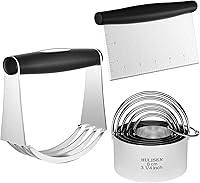
The [Rachael Ray Tools and Gadgets Stainless Steel] bench scraper offers a stainless steel surface for scooping, transferring and slicing pastry dough. Its ribbed composite handle gives you a firm grip, and the tool is dishwasher safe.
A mixing bowl set also helps you keep ingredients and dough portions organized before they reach the board. The FineDine set includes 6 stainless steel bowls in ½, 1, 2, 3, 4 and 5 quart sizes, with nesting storage.
For alternatives, compare best wooden pastry boards for dough if you want a different surface feel. A best wooden pastry board with a lip may also suit a counter where edge movement is a concern.
How should you set up and care for the board?
Set the board on a stable, clean and dry counter before adding flour or dough. A steady base keeps the stone from shifting while you roll, scrape and lift dough.
Check that the counter is level enough for the board to sit flat. Even a small wobble can make rolling less predictable and can let flour drift toward the edge.
Keep the edges clear, especially when the stone is large or difficult to lift. Tools and bowls placed too close to the edge are more likely to slide or fall.
Use the board for pastry work rather than treating it as a general chopping surface. Knives and hard utensils can damage the stone and make the surface less smooth over time.
A separate bench scraper can remove dough and flour, while gentle cleaning helps keep the surface ready for the next batch. A scraper also helps you lift sticky pieces without using your hands as much.
Follow the care instructions for the specific marble board. Different stones and finishes can respond differently to water, soap and scrubbing.
Avoid leaving wet ingredients or colored foods on the surface longer than needed. Prompt cleanup reduces the chance of staining and keeps the board ready for the next use.
Store the board where it cannot slide or be struck by other cookware. A low, stable shelf is safer than a spot where it may be knocked by pans or bowls.
Do not stack heavy items on top of the board. Extra weight and sudden knocks can chip the edges or crack the stone.
Wash and dry the board according to its care guidance, then let it rest before putting it away. Storing a damp board in a closed space can trap moisture.
A silicone mat can make cleanup easier, but check its size before buying. Our guide to silicone pastry mats made in usa covers what to check when comparing mat options.
Place a mat only if it fits the board without curling at the edges. A mat that lifts or folds can catch dough and make rolling uneven.
Keep flour light on the surface and brush away excess before storing the board. A clean, dry stone is easier to set up again and helps dough release more evenly.
Is a 24 x 36 marble pastry board worth it?
A 24 x 36 board is worth considering only when you have a dedicated work surface and a regular need for its area. It gives you much more room for several dough portions, but it also demands more counter space, storage and careful handling.
The extra area can help when you divide a large batch into many pieces. You can keep portions spread out instead of moving them to another surface while one is rolled.
That room also helps with wide pastry sheets and repeated rolling. You do not need to lift and turn dough as often when it stays within the board.
The trade-off is clear in a smaller kitchen. A board this large can cover most of a counter and leave little room for bowls, flour and tools.
Handling also takes more thought. You need a clear route to the counter and a storage spot that does not require lifting the board over other items.
For most home bakers, the 24 x 16 size is easier to place and useful for a wider range of recipes. Move to 18 x 24 when your dough sheets regularly reach the edges, and choose 24 x 36 when large batches are part of your normal routine.
An 18 x 24 board can be a useful step up without going to a full worktable size. It adds depth and width for larger crusts while still fitting many counters.
Choose 24 x 36 when you bake in volume on a regular schedule. Occasional large batches may be easier to handle on a smaller board in stages.
Your oven size can also shape your dough workflow. If you are comparing baking formats, read How Do You Choose Between 12 Inch or 16 Inch Pizza Oven? and Best Pizza Stone For Large Pizzas.
A larger oven may support wider doughs that benefit from more rolling space. A smaller oven may make a very large board less useful during the final shaping step.
Think about how often you will move the board. If it must be carried to storage after each session, a smaller size may save effort and reduce the risk of damage.
The best choice fits your normal routine, not an occasional project. A board you use often and store safely will serve you better than a larger one you avoid.
What is the best marble pastry board size for you?
Pick a marble pastry board 24 x 16 if you want the most balanced choice for everyday pastry work. Choose 16 x 20 for a deeper, narrower counter, 18 x 24 for wider dough sheets and 24 x 36 for a dedicated high-volume baking station.
The 24 x 16 size suits pie crusts, biscuits and small pastry batches. It gives you room to roll and turn dough without taking over the whole counter.
A 16 x 20 board may fit better when depth matters more than width. Its shape can suit a counter that runs front to back more than side to side.
An 18 x 24 board adds space for larger sheets and several portions. It is a good middle step when dough often reaches the edges of a smaller board.
A 24 x 36 board makes sense for frequent large batches. It needs a dedicated surface and a storage plan that matches its weight and size.
Measure the clear counter and storage space first, then compare it with the largest dough shape you make often. The right board leaves enough room to roll, scrape and set down tools without turning the rest of the counter into an obstacle.
Check the route you will use to carry the board as well. A size that fits on the counter may still be awkward to move and store.
If you bake different recipes each week, choose the size that covers your usual work well. That balance usually matters more than having space for a rare oversized batch.
Frequently asked questions
Is a marble pastry board 24 x 16 large enough?
A marble pastry board 24 x 16 is large enough for many home baking tasks, including rolling one pie crust, pastry sheet or small dough batch. It gives you more working room than a narrow board while still fitting many counters.
Measure your available depth and allow space around the board before choosing.
Is a 16 x 20 marble pastry board better than 24 x 16?
A 16 x 20 marble pastry board offers a similar work area to a 24 x 16 board, but its longer front-to-back shape may fit some counters better. Choose based on your counter depth, the direction you prefer to roll and where you need space for bowls, flour and tools.
Who needs an extra large marble pastry board?
An extra large marble pastry board suits frequent bakers who roll large dough sheets or several portions in one session. A 24 x 36 board needs a dedicated surface, safe handling space and a storage plan.
It can be wasteful for small kitchens if most of your dough work is modest.
Does marble keep pastry dough cold?
Marble can feel cool during pastry work, which many bakers find useful when handling butter-based dough. The board still needs a stable, clean surface, and the dough can warm as you work.
Follow the care guidance for the specific stone and avoid treating the board as a cutting surface.