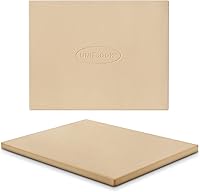
How Does a Pizza Stone Work?
A pizza stone stores intense heat and transfers it into the dough while its porous surface helps manage moisture. That combination can produce a firmer, crisper crust than a cool baking tray.
On this page (10 sections)
- How does a pizza stone work?
- Why do pizza stones need preheating?
- Does a pizza stone absorb moisture?
- Do pizza stones work in a home oven?
- What is the difference between a pizza stone and a pizza pan?
- How thick should a pizza stone be?
- Can a pizza stone go on a grill?
- How do you use a pizza stone correctly?
- How do you clean and care for a pizza stone?
- So, how does a pizza stone work for your kitchen?
A pizza stone works by storing heat, transferring it quickly to the dough, and helping excess moisture leave the crust. The result can be a firmer base with better browning than pizza baked on a cold metal tray.
The stone does not create the heat itself. Your oven or grill heats the stone first, then the stone acts as a steady baking surface when you launch the pizza onto it.
How does a pizza stone work?
A pizza stone works as a heat reservoir beneath the pizza. Its hot surface gives the dough a strong burst of heat from below while the oven cooks the top.
That matters because pizza dough contains water. As the dough heats, water turns to steam.
A porous stone can help draw some surface moisture away from the dough, while the stored heat helps the base set and brown.
The stone also reduces the effect of small temperature changes when you open the oven door. It won't keep the oven at one exact temperature, but its thermal mass can provide a steadier cooking surface than a thin pan.
A stone needs time to heat through. If you place it into a fully heated oven and immediately add pizza, the top may cook before the base receives enough heat.
Why do pizza stones need preheating?
Preheating gives the stone enough stored heat to cook the bottom of the dough. Put the stone in the oven while it is still cold, then heat both together.
A practical starting point is 30 to 60 minutes after the oven reaches its target temperature. Thicker stones can take longer to heat fully, while a thin stone may be ready sooner.
Keep the stone on a rack with room around it for airflow. Don't place a cold stone into a very hot oven unless its care instructions specifically allow that practice.
The gradual temperature change also helps reduce thermal shock. Avoid moving a hot stone onto a cold, wet counter, and let it cool naturally before cleaning or storing it.
Does a pizza stone absorb moisture?
A porous pizza stone can absorb some surface moisture from the dough, helping the crust dry and crisp. It does not pull all moisture from a pizza, and it cannot replace good dough handling.
Moisture control also depends on the dough, sauce, cheese, toppings, and baking time. A heavily loaded pizza may remain soft in the center even when the stone is properly heated.
Use a light layer of flour or another approved launching aid so the dough does not stick. Excess flour can burn, so use only what helps the pizza move from the peel to the stone.
A perforated peel can help excess flour fall away before launch. After cooking, ventilation beneath the pizza can help steam escape instead of softening the base.
Do pizza stones work in a home oven?
Pizza stones can work in a home oven when they fit the rack, receive enough preheating time, and stay within their heat limit. They are useful for fresh pizza, frozen pizza, bread, pastry, and similar baked foods.
Measure the oven rack and the clearance around the stone before buying. A rectangular stone can use more rack space than a round one, so check that the door closes without contact.
The Hans Grill Pizza Stone PRO XL is a rectangular cordierite stone measuring 14.9 x 11.8 x 0.6 in. It is designed for grill and oven use and is heat resistant up to 1112°F.
Its aluminium peel has a turned beechwood handle and perforations. Choose it if you want a launch tool included with the stone and expect to bake foods beyond pizza.
What is the difference between a pizza stone and a pizza pan?
A pizza pan supports the dough with a solid metal surface, while a pizza stone stores more heat and uses a porous baking surface. A pan is often easier to handle, but a stone is aimed at stronger heat transfer and moisture control.
A screen is another baking surface to compare in this pizza screen vs pizza stone guide.
A pan can suit thick crusts, shaped pizzas, or cooks who want to move the food in and out without a peel. A stone can suit thin crusts and pizzas where a firmer base is the main goal.
The choice also depends on your routine. For a broader look at shape, handling, and cooking style, compare pizza pan vs pizza stone.
If you want to understand pan sizes and materials before choosing, see this pizza pan buying guide. It covers cases where a pan may be more convenient than a baking stone.
How thick should a pizza stone be?
A thicker pizza stone usually stores more heat, but it also takes longer to heat and can be heavier to handle. A thinner stone may heat faster, though it may not hold as much heat when a cold pizza is added.
Thickness is only one part of the decision. The oven temperature, stone material, pizza size, and preheating time also affect the result.
The Unicook 15 x 12 Inch Rectangular Pizza is 0.6 in thick and weighs about 6.8 lb. Its cordierite construction is heat resistant up to 1450°F, and its maker describes the surface as suitable for pizza, bread, rolls, cookies, and more.
It includes a plastic dough scraper that can also remove residue after the stone cools. Choose it if you want a rectangular stone with a higher stated heat limit and a scraper rather than a peel.
Leave at least 1 to 2 in of clearance on all sides inside the oven or grill for fit and airflow. For a thicker option, compare these best thick pizza stones.
Can a pizza stone go on a grill?
Some pizza stones are made for both grills and ovens, but you still need to check fit, airflow, and the stone's heat limit. A grill can expose the stone to stronger local heat than a home oven.
Set the stone where it has stable support and enough room around it. Avoid sudden temperature changes, such as placing a hot stone on a cold surface or exposing it to water.
The Hans Grill Rectangular Pizza Stone with Peel measures about 15 x 12 x 0.59 in. It is a cordierite stone for oven baking and BBQ grilling, with a wooden peel included.
Choose this set if you want a stone and peel together for indoor or outdoor baking. The stone is heat resistant up to 1112°F and is also intended for bread, pastry, calzone, and frozen pizza.
A peel helps move uncooked dough onto the hot surface and remove the finished pizza. For a side-by-side look at metal heat transfer, read which is better, pizza stone or pizza steel.
How do you use a pizza stone correctly?
Heat the stone first, launch a lightly topped pizza onto it, and let the stone cool before cleaning. These steps protect the stone and give the crust the best chance to brown.
- Place the stone on a suitable oven rack while the oven is cold.
- Preheat the oven and stone together for about 30 to 60 minutes.
- Prepare the pizza on a peel or another surface that allows quick transfer.
- Use a light dusting of flour or another suitable launching aid.
- Slide the pizza onto the hot stone without dragging the dough.
- Bake until the crust is set and browned.
- Remove the pizza and let the stone cool completely.
Keep toppings moderate so moisture does not collect in the center. If the dough sticks to the peel, work faster and use enough launching aid to release it, but avoid covering the base in loose flour.
For a stone and launch tool sold together, compare these best pizza stone sets. For a pizza aimed at a thin, high-heat style, see the best pizza stone for Neapolitan pizza.
How do you clean and care for a pizza stone?
Let the stone cool fully, scrape away stuck food, and follow its hand-wash instructions without detergent unless the manufacturer allows it. Never cool a hot stone with cold water because the sudden change can cause cracking.
Cordierite stones may develop stains and dark marks during normal use. Discoloration does not automatically mean the stone has stopped working.
For the Unicook stone, use the included plastic scraper after cooling, then hand wash with warm water and a brush if needed. Do not use detergent.
For the Hans Grill stones, hand washing is the stated care method. Dry the stone completely before storing it, and keep it where it will not be knocked against hard surfaces.
So, how does a pizza stone work for your kitchen?
A pizza stone works best when you want a hot, steady baking surface and a drier, firmer pizza base. It helps most when you preheat it fully, avoid excess toppings, and handle it carefully through temperature changes.
Choose the Hans Grill Pizza Stone PRO XL if a perforated aluminium peel matters. Choose the Unicook 15 x 12 Inch Rectangular Pizza if you want a plastic scraper and a higher stated heat limit.
Choose the Hans Grill Rectangular Pizza Stone with Peel if you want a wooden peel for oven and BBQ use.
Measure your oven or grill first, then decide whether heat storage, moisture handling, or easier loading matters most. That decision will tell you whether a stone is a better fit than a pizza pan.
Frequently asked questions
How long should you preheat a pizza stone?
Preheat the pizza stone with the oven for about 30 to 60 minutes, depending on the stone's thickness and your oven. The goal is to heat the stone fully before the dough touches it.
Always follow the temperature limits and care instructions for your specific stone.
Does a pizza stone make pizza crispier?
Yes, a pizza stone can make pizza crispier by giving the dough a hot surface and helping manage excess moisture. It cannot fix every problem, though.
Wet dough, too many toppings, a cool stone, or a weak oven temperature can still leave the center soft.
Can you wash a pizza stone with soap?
Usually, no. Porous stones can absorb detergent and release unwanted smells during later heating.
Let the stone cool fully, scrape away residue, and use only the cleaning method allowed for that stone.
Never put a hot stone under cold water.