Why Is My Pizza Crust Bubbly?
A bubbly pizza crust usually means gas from fermentation collected in the dough, often because it was stretched unevenly or left undocked. Smaller bubbles are normal; large blisters can be reduced by adjusting proofing, shaping, and baking.
On this page (8 sections)
- Why is my pizza crust bubbly?
- Can fermentation make large crust bubbles?
- How does stretching affect bubbles in pizza crust?
- Should you dock pizza dough to stop bubbles?
- How can you prevent a bubbly pizza crust?
- Does oven heat change how bubbles form?
- Can baking surfaces help with blistering?
- When should you leave pizza crust bubbles alone?
A bubbly pizza crust usually forms when fermentation gas collects in a pocket and expands in the oven. Large blisters are more likely when dough is stretched unevenly, proofed for a long time, or baked without docking where the recipe calls for it.
Small bubbles are normal and can make the crust lighter. To prevent oversized ones, handle the dough gently, press visible air pockets toward the rim, and use a dough docker on the center only when suited to your crust.
Why is my pizza crust bubbly?
A bubbly crust usually reflects gas from yeast fermentation expanding during baking. The dough holds that gas until oven heat expands it quickly, especially where the dough is thin or folded around an air pocket.
A long or warm proof can leave more gas in the dough. This does not always cause a problem, but dough that is very puffy may need a gentle reshaping before it goes on the peel or pan.
Uneven stretching can trap gas in the middle. If the center stays thick while another spot is thin, heat and steam may inflate one area much faster than the rest.
Can fermentation make large crust bubbles?
Yes. Yeast activity creates carbon dioxide, and a longer or warmer rise can leave more gas for the oven to expand.
Use the recipe's timing and dough cues rather than relying on the clock alone. Dough that has doubled early in a warm room may need less time than dough resting in a cool kitchen.
If the dough barely rose, the cause may be different from excess fermentation. See why your pizza dough didn't rise for help with inactive yeast, cold conditions, or other proofing issues.
For a dough that resists stretching, check why pizza dough can feel tough. Tight dough can spring back and make it harder to spread air pockets evenly.
How does stretching affect bubbles in pizza crust?
Stretching affects bubbles because pressing and pulling dough moves its gas around. Push large pockets gently from the center toward the edge, where some open bubbles can help create a light rim.
Avoid using a rolling pin if you want a puffy cornicione, since it pushes out more of the gas that helps form an airy edge. If you prefer a thin, even crust, rolling or docking may fit the style better.
Lift and rotate the dough as you stretch. Work from the center outward while leaving the outer rim thicker, and avoid pinching the dough into folds that trap air.
Should you dock pizza dough to stop bubbles?
Docking can reduce large bubbles by making small holes that let steam escape. It is most useful for thin, even crusts, sheet-pan pizza, and recipes that specify a docker.
A dough docker is a hand tool with short spikes that puncture the surface. Roll it across the center in overlapping passes, then keep the rim undocked if you want it to puff.
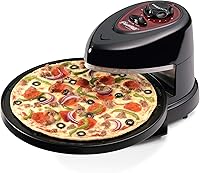
The Presto 03430 Pizzazz Plus Rotating Oven has a removable nonstick baking pan and a timer that shuts off the heating elements. It can bake homemade pizza, but dough preparation still determines whether bubbles form.
Don't dock every crust by default. A Neapolitan-style or other airy dough may depend on gas pockets for its texture, while a crisp thin crust benefits more from an even, flatter surface.
How can you prevent a bubbly pizza crust?
To prevent oversized bubbles, stretch evenly, remove large air pockets, and control proofing. These steps reduce trapped gas without flattening every small bubble.
- Let the dough relax until it stretches without snapping back.
- Press large pockets gently toward the rim before shaping.
- Avoid folds or pinches that trap air in the center.
- Follow the recipe's proofing temperature and timing.
- Dock the center if your crust style or recipe calls for it.
Use flour sparingly on the work surface. Too much can keep the dough from gripping the counter and make it harder to stretch evenly.
Does oven heat change how bubbles form?
Oven heat controls how quickly gas and steam expand, so a very hot bake can inflate weak spots fast. A strong, even bake still suits many pizza styles, but it cannot correct air trapped during shaping.
Make sure the oven or baking surface is fully heated according to its instructions. If a stone seems to slow a gas oven, see why a Frigidaire oven may lose heat with a pizza stone.
If the crust blisters in one spot every time, check whether the dough is thinner there or whether a hot spot is affecting the bake.
If the crust also stays pale, read why your pizza crust stays pale. That guide covers heat and browning, which are separate from how gas pockets form.
The Wood-Fired Oven Cookbook by Holly & David Jones covers pizza alongside breads and other dishes for outdoor ovens. Its guidance on controlling cooking heat may help you plan a more consistent bake.
The book was published by Lorenz Books and has 128 pages with more than 400 photographs, according to its title. It is a reference for readers cooking in a wood-fired oven, not a tool for correcting dough that was overproofed or stretched unevenly.
Can baking surfaces help with blistering?
A baking surface affects how heat reaches the bottom of the dough, but it does not prevent fermentation bubbles by itself. Choose a surface that fits your oven and follow its installation and heating instructions.
Rutland Fire Bricks are fireclay bricks sized 9 x 4.5 x 1.25 inches and sold in a 6-pack. They are heat-rated to 2700°F (1480°C), according to Rutland, for residential use.
Measure the oven and confirm the brick type is appropriate for your design before buying. Bricks affect heat retention and transfer, while shaping and proofing remain the main controls for dough bubbles.
If toppings brown before the crust is ready, see why pizza toppings burn before the crust. Adjusting topping load and bake setup can help with that different issue.
When should you leave pizza crust bubbles alone?
Leave small, even bubbles alone when you want a light, airy crust. A few blisters are part of many pizza styles and do not mean the dough has failed.
Press down a large bubble before baking if you want a flatter result. If one inflates during baking, release steam carefully with a utensil and avoid touching the hot surface.
Choose the fix that matches your goal: use gentle handling and an undocked rim for an airy crust, or dock the center and stretch evenly for a flatter, more uniform base.
Frequently asked questions
Why does my pizza crust get big bubbles?
Large crust bubbles form when gas gathers in one spot as dough ferments and bakes. Uneven stretching, trapped air, or a long proof can leave a thin area that puffs up quickly in the oven.
Press large air pockets toward the edge before adding toppings, and dock the center if your recipe or pan calls for it.
Should I pop bubbles in pizza dough before baking?
You can gently press or pop a large bubble before it goes into the oven, then smooth the dough without tearing it. If a blister forms during baking, use a utensil to release steam only when it is safe to reach the pizza.
Small bubbles are usually harmless and can be left alone.
Does cold fermented dough make a bubbly crust?
Cold fermentation can contribute to bubbles because yeast continues producing gas slowly while dough rests. It does not guarantee an overly blistered crust; dough strength, fermentation time, temperature, and shaping all matter.
Bring dough to a workable temperature and press out large trapped pockets as you stretch it.
Does docking stop pizza crust bubbles?
Docking makes small holes in the dough so steam can escape, which can limit large bubbles in the center. It is useful for some thin crusts and prepared dough, but it can reduce the airy texture of a puffy rim.
Follow the recipe or pan directions and avoid docking the outer edge.