6 Best Glass Dough Proofing Containers (November 2026)
The best glass dough proofing containers include the Cambro Food Storage Containers with Lids for commercial-style bulk dough, the Brod & Taylor Proofing Container for proofer and fridge stacking, and the GENICOOK Sourdough Starter jar & Dough Proofing (best true glass set for starter and dough).
On this page (10 sections)
- Our top glass dough proofing container picks compared
- Best glass dough proofing container: side-by-side comparison
- How we compared these dough proofing containers
- What size glass dough proofing container do you need?
- Glass, plastic or metal: which material is best for proofing?
- What shape works best for dough proofing?
- How do volume markings and lids help proofing?
- How do you set up and care for a dough proofing container?
- Which dough proofing container should you buy?
- Verdict: best glass dough proofing container for your kitchen
The best glass dough proofing container for most bakers is the GENICOOK set, because it pairs a 24oz starter jar with a 71oz borosilicate bowl you can watch through the walls. If your main job is bulk pizza dough, a big translucent tray will serve you better than a small glass bowl.
Glass proofing vessels solve one problem well. You can see bubbles, rise and folds without lifting a lid and losing humidity.
That view matters for sourdough starter, high-hydration dough and pizza dough you want to catch at the right moment.
Start with our dough proofing container buying guide if you are new to this category. It explains capacity, shape and fridge fit in plain terms before you compare individual picks.
Our picks at a glance
-
1
 Best for commercial-style bulk dough
Cambro Food Storage Containers with Lids
9.7/10 our score
See it on Amazon -
2
 Best for proofer and fridge stacking
Brod & Taylor Proofing Container
9.6/10 our score
See it on Amazon -
3
 Best true glass set for starter and dough
GENICOOK Sourdough Starter jar & Dough Proofing
9.4/10 our score
See it on Amazon
- 4
 Check it
Ziliny 2 Pcs 2 Qt Dough Proofing
Best for small two-container batches - 5
 Check it
Ziliny 1 Pcs 4 Qt Clear Square
Best square fridge saver - 6
 Check it
Sourdbred Dough Proofing Container
Best for six dough balls at once
Our top glass dough proofing container picks compared
The GENICOOK set is the top true glass choice here. The other picks are translucent plastic, and they win on size, shape and stacking for bulk dough.
Our score weighs specs, features and buyer feedback against what you are shopping for. Glass clarity, sealed lids, usable capacity and a shape that fits your fridge all count.
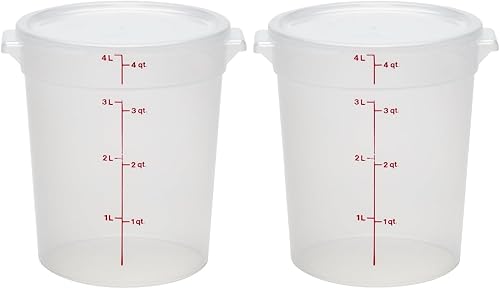
Cambro Food Storage Containers with Lids: Best for commercial-style bulk dough
- 4 quart capacity, 2 pack
- Round translucent plastic, BPA-free
- 8 in diameter x 9 in tall
- Stackable with lids, refrigerator safe
Two tall round 4-quart containers for large batches, brining and proofing, with translucent walls for checking rise.
Pros
- Two containers in a pack
- Tall shape suits bulk dough
- Stackable for fridge storage
Cons
- Plastic, not glass
- Round shape uses more fridge space than square
Cambro suits bakers who proof large batches and store other foods in the same vessel. Each container holds 4 quarts and measures 8 inches across by 9 inches tall, so the tall round shape gives dough room to rise.
The translucent walls let you check rise without opening the lid. Cambro says the BPA-free plastic resists cracking and breaking, and the matching lids help keep food fresh for longer.
Stacking matters in a busy fridge. These containers stack, and the 2-pack format gives you one tub for dough and one spare for brining, meal prep or dry goods.
The trade-off is material and shape. This is plastic, not glass, and a tall round tub uses more shelf space than a square container of equal volume.
Buy it for bulk dough and versatile kitchen storage. Skip it if you want true glass or a low rectangular tray for folds.
Brod & Taylor Proofing Container: Best for proofer and fridge stacking
- 6L capacity, 2 pack
- Fits up to 3000g of dough
- Translucent walls with volume markings
- 12.8 x 10.5 x 4 inches, dishwasher safe
Two low rectangular trays sized for stretch and coil folds, with volume markings to track rise through translucent walls.
Pros
- Low wide shape for folds
- Volume markings on walls
- Stacks in fridge and proofer
Cons
- Polypropylene, not glass
- One pack only, check quantity before ordering
Brod & Taylor suits bakers who stretch, fold and coil dough inside the same box. Each tray holds 6 liters and up to 3000 grams of dough, and the wide base makes folds easier than in a deep round bowl.
Translucent walls with volume markings show rise without opening the lid. The snap lid seals in moisture, which helps prevent a dry skin on the surface during proofing.
The low profile is the main practical benefit. Two containers stack in a fridge or proofer, with or without lids, and the 12.8 x 10.5 x 4 inch size fits flat shelves well.
Brod & Taylor says the BPA-free polypropylene resists stains and odors, and dough releases smoothly. It is dishwasher safe and freezer friendly.
The trade-off is that this is polypropylene, not glass, and it comes as a 2-pack. Confirm the count fits your batch size before you order.
Buy it for folds, fridge stacking and proofer use. Skip it if true glass is your priority.
GENICOOK Sourdough Starter jar & Dough Proofing: Best true glass set for starter and dough
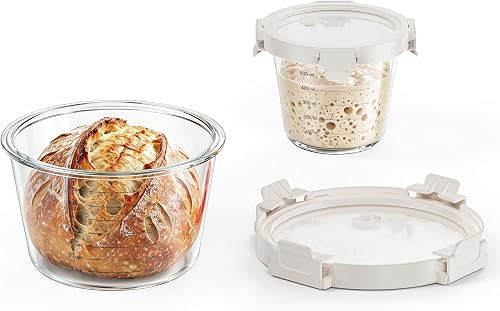
- Borosilicate glass, 24oz and 71oz
- Airtight lids with silicone seal
- Wide mouth measuring bowls
- Microwave and oven safe, lid removed
The only true glass set here, with a small jar for starter feeding and a larger bowl for mixing, proofing and watching bubbles.
Pros
- Real borosilicate glass
- Two sizes for starter and dough
- Clear for watching fermentation
Cons
- 71oz is smaller than bulk trays
- Glass needs more care than plastic
GENICOOK suits sourdough bakers who want one true glass set for starter and dough. The set includes a 24oz container for starter feeding and a 71oz container for mixing and proofing.
Borosilicate glass handles temperature changes better than standard glass. GENICOOK says it is safe for microwave, oven with lid removed, refrigerator and dishwasher use.
Clear measuring marks help you measure ingredients, and the wide mouth makes feeding starter, stirring and cleaning easier. Airtight lids with silicone seals help maintain freshness and reduce spills.
Watching fermentation is the clear win here. You can see bubbles, starter activity and dough rise in real time through crystal-clear walls.
The trade-off is capacity. The 71oz bowl is smaller than the 4 to 6 quart trays for bulk pizza dough.
Glass also needs more care than plastic.
Buy it for starter work and small to medium dough batches. Skip it if you routinely proof 6 lb or more of dough at once.
Ziliny 2 Pcs 2 Qt Dough Proofing: Best for small two-container batches
- 2 quarts each, 2 pack
- Clear polycarbonate with graduations
- Round, stackable, airtight snap lid
- 9.84 x 8.27 x 6.69 inches
Two clear round 2-quart containers with scales and handles for smaller dough batches and easy fridge stacking.
Pros
- Two pack for parallel batches
- Graduations and handles
- Clear walls for checking contents
Cons
- Polycarbonate, not glass
- Not oven safe
Ziliny suits bakers who like two matching containers for parallel batches. Each round tub holds 2 quarts, and the pack includes 2 containers with snap lids.
Clear polycarbonate walls with graduations let you identify contents and track amounts without opening the lid. Handles make lifting a full tub easier.
The airtight lid helps with fermenting dough, marinating and everyday storage. The round containers stack to save space in a fridge or pantry.
Ziliny says the polycarbonate is sturdy and less likely to break or crack in daily use. Care guidance is hand wash recommended, with top-rack dishwasher use with caution, and it is not oven safe.
The trade-off is that this is polycarbonate, not glass, and 2 quarts per tub is modest for large pizza dough batches.
Buy it for small batches and two-tub flexibility. Skip it if you need oven use or a single large tray.
Ziliny 1 Pcs 4 Qt Clear Square: Best square fridge saver
- 4 quarts, 1 piece
- Clear square polycarbonate with scale
- Airtight snap lid
- 8.27 x 7.87 x 7.48 inches, stackable
One square 4-quart container that uses fridge shelf space more tightly than a round tub of the same volume.
Pros
- Square shape saves shelf space
- Scale and handle
- Airtight lid for overnight proofing
Cons
- Single container only
- Hand wash only
Ziliny suits bakers who want a square container that fits fridge shelves tightly. This single piece holds 4 quarts and measures 8.27 x 7.87 x 7.48 inches.
Clear walls with a scale and handle let you check contents and amounts without opening the lid. The fitted snap lid creates an airtight seal for overnight dough storage.
The square shape is the practical edge over a round tub. It maximizes shelf space and stacks with other containers, which helps in a crowded refrigerator.
Ziliny says the durable polycarbonate resists breakage and is freezer safe. Care is hand wash only, so plan for that if you prefer dishwasher-safe containers.
The trade-off is quantity and material. You get one container, in polycarbonate rather than glass.
Bulk bakers may want a 2-pack instead.
Buy it for fridge efficiency and overnight proofing. Skip it if you want glass or multiple tubs in one pack.
Sourdbred Dough Proofing Container: Best for six dough balls at once
- 5Qt, 1 pack
- Holds up to 6.6 lb of dough
- Fits up to 6 dough balls
- 12.6 x 10.3 x 4 inches, translucent polypropylene
One wide 5-quart tray that holds up to 6.6 lb of dough or six balls, with markings to track rise without opening the lid.
Pros
- Holds six dough balls
- Wide base for folds
- Volume markings for rise tracking
Cons
- Single pack only
- Polypropylene, not glass
Sourdbred suits pizza bakers who ball dough in the proofing tray. This 1-pack tray holds 5 quarts, up to 6.6 lb of dough, or up to 6 dough balls.
The wide rectangular base makes stretch and coil folds easy inside the container. Translucent walls with volume markings let you track rise without opening the lid.
The lid seals in moisture to keep dough soft and protect it from air drying. Sourdbred says the BPA-free polypropylene resists stains, odors and sticky residue, and dough releases smoothly.
Stacking helps in the fridge. The tray stacks with or without the lid, and the 12.6 x 10.3 x 4 inch footprint fits flat shelves.
The trade-off is that this is polypropylene, not glass, and it is a single pack. Confirm one tray matches your batch size before ordering.
Buy it for six-ball pizza dough batches. Skip it if true glass or a 2-pack matters more.
Best glass dough proofing container: side-by-side comparison
A comparison table helps you see capacity, shape and material at a glance. Use it to narrow the list to two or three picks before you check fridge dimensions.
| Product | Best for | Capacity | Shape | Size | Our score |
|---|---|---|---|---|---|
| Cambro Food Storage Containers with Lids | commercial-style bulk dough | 4 quarts | Round | 8 inches diameter x 9 inches tall - 2 Pack | 9.7 |
| Brod & Taylor Proofing Container | proofer and fridge stacking | 6 liters | Rectangular | 12.8 x 10.5 x 4 inches | 9.6 |
| GENICOOK Sourdough Starter jar & Dough Proofing | true glass set for starter and dough | 24oz and 71oz | 9.4 | ||
| Ziliny 2 Pcs 2 Qt Dough Proofing | small two-container batches | 2 quarts | Round | 9.84 x 8.27 x 6.69 inches | 9.2 |
| Ziliny 1 Pcs 4 Qt Clear Square | square fridge saver | 4 quarts | Square | 8.27 x 7.87 x 7.48 inches | 8.9 |
| Sourdbred Dough Proofing Container | six dough balls at once | 5 quarts | Rectangular | 12.6 x 10.3 x 4 inches | 8.6 |
How we compared these dough proofing containers
We compared the specs, features and buyer feedback for each pick against one job. That job is proofing dough with a clear view, sealed humidity and a shape that fits daily fridge use.
We checked capacity in quarts, liters and ounces, then translated it into dough weight where the maker gave one. A 6 liter tray that holds up to 3000 grams tells you more than volume alone.
We checked shape next. Round tubs suit small batches and stirring.
Low rectangular trays suit stretch and coil folds and six-ball batches. Square tubs save shelf space.
We checked material honestly. Only the GENICOOK set is borosilicate glass.
The Cambro, Brod & Taylor, Ziliny and Sourdbred picks are translucent plastic, and they are included because many bakers search for glass but buy for size and stacking.
We also checked lids, markings and care. Airtight lids, volume markings, dishwasher safety and stackability change daily use more than a brand name.
What size glass dough proofing container do you need?
Start with dough weight, not container volume. A container that holds 4 quarts may still be tight once dough rises and you need headroom.
For starter feeding and small batches, the GENICOOK 24oz and 71oz set covers most needs. The 24oz jar suits feeding, yeast activation and small prep.
The 71oz bowl suits mixing and proofing a modest batch.
For bulk pizza dough, look at the trays. Brod & Taylor holds up to 3000 grams.
Sourdbred holds up to 6.6 lb or six balls. Cambro holds 4 quarts per tub in a 2-pack.
Small batches and starter work
Choose a 24oz to 71oz glass set for sourdough starter and small dough. You get a clear view of bubbles and activity, and the wide mouth makes feeding easier.
Bulk pizza dough
Choose a 4 to 6 quart tray for several balls. A low rectangular tray gives you room to ball dough and fold without crowding.
Glass, plastic or metal: which material is best for proofing?
Glass is best for clarity and temperature change, plastic is best for light stacking, and metal is best for durability. Your material choice should match your batch size and fridge.
Glass lets you watch fermentation in real time. Borosilicate glass also tolerates microwave and oven use with the lid removed, as GENICOOK specifies.
It is heavier and needs more care.
Translucent plastic is lighter and often stackable. Brod & Taylor, Sourdbred, Cambro and Ziliny all use plastic, and several offer volume markings or graduated scales to track rise.
When plastic is the better buy
Choose plastic for large rectangular trays, six-ball batches and proofer stacking. The weight saving matters when a tub is full of dough.
When to look at metal instead
If you want a best metal pizza dough container, compare lids, weight and fridge fit. Metal suits bakers who value durability over a clear view of rise.
What shape works best for dough proofing?
Low and rectangular is best for folds and balling, round is best for small batches, and square is best for fridge space. Shape changes how you work the dough inside the tub.
A wide base makes stretch and coil folds easy. Brod & Taylor and Sourdbred both use that low rectangular shape for this reason.
You can fold dough without lifting it into a bowl.
Round tubs work well for stirring, starter feeding and smaller batches. Cambro and the Ziliny 2-quart pair use round shapes that stack and store cleanly.
Square tubs save shelf space. The Ziliny 4-quart square container fits a fridge shelf more tightly than a round tub of the same volume.
Round containers
Choose round for starter jars, small batches and versatile storage. Check the diameter against your shelf depth.
Rectangular trays
Choose rectangular for pizza dough, six-ball batches and folds. Check the footprint against your fridge and proofer.
Square containers
Choose square for tight fridge shelves. Measure the shelf before you order a 4-quart square tub.
How do volume markings and lids help proofing?
Markings help you track rise without opening the lid, and a sealed lid helps you hold humidity. Both reduce the swings that can dry the dough surface.
Brod & Taylor and Sourdbred use translucent walls with volume markings. Ziliny uses graduations and a scale.
GENICOOK uses clear measuring marks on glass.
A snap or airtight lid seals in moisture. Brod & Taylor says this helps prevent dry skin.
GENICOOK says the silicone-sealed lids help maintain freshness and reduce spills.
Open the lid only when you need to fold, check or ball the dough. Otherwise, let the markings do the work.
What to check on a lid
Check closure type, seal and whether the lid is dishwasher safe. A lid that does not seal well will not hold humidity for overnight proofing.
Why markings matter for sourdough
Sourdough timing decides flavor and texture. Markings let you catch the rise at the right moment without repeated opening.
How do you set up and care for a dough proofing container?
Lightly oil or flour the walls, add dough, seal the lid and track rise through the markings. Keep the container in the fridge or a warm spot that matches your recipe.
For glass, the wide mouth and clear walls make cleaning easier. GENICOOK says its borosilicate glass is dishwasher safe, and oven safe with the lid removed.
For plastic trays, check care guidance before washing. Brod & Taylor is dishwasher safe and freezer friendly.
The Ziliny square container is hand wash only. The Ziliny round pair is hand wash recommended.
Do not use a lid in the oven unless the maker confirms it is safe. GENICOOK specifies oven use with the lid removed.
If you are learning dough basics, read How to Make Pizza Dough for a Pizza Oven? and What Do You Need to Make Pizza Dough for a Pizza Oven?. Those guides pair well with a proofing container choice.
Which dough proofing container should you buy?
Buy the GENICOOK set for true glass, the Brod & Taylor trays for folds and proofer stacking, and the Sourdbred tray for six balls. Match the pick to your batch size first.
If you want the broader category view, compare our best pizza dough proofing container roundup. That guide covers more shapes and materials for pizza bakers.
If you prefer baskets for shaping, see our best dough proofing basket guide. Baskets suit final shaping, while these containers suit bulk fermentation and fridge storage.
Measure your fridge shelf before you order. A low rectangular tray and a tall round tub can both hold 4 quarts, but they fit very different shelves.
Source content: product titles, bullets and specs for Cambro B0CZ552H67, Brod & Taylor B0GH3C2H31, GENICOOK B0GTYJ9HHZ, Ziliny B0F3DDZNQL, Ziliny B0G2XNMYKW and Sourdbred B0GBXG3FTZ, as supplied for this post.
Verdict: best glass dough proofing container for your kitchen
The best glass dough proofing container overall is the GENICOOK set, because it is the only true borosilicate glass option here and it covers starter feeding through proofing. Choose a larger translucent tray if bulk pizza dough is your main job.
Pick Cambro for a 2-pack of tall round tubs. Pick Brod & Taylor for low trays with volume markings.
Pick Sourdbred for a single tray that holds six balls. Pick Ziliny for small 2-quart pairs or a square 4-quart fridge saver.
Next, measure your shelf and check the dough weight you proof most often. That pair of facts will point to the right size faster than any feature list.
Our top 3 picks at a glance
-
1
Best for commercial-style bulk dough
Cambro Food Storage Containers with Lids
9.7/10 our score
See it on Amazon -
2
Best for proofer and fridge stacking
Brod & Taylor Proofing Container
9.6/10 our score
See it on Amazon -
3
Best true glass set for starter and dough
GENICOOK Sourdough Starter jar & Dough Proofing
9.4/10 our score
See it on Amazon
Frequently asked questions
Is glass better than plastic for dough proofing?
Glass is better when you want a clear, heavy, stain-resistant vessel that tolerates temperature change. Plastic is lighter and often stackable, and many bakers prefer it for large rectangular trays.
Choose by shape, size and fridge fit as much as by material.
What size glass dough proofing container do I need?
A 71oz glass bowl suits small batches and starter work. Bulk pizza dough for several balls usually needs a 4 to 6 quart tray.
Check the dough weight, not just volume, and leave headroom for rise.
Can I proof dough in a glass container in the fridge?
Yes, many glass containers are refrigerator safe. GENICOOK says its borosilicate glass is safe for refrigerator use.
Confirm the lid seal and check that the container fits your shelf with the lid on.
Do I need volume markings on a proofing container?
Markings help you track rise without opening the lid. That reduces temperature and humidity swings during proofing.
They are useful for sourdough and pizza dough, where timing decides texture.
Can glass dough containers go in the oven?
Some borosilicate glass is oven safe with the lid removed. GENICOOK specifies oven use with the lid removed.
Never put a sealed lid in the oven unless the maker confirms it is safe.


