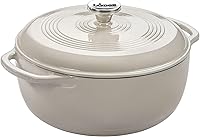
How to Choose a Pumpkin Cast Iron Dutch Oven
A pumpkin cast iron dutch oven is worth choosing when you want a heavy, lidded pot that browns, bakes and serves in one piece: pick usable capacity for your largest recipe, check that the lid seats flat, and accept that the ribbed pumpkin shape uses more shelf space than a round pot.
On this page (13 sections)
- How does usable capacity work in a pumpkin cast iron dutch oven?
- Why does lid fit matter more on a shaped pot?
- How do decorative ribs and a stem handle affect daily use?
- Which heat sources should you check before you choose one?
- How does cast iron compare with enamel for a pumpkin pot?
- When should you use a skillet or griddle instead of a pumpkin pot?
- How do you size a pumpkin pot for baking and roasting?
- How should you clean and store a ribbed pumpkin pot?
- How do you care for cast iron so the finish lasts?
- When does a set make sense instead of one pumpkin pot?
- Can you put a cast iron pumpkin dutch oven in a pizza oven?
- How should you decide between a pumpkin pot and a plain round pot?
- Which cast iron pumpkin dutch oven should you buy first?
A cast iron pumpkin dutch oven works best when you buy it for lidded cooking and serving, not for looks alone. The ribbed shape is the point of the pot, but capacity, lid fit and storage space decide whether you use it often.
Start with your largest recipe. A pot that is too small forces you to split a braise or soup, and a pot that is too large can feel heavy and store poorly.
If you are also weighing a plain round pot, read our cast iron dutch oven vs enamel dutch oven guide before you decide.
How does usable capacity work in a pumpkin cast iron dutch oven?
Usable capacity is the volume you can actually fill while the lid still closes. A maker may quote total pot volume, and that number can be higher than the space you should use for soup or a braise.
You need headroom for steam, bubbles and ingredients that rise during cooking. For baking, you also need room for dough expansion.
A pot filled to the rim may boil over or bake unevenly.
Use your largest regular recipe as the test. If you make a whole chicken, a family soup or a loaf with a large rise, size the pot for that dish first.
Measure the inside width as well as the volume. A pumpkin pot can have a wide ribbed body, but the opening at the top may be narrower.
That matters for a whole chicken, a round loaf or a stirring spoon.
Rule: choose capacity for your largest recipe, then leave headroom for steam and rise.
Why does lid fit matter more on a shaped pot?
Lid fit matters because a lidded pot only works when the lid seats flat and holds heat and moisture. A small gap can change a braise, and a loose lid can let steam escape.
Pumpkin pots have a stem handle and a ribbed rim, so check the lid from more than one angle. Set the lid on the empty pot and look for rocking.
Turn the lid a quarter turn and check again.
Check the knob and stem clearance too. A tall stem can hit an oven rack above it, and a lid handle can be hard to grip with oven mitts.
You should be able to lift the lid straight up without scraping the rim.
For baking, a tight lid helps trap steam at the start. For braising, a steady lid keeps liquid from reducing too fast.
Rule: buy only when the lid sits flat, lifts cleanly and clears your oven rack.
How do decorative ribs and a stem handle affect daily use?
The pumpkin shape adds character at the table and storage cost in the kitchen. Those tradeoffs are real, and you should decide if you want them before you buy.
The ribs make the pot wider than a smooth pot of similar volume. That can be good for serving, because the shape reads as a pumpkin on the table.
It can also make the pot harder to fit in a cabinet or a crowded oven beside another pan.
The stem handle adds height. It gives you a clear grip point, but it also raises total height when the lid is on.
Measure from rack to the top of the oven before you commit.
Cleaning takes more care around the ribs. Food can settle in the grooves, so you may need a brush or a soak.
What is a pumpkin cast iron dutch oven for at the table?
At the table, the shape does the work for you. A soup or roasted vegetables can go from oven to table in the same pot.
You save a serving bowl, and the pot keeps heat while people eat.
If you rarely serve from the cookware, a plain round pot may fit your habits better. If you host often, the pumpkin shape can earn its space.
Rule: keep the shape if you will serve from it often, and skip it if storage space is tight.
Which heat sources should you check before you choose one?
Check your heat source first because cast iron needs a flat, stable base to heat evenly. A pot that wobbles or sits too small on a burner will frustrate you.
For gas and electric coil stovetops, check that the base sits flat and covers the burner well. For smooth top electric and induction, the base should be flat and close in size to the element.
For oven use, check height with the lid on and the handle position. A pumpkin pot with a stem may need a lower rack than you expect.
For grills and campfires, weight and handle design matter more. A heavy pot is stable, but you need a safe way to move it.
Our best cast iron dutch oven pot roundup gives you a plain pot comparison if you decide the pumpkin shape is not right.
Rule: match the pot base and total height to your actual burner and oven before you buy.
How does cast iron compare with enamel for a pumpkin pot?
Cast iron suits high heat, browning and long service, while enamel suits easier cleanup and acid heavy dishes. That split helps you decide what matters most.
Plain cast iron can develop a seasoned surface that improves with use. Lodge says its pre-seasoned cookware is made with iron and oil and is PFAS-free.
That finish can work well for browning, roasting and baking, and it avoids a glass coating that can chip.
Enamel can be easier to clean after tomato sauce, wine or citrus. It also gives you a visible color and a smooth surface.
The tradeoff is that enamel is a coating, so hard knocks and metal utensils can damage it.
A pumpkin shape in cast iron often has a more rustic finish. If you want the shape with a smoother, brighter interior, enamel may be the better match.
Rule: choose plain cast iron for browning and durability, and choose enamel for easier cleanup with acidic foods.
When should you use a skillet or griddle instead of a pumpkin pot?
A pumpkin pot is not the only cast iron shape you need. A skillet or griddle can handle flat, fast cooking that a deep lidded pot cannot do well.
A deep pot traps steam and holds liquid. A skillet gives you wide, open space for frying and searing.
A griddle gives you a flat surface for pancakes, tortillas and vegetables.
If your pumpkin pot will be your only cast iron piece, it can cover braises, soups and roasts. It will not replace a skillet for eggs or a griddle for pancakes.
The skillet is 10.25 in and pre-seasoned, with a teardrop handle for grip. Lodge says it is oven safe and stovetop compatible, and the pan works for frying, roasting and sauteing.
Rule: add an open skillet or griddle only when you need flat, fast cooking that a lidded pot cannot do.
How do you size a pumpkin pot for baking and roasting?
For baking and roasting, inside width and depth matter as much as volume. A loaf, a chicken or a pot roast needs room in every direction, not just a large total number.
For bread, measure your usual loaf size. The pot should leave space around the dough for heat to circulate.
If the dough touches the sides early, the crust can set in an odd shape.
For roasting, depth helps keep juices in the pot. A whole chicken needs width for the body and height for the lid.
A pot roast needs length more than height, so a rounder pot may fit better.
For vegetables, a wide pot helps you spread pieces out. Crowded vegetables steam more than they roast.
Our best cast iron dutch oven large picks are a useful check if your largest recipe keeps outgrowing a smaller pot.
Rule: measure your largest loaf, roast or chicken against the inside width and depth, not just the volume.
How should you test a pumpkin cast iron dutch oven for roasting?
Test roasting fit by picturing the food with the lid on. You need space for the food, the lid and the steam cycle.
A chicken that touches the lid will brown in spots and stay pale in others.
Put a trivet in your mind as part of the plan. If you use one, the food sits higher and needs more headroom.
If you cook directly in the pot, the food sits lower and browns more on the bottom.
Leave room for basting without lifting the lid for long. Every lift drops the temperature.
Rule: leave clear space above the food so the lid closes without pressing on it.
How should you clean and store a ribbed pumpkin pot?
Cleaning starts with warm water, a brush and prompt drying. The ribs can hold food, so do not let a braise sit for hours before you wash it.
After cooking, let the pot cool before you add water. A soak in warm water can loosen residue.
Use a brush to reach the grooves, and dry the pot on the stove or with a towel. Cast iron should not sit wet, because moisture can cause rust.
For seasoning care, cook with fats when you can and avoid long soaks. Lodge says its pre-seasoned finish improves with use.
You do not need a complex routine, but you do need to dry the pot fully.
For storage, measure the shelf before you put the pot away. Store it where you can lift it with both hands.
Our best cast iron dutch oven accessories roundup points you to brushes, trivets and mitts that suit heavy lidded pots.
Rule: dry the pot fully after washing and store it where the ribs and stem fit without forcing it.
How do you care for cast iron so the finish lasts?
Care for cast iron by using it often, drying it well and avoiding harsh shocks. The finish you get at the start is only the start, and normal use helps build a cooking surface.
Cooking is part of care. Frying, roasting and baking help maintain the seasoned surface.
Acid heavy dishes are fine in moderation, but long, wet storage of tomato sauce in plain cast iron can wear the finish.
Avoid sudden temperature shocks. Do not put a very hot pot under cold water.
Let it cool on the stove or in the oven.
Store the pot dry, with the lid resting so air can reach the surface. If you stack pans, use a paper towel or cloth between them.
The griddle is 10.5 in, round and pre-seasoned, with even heat across the surface. Lodge says it works on stovetops, ovens, grills and camp stoves.
Rule: keep cast iron dry, avoid cold water on a hot pot and use it for regular cooking to maintain the finish.
When does a set make sense instead of one pumpkin pot?
A set makes sense when you want matched shapes for different jobs and you have storage for all of them. One pumpkin pot can cover many lidded dishes, but it cannot cover every flat cooking task.
If you already own a skillet, a single pumpkin pot may be enough. You can braise, bake and serve in it, and use the skillet for eggs and searing.
If you own no cast iron, a set can give you a pot, a skillet and a griddle in one order. The tradeoff is cabinet space and weight.
Three heavy pieces take more room than one pot.
Our best cast iron dutch oven set roundup helps you compare sets by shape and size.
The pizza pan is 14 in, pre-seasoned and oven ready, with dual handles for lifting and serving. Lodge says it is for oven baking and grill use, and the flat surface suits homemade pizzas and flatbreads.
Rule: buy a set only when you will use each shape often and have clear storage for the full collection.
Can you put a cast iron pumpkin dutch oven in a pizza oven?
You can use cast iron in many ovens, but you should check heat limits, base fit and handle clearance first. A pizza oven runs hotter and tighter than a home oven.
A pumpkin pot with a tall stem may not fit under the roof of a pizza oven. Measure the opening and the interior height with the lid on.
You also need room to lift the lid.
Cast iron holds heat well, which is good for baking, but it can overshoot if you leave it in a very hot space for too long. Shorter checks help you learn how your oven runs.
If you use wood as fuel, our How to Choose Wood for a Pizza Oven? guide covers fuel choices and heat control. It is a helpful read if you plan to use the pot in that setting often.
Our What Do You Need to Choose Wood for a Pizza Oven? guide also breaks down the gear and fuel questions in plain terms.
Rule: use a pumpkin pot in a pizza oven only when height, clearance and heat limits all fit with room to spare.
How should you decide between a pumpkin pot and a plain round pot?
Choose a pumpkin cast iron dutch oven when the shape will serve food often and you have room for the wider body. Choose a plain round pot when storage, oven clearance or daily washing matter more than the seasonal look.
A pumpkin pot earns its place at the table. It can turn a soup or roast into a seasonal centerpiece without extra dishes.
That value is real if you host or cook holiday meals.
A plain round pot is often easier to store, stack and fit in an oven. It may also give you more usable volume for the same outside width.
If your cabinets are tight, that difference can decide the purchase.
Look at your kitchen honestly. Measure the shelf, the oven rack and the burner.
Then picture the pot in each place.
Rule: pick the pumpkin shape for serving and seasonal use, and pick a round pot for tight storage and daily ease.
Which cast iron pumpkin dutch oven should you buy first?
Buy the pumpkin cast iron dutch oven that fits your largest recipe, seats its lid flat and fits your shelf and oven. That order of checks protects you from buying a pot for looks alone.
Start with capacity and inside width. Then check lid fit and total height with the stem.
Then confirm your burner size and storage space. If any of those checks fail, the shape is not right for your kitchen.
If the checks pass, the pumpkin pot can do real work. It can braise, bake, roast and serve, and it can hold heat while food reaches the table.
Our cast iron skillet guide is a good next read if you want to add an open pan after you choose the pot.
Final rule: choose the pumpkin pot that fits your recipes, your oven and your storage, and add open cast iron shapes later only for jobs you do often.
Frequently asked questions
What is a pumpkin cast iron dutch oven used for?
A pumpkin cast iron dutch oven is a lidded cast iron pot with a ribbed, pumpkin like shape. You can use it for braises, soups, roasts, bread and serving, as long as the usable capacity fits the recipe and the lid fits your heat source.
How do you check lid fit on a cast iron pumpkin dutch oven?
Set the lid on the pot with no food inside and look for rocking, gaps or uneven contact. A lid that seats flat helps hold steam and heat, while visible gaps can let moisture escape during long braises and baking.
Is a pumpkin shape harder to store than a round dutch oven?
Yes, the wide ribs and stem handle often make the pot wider than a round dutch oven of similar capacity. Measure shelf depth, oven clearance and storage space before you buy so the shape does not create a daily hassle.
Can you use a cast iron dutch oven on induction?
Cast iron generally works on induction because the base is magnetic, but you should confirm the flatness and diameter of the specific pot base for your cooktop. A pot that is too small for the burner zone may heat unevenly.
What should you check before buying a pumpkin cast iron dutch oven?
Check usable capacity, outside width, lid fit, handle clearance, heat source compatibility and care needs. Our score weighs specs, features and buyer feedback against what you're shopping for.