How to Choose a Cast Iron Pizza Pan Size
Choose a 12 inch cast iron pizza pan for most home ovens and 1 to 2 people, and a 14 inch pan when your oven fits it and you cook for more people. The number is the pan size, not the dough size, so check the usable cooking diameter and the outside dimensions with handles before you order.
On this page (12 sections)
- What does 12 inch mean on a cast iron pizza pan?
- What does 14 inch mean on a cast iron pizza pan?
- How do you measure your oven before you buy?
- How does pan size change servings and dough?
- Round, rectangular or skillet shape: which size fits?
- How thick should the pan be for even heat?
- Which products fit a 14 inch kitchen?
- How do handles change the size you need?
- How do you care for a cast iron pizza pan by size?
- Cast iron pan or pizza stone: how does size compare?
- More guides on this topic
- What is the final rule for choosing 12 inch or 14 inch?
Choose a 12 inch cast iron pizza pan when your oven is compact, you cook for 1 to 2 people, or your usual dough is 10 to 11 inches. Choose a 14 inch pan when you cook for 3 to 4 people, your oven fits it with room to spare, and you want a shareable crust.
The size in the name is only the start. You also need the usable diameter, the outside width with handles, and the depth of your oven.
A pan that is too large for the oven will cook unevenly, even if the dough would fit the pan.
This guide compares 12 inch and 14 inch options, explains what the dimensions mean, and shows which products fit each size band. We compared the specs below so you can match the pan to your oven, your dough and your table.
What does 12 inch mean on a cast iron pizza pan?
A 12 inch cast iron pizza pan is about 12 inches across the cooking surface, and the outside size is often a little larger. See Lodge cast iron baking pan options for more choices.
That makes it a practical starter size for many home ovens.
Check the usable diameter before you order. Some pans called 12 inch hold a 10 or 11 inch pizza with room around the edge.
That spare room helps the crust rise and keeps sauce and cheese from spilling over.
A 12 inch pan suits a 10 to 11 inch dough ball for most home bakers. You can stretch a larger ball on it, but the crust will be thinner and the edge will sit closer to the rim.
Weight matters at this size too. A 12 inch cast iron pan is easier to lift, turn and clean than a 14 inch pan.
If you will carry the pan from oven to table often, the smaller size can be easier to handle.
When a 12 inch pan is the right call
Pick a 12 inch pan when your oven rack is 13 to 15 inches wide. You still need space on both sides for hot air to move.
A tight fit can lead to a pale edge on one side and a dark edge on the other.
Pick 12 inches when you cook for 1 to 2 people. One 11 inch pizza gives each person a generous share, plus room for a salad or side dish.
Pick 12 inches when you like to make personal pizzas. You can split dough into 2 smaller pies and bake them one after another.
If you are new to cast iron pizza, start with how to use a cast iron pizza pan so you learn the preheat and dough steps before you size up.
What does 14 inch mean on a cast iron pizza pan?
A 14 inch cast iron pizza pan gives more cooking area for a shareable pizza. It is a common size for family meals, flatbreads and pies that feed 3 to 4 people.
The usable diameter is still the key number. The Home-Complete pan is 14 inches long and 1 inch high, and it holds up to a 13 inch pizza.
That 1 inch gap is normal and useful.
A 14 inch pan needs a larger oven. Measure the rack from side to side and from front to back, then add the handles.
Dual handles add width and depth that the round cooking surface does not show.
Heat retention is a strength of cast iron at this size. A larger pan holds heat across more of the crust, which can help the base crisp while the top cooks.
It also takes longer to preheat, so plan extra time.
When a 14 inch pan is the right call
Pick 14 inches when your oven rack is at least 16 inches wide. That leaves room on each side for air flow and for you to grab the handles safely.
Pick 14 inches when you cook for a family or guests. One 13 inch pizza can be sliced and shared, and flatbreads cut into strips fit well on the flat surface.
Pick 14 inches when you make dough for 3 to 4 people in one bake. Two smaller pizzas can take more time and more oven cycles.
Our best cast iron pizza pan roundup compares more options if you want to see other 14 inch models before you decide.
How do you measure your oven before you buy?
Measure your oven before you compare pans. The pan must fit the rack, the door and the handle space at the same time.
Measure rack width from left wall to right wall at your usual height. Leave at least 1 inch on each side for air flow.
Measure rack depth from the front edge to the back wall. Pans with dual handles need extra depth at the front and back.
Check door clearance with the door open. Make sure the pan slides in without hitting the door or top element, especially with tall rims.
Check handle space last. Tab handles add less width.
Full dual handles help you lift a hot pan but add inches to the outside size.
If the pan plus handles plus 1 inch on each side does not fit, choose the smaller size.
How to measure for a pizza oven or grill
Pizza ovens and grills have different limits from a home oven. The floor of a small pizza oven may be round, and the opening may be narrower than the floor.
If you use a separate pizza oven, read How Do You Choose Between 12 Inch or 16 Inch Pizza Oven? before you buy a pan for it. The same fit logic applies, but the opening shape changes the answer.
For grill use, check the grate size and the lid clearance. A pan that fits with the lid closed may still block air flow if it covers most of the grate.
Our best cast iron pan for pizza oven guide lists pans made for that kind of heat and space.
How does pan size change servings and dough?
Pan size sets the pizza size and the dough amount you need. A 14 inch pan does not only feed more people.
It also changes crust thickness if you use the same dough ball.
An 11 inch pizza has an area of about 95 square inches. A 13 inch pizza has an area of about 133 square inches.
That is about 40 percent more pizza.
The same dough ball on both pans will make the 13 inch pizza thinner. It can still crisp well, but the edge will be less puffy.
For similar thickness, a 13 inch pizza needs roughly 40 percent more dough than an 11 inch pizza. Weigh the dough and scale it by area.
One 11 inch pizza can serve 2 people well. One 13 inch pizza can serve 3 to 4, depending on appetite and sides.
Match the dough ball to the pizza area, not the pan label. Stretch to the usable diameter, not the outside rim.
Round, rectangular or skillet shape: which size fits?
Shape can matter as much as diameter. Round pans match round dough, rectangular pans match rectangular pies, and skillets give you deeper sides.
A round 12 inch pan is easy to turn in a round oven. The crust cooks more evenly when the pan and the oven share the same shape.
A rectangular stone or pan can use space that a round pan wastes. The Hans Grill stone is 15 by 12 inches, so it can hold a rectangular pizza, calzone, pastry or artisan bread in an oven or on a grill.
A cast iron skillet is a different shape again. It has taller sides than a flat pizza pan.
That works for deep dish pizza, but it changes the crust and the topping load.
If you want a deep dish style, read our cast iron skillet deep dish pizza recipe and compare the side height with a flat pan.
A cast iron skillet guide helps if you are choosing between a skillet and a flat pizza pan for everyday use.
How thick should the pan be for even heat?
Thickness affects heat retention and preheat time. Thicker cast iron holds heat longer, but it takes more time to get hot.
Most cast iron pizza pans are thick enough to crisp a crust. The weight is a useful clue.
The Lodge pan weighs 4.33 kg, and the Home-Complete pan weighs 6.7 pounds. Both are heavy enough to hold heat through a bake.
A thin pan can heat and cool fast. That can be useful for stovetop use, but it can also create hot spots under toppings.
Cast iron pizza pans are usually thicker than baking sheets for that reason.
Preheat the pan in the oven while the oven heats. A cold pan will not crisp the base of a fresh dough.
A preheated pan gives the crust a head start.
Rule: preheat the pan for at least 20 minutes, and longer for a 14 inch pan. Check the brand instructions for your model before you change the time.
Which products fit a 14 inch kitchen?
Two of the products here are 14 inch cast iron pans. They suit different kitchens and different ways of cooking.
Pick the Lodge if you want pre-seasoned cast iron with handles, and pick the Home-Complete if you want a pan that also works on stovetops, grills and campfires.
The Lodge BOLD Pre-Seasoned Cast Iron Pizza Pan is 14 inches, with dual cast iron handles. Lodge says it is seasoned with vegetable oil and made without PFOA or PTFE.
The pan is for oven baking and grill use, and Lodge says to hand wash it.
That seasoning means you can cook pizza on it right away. The surface will improve with use as you cook more pizzas and flatbreads.
Dual handles make lifting and serving easier when the pan is hot.
Weight is a trade-off. At 4.33 kg, this pan is heavy.
You will want oven mitts and a stable trivet. The weight also helps the pan hold heat for a crisp crust.
The Home-Complete Cast Iron Pizza Pan is 14 inches long and 1 inch high. It holds up to a 13 inch pizza.
The pan weighs 6.7 pounds and has dual handles.
Home-Complete says the pan works on gas, electric and induction stovetops, in the oven, on the grill and over a campfire. That range makes it useful beyond pizza, for eggs, bacon, cornbread, biscuits and pancakes.
The brand says to season it before first use. It also says to dry it well to prevent rust, and to rinse, dry, cover with a thin layer of oil and bake upside down for 1 hour at 350 degrees F to season.
Rule: choose the Lodge for a ready-to-use oven and grill pan, and the Home-Complete for a versatile pan you will also use on a stovetop or campfire.
How do handles change the size you need?
Handles change the outside dimensions and the way you lift the pan. A pan with no handles can slide into a tight oven, but a pan with dual handles is safer to carry.
Dual handles give you two grip points. That helps when the pan is full of hot pizza and cheese.
It also helps you turn the pan halfway through the bake.
Small tab handles add less width. They can help a pan fit in a smaller oven, but they give you less grip.
You may need a towel or mitt on each side.
Handles also change storage. A pan with dual handles needs more cabinet or drawer space.
Measure the full width before you store it.
If you will carry the pan to the table, choose dual handles. If you will only use the pan inside the oven, tab handles can save space.
Our guide to using a lodge cast iron pizza pan shows how the Lodge handles work in a real bake.
How do you care for a cast iron pizza pan by size?
Care is the same for 12 inch and 14 inch pans, but a larger pan needs more drying space and a larger trivet. Size does not change the steps.
After cooking, let the pan cool. Wash it by hand with warm water.
A soft sponge can remove most residue. Dry it right away with a towel or on low heat.
To prevent rust, rub a thin layer of oil on the dry pan. Store it in a dry place.
If you stack pans, put a cloth or paper towel between them.
Do not soak cast iron for long periods. Soaking can lead to rust.
If rust appears, scrub it off and season the pan again following the brand instructions.
For pizza technique, how to make pizza in a cast iron pan covers dough, preheat and topping steps that work at both sizes.
Cast iron pan or pizza stone: how does size compare?
Cast iron and stone heat in different ways. Cast iron heats faster and holds heat in the pan, while stone heats slower across a flat surface.
A cast iron pan has rims and handles. It can hold sauce and toppings in place and is easier to move from oven to table.
A pizza stone is flat. It can support a large rectangular or round pizza, but it needs a peel to move dough on and off the hot surface.
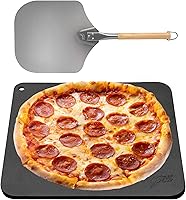
The Hans Grill stone is 15 by 12 inches and is made of cordierite. Hans Grill says it is heat resistant to 1112 degrees F and is for oven and BBQ use.
It includes a wooden peel.
Staining is normal on a stone. Hans Grill says marks and stains do not affect performance.
Many cooks prefer a well-used stone.
If you are still deciding, read cast iron pizza pan vs pizza stone. That guide compares heat, care and pizza style.
For oven size planning, Which Is Better 12 Inch or 16 Inch Pizza Oven? helps if you are choosing a separate pizza oven as well as a pan.
More guides on this topic
- Best Cast Iron Pans for Pizza Ovens
What is the final rule for choosing 12 inch or 14 inch?
Choose 12 inch for compact ovens, 1 to 2 people and personal pizzas, and 14 inch for larger ovens and shareable pizzas. Then check the usable diameter, the outside size with handles and the dough amount.
Start by measuring rack width, rack depth and door clearance. Subtract space for air flow on each side.
If a 14 inch pan with handles does not fit, a 12 inch pan is the better choice.
Next, match the pan to your usual dough. An 11 inch pizza on a 12 inch pan and a 13 inch pizza on a 14 inch pan both leave room for the crust to rise.
Then pick the pan for your cooking style. The Lodge suits oven and grill pizza with pre-seasoned cast iron.
The Home-Complete suits a pan you will also use on a stovetop, grill or campfire. The Hans Grill stone suits rectangular pies and breads.
Our best cast iron pizza pan roundup lists more models if these two do not fit your oven.
Frequently asked questions
Is a 12 inch or 14 inch cast iron pizza pan better?
A 12 inch cast iron pizza pan often fits more ovens and suits 1 to 2 people, while a 14 inch pan gives more room for shareable pizzas. Measure width, depth and handle space first, then match the pan to your usual dough diameter and appetite.
Does a 14 inch pan hold a 14 inch pizza?
Not always. Some 14 inch pans hold a smaller pizza, such as 13 inches, so the crust has room to rise and toppings stay inside the rim.
Check the usable diameter in the product details before you stretch dough to the full pan size.
Can a cast iron pizza pan go in a small oven?
Only if the pan fits with air space around it for heat to circulate. Measure the rack width, rack depth, door clearance and handle room, and leave at least an inch on each side where possible.
Are rectangular pans better than round pans?
Rectangular pans suit rectangular pies, calzones and breads, and they can use oven space differently from round pans. Round pans are easier for matching a round dough and for turning pizza in a round oven.