How to Use a Blackstone Pizza Oven
To use a Blackstone pizza oven, set it on a stable surface, connect fuel as directed, preheat the stone, turn it during the bake, and check the crust in the last minute. The exact steps depend on your model, so follow your manual for fuel, heat, and turning instructions.
On this page (9 sections)
- How to use blackstone pizza oven setup for a first bake
- Where should you place a pizza oven before you light it
- How long should you preheat the stone before baking
- How do you launch a pizza without sticking it to the peel
- When should you turn the pizza for an even crust
- How do you know when pizza is done in a hot oven
- What should you do if the crust burns on one side
- Can a countertop rotating oven teach the same turning skills
- What type of oven should you choose for easier first bakes
To use a Blackstone pizza oven, set it on a stable surface, connect fuel as directed, preheat the stone, turn it during the bake, and check the crust in the last minute. The exact steps depend on your model, so follow your manual for fuel, heat, and turning instructions.
This guide covers placement, preheating, launching, turning, and doneness checks. It also covers burned spots and cleaning.
The same routine works for most fixed stone gas ovens, with small changes for your model.
How to use blackstone pizza oven setup for a first bake
Start with a level, heat safe surface and enough clearance around the oven. Keep it away from walls, curtains, and anything that could catch heat.
Keep children and pets back during setup and cooking.
Read the manual before you connect fuel or power. Check that the stone, peel, and burner parts are clean and in place.
Wipe away crumbs and loose ash that could smoke or flare.
Set out a peel, flour or cornmeal, a timer, and a heat proof glove before the oven gets hot. Have cold dough and toppings ready before you launch the pizza.
Test ignition with the oven empty and listen for steady burner sound. If heat looks uneven, stop and check the manual.
For a first bake, choose a simple cheese pizza to see where hot spots form.
What should you check before connecting gas or power
Check hoses, seals, and cords for damage before connecting anything. Look for cracks, kinks, loose fittings, or frayed wires.
Do not use a damaged part.
Confirm fuel type and pressure match the manual. Tighten connections as the maker specifies and do not over tighten fittings.
Keep spare fuel and food away from the burner, not beside it.
If you smell gas and cannot find the source, stop, turn off fuel, and follow the maker safety steps.
Where should you place a pizza oven before you light it
Place the oven on a firm, level surface with open space on the peel side. Use a sturdy table or stand that can hold its weight and heat.
Leave room in front for the peel and your hands, so you can slide pizza in and out without leaning over the hot opening. Keep hoses and cords out of the walkway.
Wind can push heat to one side and brown one part faster, so turn the opening away from strong wind when you can. For a wider view of oven types and heat sources, see What Is a Pizza Oven and How Does It Work?.
How long should you preheat the stone before baking
Preheat until the stone reaches the maker recommended temperature and looks evenly hot. A cold stone makes dough stick and leaves the base pale.
A hot stone helps crust set fast and release from the peel.
Start the burner with the oven empty and the door in the position the manual calls for. Some ovens heat best with door closed, while others need a gap for airflow.
Follow your model, not a guess.
Use a thermometer if your oven has one or if the maker allows a surface check. Check center and edges.
A large gap means more time or a lower setting to let heat soak in. Preheating takes longer on cold or windy days.
The HALO Versa 16 has a 16 inch motorized cordierite stone that rotates 360 degrees. HALO says it reaches 750°F stone temperature in 12 minutes.
That rotating action helps compare with a fixed stone you turn by hand.
How do you launch a pizza without sticking it to the peel
Dust the peel lightly, stretch dough fast, and launch in one smooth push. A thick layer of flour can burn and taste bitter.
A light dusting helps dough slide when you shake the peel.
Stretch dough on a clean, floured surface until round and flat. Keep edge a little thicker if you want a raised rim.
Work fast once dough is shaped.
Place shaped dough on the peel and add sauce and toppings there. Keep toppings light near the edge so pie can slide off.
A heavy pie is harder to move and can stretch dough out of shape.
Shake peel gently before moving to oven. Dough should move a little on surface.
If it sticks, lift one edge and add light dusting underneath. Slide pizza off peel in one steady motion.
Pull empty peel straight back without dragging across toppings.
When should you turn the pizza for an even crust
Turn pizza once crust starts to set, then check again near the end. Turning moves pie away from a hot spot and browns both sides more evenly.
You do not need to turn every 30 seconds.
Wait until base feels firm enough to move with a peel. That point is often about halfway through a short bake.
If base is still soft, a turn can tear dough or spill toppings.
Use a peel to lift and rotate pie, or slide it onto a second peel and turn it. Keep hands to side of hot opening.
A quick, calm move beats a slow reach over burner.
The BIG HORN Gas Pizza Oven has dual side burners rated at 23,000 BTU and a 15 inch stone. BIG HORN says it heats to 750°F in 10 minutes and reaches up to 1070°F at maximum.
With a fixed stone, manual turning matters more because heat can pool near burners.
How do you turn a pizza safely with a peel
Use a long peel, keep body to the side, and move in one clean motion. Hold peel with both hands if pie is large.
Look at crust, not at your feet, so you do not lose your place.
Slide peel under pizza until it supports base. Lift only enough to clear stone.
Rotate pie a quarter or half turn, then set it down gently.
If pie sticks, do not force it. Wait a few seconds for base to release as it cooks.
A short wait is safer than a torn crust in a hot oven.
How do you know when pizza is done in a hot oven
Check crust color, cheese melt, and base firmness in the last minute. A golden edge with browned spots shows strong heat, while pale edges often mean the stone was not hot enough or the bake was too short.
Cheese should melt and bubble across the whole pie, not stay wet in the center. Wet cheese can mean the dough is too thick, the toppings are too heavy, or heat came mostly from above.
Check the base with a peel. A firm base that lifts cleanly is a good sign, and a soft base may need a short finish with more bottom heat if your oven allows it.
Pull the pizza when it looks done, not a minute later. For context on rotating designs, our best rotating pizza oven guide compares models that turn the stone for you.
What should you do if the crust burns on one side
Move pizza away from hot spot, lower heat a little, and turn it sooner next time. One dark side usually means heat is stronger near a burner or flame.
It does not always mean oven is too hot overall.
Note where dark spots form. If back edge burns first, heat may pool at rear.
If front burns, opening or burner may be issue. That note helps fix next pie.
Try lower burner setting and longer preheat for next bake. A stone hot in center but cooler at edges needs time to even out.
Turning once or twice can spread browning.
Keep dough size matched to stone. An oversized pie can hang over cooler edge or touch hot wall.
Cleaning follows after the oven cools. Brush off crumbs and wipe surfaces with a soft cloth.
Wait until stone is cool before washing or moving it.
Can a countertop rotating oven teach the same turning skills
Yes, a countertop rotating oven can teach timing and turning habits on a smaller scale. It will not match heat or stone size of an outdoor gas oven, but it helps you learn how rotation affects browning.
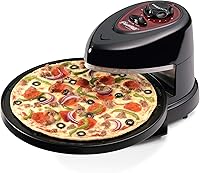
The Presto 03430 Pizzazz Plus Rotating Oven is a 12 inch countertop model with a rotating tray. It has top and bottom heating elements you can control on their own.
Presto says tray turns to help bake foods more evenly, and timer turns heating elements off at end of set time.
That size fits frozen or small homemade pizzas at home. You can practice watching color, using timer, and choosing top, bottom, or both elements.
Those habits carry over to a larger outdoor oven.
For gas models with rotating stones, see Best Gas Pizza Ovens with Rotating Stones. That guide compares motorized rotation with manual turning.
What type of oven should you choose for easier first bakes
Choose a fixed stone if you want simple control, and a rotating stone if you want less manual turning. A fixed stone has fewer parts to care for, but you must turn the pie yourself, while a rotating stone helps browning and frees your hands for prep.
Fuel choice also matters. Gas gives fast heat and easy control outdoors, electric fits indoor counters and small spaces, and pellet models add flavor but need more care with fuel and airflow.
To see how pellet heat differs, read What Is a Pellet Pizza Oven and How Does It Work?.
Use the same order each time: place, preheat, stretch, launch, turn, check, and clean. Before you start, check fuel or power, surface stability, and clearance, and after the bake, let the oven cool before brushing the stone.
For a deeper look at a rotating gas model, check our HALO Versa 16 Pizza Oven Review.