How Thick Should a Pizza Steel Be?
A 1/4-inch pizza steel suits most home bakers, while a 3/8-inch steel is better for back-to-back pizzas and longer baking sessions. Choose by oven capacity, preheating time and lifting weight.
On this page (8 sections)
- How thick should a pizza steel be for home use?
- What does pizza steel thickness change?
- Should you choose 1/4 inch or 3/8 inch pizza steel?
- How do oven size and capacity affect thickness?
- Is a thick pizza steel hard to lift?
- Does thickness change pizza crust results?
- How should you care for a pizza steel?
- Which pizza steel thickness should you pick?
A 1/4-inch pizza steel is the best starting point for most home ovens, while a 3/8-inch steel suits back-to-back pizzas and longer baking sessions. Thickness changes how much heat the steel holds and how quickly it gives that heat back to dough.
A thicker piece of steel stores more energy during preheating. That stored heat can help the surface stay hot when cold dough lands on it.
It also needs more time to warm through. The oven has to heat more metal before the center is ready for baking.
Weight rises with thickness as well. Moving a heavy steel in and out of the oven takes more care than moving a lighter one.
Choose thickness by your oven's available space, how many pizzas you bake in one session and how comfortably you can lift the steel. A thinner steel may be the better daily tool if you make one pizza at a time.
Think about how often you bake pizza. A cook who makes one pie a week has different needs than a cook who feeds a table in batches.
Think about your normal routine too. If pizza is an occasional treat, a shorter warm-up and easier storage may matter most.
If pizza night is a regular event with several pies, heat recovery starts to matter more. The steel should still be hot enough for the next launch after the first one.
Your oven size sets a hard limit. A thick steel still needs clearance around its edges for hot air to circulate.
Your rack strength sets another limit. A heavy steel should sit level and stable during the whole bake.
For a wider look at pans, stones and steel surfaces, see our pizza pan buying guide.
Start with your usual baking pattern rather than the thickest option available. That choice keeps the steel useful instead of just impressive.
A steel that fits your oven, your schedule and your strength will get used more often. Regular use is what turns a good baking surface into a reliable part of your kitchen.
How thick should a pizza steel be for home use?
A 1/4-inch pizza steel fits the needs of many home cooks. It offers a balance between heat storage, preheating time and manageable weight.
A 1/4-inch steel is often enough for a standard home oven when you bake one pizza, wait between pizzas or value easier handling. It can also leave more room for airflow around the steel than a thicker, heavier model.
More headroom can help the top of the pizza cook while the base cooks from below. That balance matters when you use a standard oven rather than a dedicated pizza oven.
A 1/4-inch steel also heats through in less time than a thicker slab. An earlier start means dinner is less tied to a long warm-up window.
A 3/8-inch pizza steel makes more sense when you bake several pizzas in sequence. Its extra mass stores more heat, which can help the surface recover after each pizza is launched.
Recovery is the key difference between the two thicknesses. After dough lands, the surface gives up heat and needs time to come back to baking temperature.
A thicker steel has more heat in reserve for that moment. It can keep the next bake from slowing down as much.
That benefit comes with practical costs. The thicker steel is heavier to move and takes longer to prepare.
It can also sit lower in the oven because it is thicker. In a shallow oven, that reduced clearance may affect some recipes.
The right thickness is not simply the thickest steel that fits. The best thickness is the one your oven can heat well and you can lift safely.
Check rack position before you decide. A steel placed too close to a heating element may need closer attention during baking.
Check storage as well. A heavy steel that must be lifted high or moved far will quickly become a chore to use.
For one pizza at a time, the lighter steel often wins on convenience. For a line of pizzas, the thicker steel often wins on consistency.
Match the thickness to the session you actually cook. That keeps the choice simple and avoids paying for heat capacity you rarely need.
What does pizza steel thickness change?
Thickness mainly changes heat storage, recovery time, preheating time and weight. The surface area and oven temperature also affect how the steel behaves.
| Thickness | Main strength | Main trade-off | Good fit |
|---|---|---|---|
| 1/4 in | Faster to heat and easier to handle | Less stored heat between pizzas | One-pizza sessions and lighter ovens |
| 3/8 in | More heat storage and recovery | Longer preheat and much more weight | Back-to-back pizzas and batch cooking |
A thicker steel does not automatically cook every pizza faster. It needs enough time to absorb heat before baking, and the oven must keep supplying heat after the dough lands.
A thinner steel can be easier to use regularly because it asks less of your rack, storage space and arms. If you usually bake one pizza, the convenience may matter more than maximum heat retention.
How does pizza steel thickness affect preheating?
Thicker pizza steel usually needs more preheating time. More metal must reach baking temperature before it can transfer strong heat into the dough.
Plan your baking session around the steel, not only the oven's air temperature. The oven may display the target temperature while the center of a heavy steel is still heating.
A 3/8-inch steel can be useful for a group meal, but the longer warm-up should be part of your routine. If you often decide to make pizza at short notice, a 1/4-inch model may be more practical.
Should you choose 1/4 inch or 3/8 inch pizza steel?
Choose 1/4 inch for lighter handling and regular single-pizza baking. Choose 3/8 inch for heat recovery during repeated baking, provided your oven and storage area can support it.
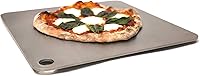
The Artisan Steel High Performance Pizza Steel is 16 in by 14.25 in and 0.25 in thick. It weighs 16 lb, so it offers a substantial baking surface without the weight of a 3/8-inch square steel.
Its rectangular shape may suit ovens where width and depth are not equal. The steel is made in the USA, has a hand-wash care instruction and is rated for a maximum temperature of 375°F.
The THERMICHEF 16" x 16" Pizza Steel is 3/8 in thick and weighs 27.5 lb. Its 16 in square surface is designed for pizzas up to 15 in, and the brand recommends preheating it at 500°F for 45 to 60 minutes.
This model stores more heat than thinner steels, but that advantage comes with a heavier lift and longer warm-up. Measure the oven's interior depth and confirm the rack can support the steel before choosing it.
A cast iron skillet is a different option for small pizzas or pan-style cooking. The Lodge Pre-Seasoned Cast Iron Skillet with Silicone Handle Holder is 12 inches, weighs 7.5 lb and has a 1.89-liter capacity.
The Lodge is not a flat pizza steel, so it suits a different style of baking. Its cast iron construction holds heat, while the raised handle and silicone holder affect how you place and remove it from the oven.
How do oven size and capacity affect thickness?
Measure your oven rack before buying a thick pizza steel. A steel must fit with room for the oven door to close and enough clearance for air to move around it.
Check the interior width and depth, then compare them with the steel's length and width. A 16 in by 16 in steel needs more usable depth than a narrower rectangular model.
Also consider the rack's position. If the steel sits too close to the oven wall or door, launching and retrieving pizza becomes harder, especially with a large peel.
Oven capacity matters in another way. A compact oven may heat a lighter steel more easily, while a large oven may give a heavy steel more room and stronger recovery during repeated baking.
For more help matching a steel to oven size, read our guide to the best pizza steel for pizza ovens.
Is a thick pizza steel hard to lift?
A thicker pizza steel is harder to lift because it contains more metal. The difference matters when you move it for storage, clean it or adjust the oven rack.
The Artisan Steel weighs 16 lb at 1/4 in thick. The THERMICHEF weighs 27.5 lb at 3/8 in thick, so the thicker model asks much more from your hands and rack.
That gap of more than 11 lb is easy to feel. It shows up when you carry the steel to the oven, move it into place and take it out again.
It also shows up during cleaning. A heavy steel is harder to hold steady over a sink or while you dry it.
It shows up during storage too. A steel that lives in a low cupboard or on a high shelf can turn every bake into a lifting task.
Plan where the steel will live between baking sessions. A heavy model should not need to be carried across the kitchen every time you make pizza.
A stable spot near the oven helps a lot. It shortens the carry and keeps the steel away from stacked pans that could slip.
Think about the rack as well. The rack should support the weight without sagging or shifting when the steel is hot.
Use both hands when you move a thick steel. Keep your elbows close and move slowly rather than reaching across the oven.
Use oven mitts that protect your hands and keep the path clear before removing hot steel. Let the steel cool before washing or storing it.
Clear the route before you open the oven door. Counters, stools and open cupboard doors can all get in the way.
Tell others in the household where the hot steel will sit. A cooling steel on a counter is easy to forget.
If lifting a heavy load is not comfortable for you, the thinner steel is a safer daily choice. You can still get strong heat transfer without the same strain.
Weight is not a minor detail. It shapes how often you will want to bake and how safely you can finish the job.
Does thickness change pizza crust results?
Thickness affects how steadily the steel can deliver stored heat, but it does not control crust quality by itself. A well-preheated 1/4-inch steel can produce a crisp base, while a 3/8-inch model can help maintain heat during repeated bakes.
The result also depends on dough thickness, moisture, oven temperature and how long the pizza stays on the steel. A heavy steel cannot correct dough that is too thick for the bake time.
A thinner steel may work well for thin crust pizza and occasional baking. A thicker steel becomes more useful when the first pizza removes enough heat that the next bake would otherwise slow down.
If you are deciding between steel and stone, compare the heat behavior, care and handling in Which Is Better Pizza Stone or Pizza Steel?.
How should you care for a pizza steel?
Keep a pizza steel dry and follow its care instructions after every use. Steel can develop rust if moisture remains on the surface.
The Artisan Steel calls for hand washing, drying and seasoning as needed. The THERMICHEF also requires hand washing and should be seasoned before first use according to its instructions.
Start by letting the steel cool after baking. Scrape away stuck food after the steel cools enough to handle.
A stiff brush works well for this step. It removes baked bits without need for harsh scrubbing.
Wash with water and dry the steel right away. Drying promptly helps stop moisture from sitting on the surface.
Use a lint-free cloth or paper towel for drying. Then apply a light coat of cooking oil to season the surface.
Avoid putting a hot steel under cold water because sudden temperature changes can stress cookware and create a safety risk. Patience during cooling protects both you and the steel.
Do not leave washing for days. Food left on the surface can harden and make the next cleaning harder.
Store the steel in a dry place. A closed cupboard or a flat spot away from steam works well.
Keep the surface covered if dust collects where you store it. A clean surface is ready for the next bake and needs less prep.
Re-season only as needed. A thin coat after cleaning is enough to protect the surface between uses.
Check the surface before each bake. If spots look dry or dull, a light oil coat can help.
Hand washing is the stated care for both steels in this guide. That routine keeps finishes and seasoning intact over time.
For a step-by-step overview, see how to make a pizza steel, then read how to season a pizza steel and what you need to season a pizza steel.
Care does not need to be complex. Scrape, wash, dry and oil are the habits that keep steel ready for years of baking.
Which pizza steel thickness should you pick?
Pick a 1/4-inch pizza steel if you bake one pizza at a time, want a shorter warm-up and prefer easier lifting. Pick a 3/8-inch steel if you bake several pizzas in a row and have the oven space, preheating time and strength to manage the extra weight.
The Artisan Steel is the lighter 1/4-inch choice here. The THERMICHEF is the heavier 3/8-inch choice for heat storage and repeated baking, while the Lodge skillet fits cooks who want a smaller cast iron surface rather than a flat steel.
Use the Artisan Steel when your sessions are short. Its 16 lb weight and faster warm-up make it easier to use on a weeknight.
Use the THERMICHEF when your sessions are long. Its 27.5 lb weight is worthwhile when you want more heat in reserve for batch after batch.
Measure your oven first. A 16 in square steel needs clear width and depth on the rack.
Leave room for the door to close fully. Also leave space so you can launch and retrieve pizza without scraping the edges.
Set aside the full preheating time in your plan. A thick steel at 500°F needs 45 to 60 minutes according to its guidance.
Do not judge readiness by the oven display alone. The steel itself needs time to absorb heat through its center.
Store the steel where it is easy to reach. Short carries make a heavy steel far more practical.
Your best pizza steel thickness is the one that matches your real baking pattern. If you need more help comparing options made in the USA, see our guide to the best pizza steels made in the USA.
One pizza, choose lighter. Several pizzas, choose thicker if your oven and arms allow it.
Frequently asked questions
Is 1/4 inch thick enough for a pizza steel?
A 1/4-inch pizza steel is thick enough for most home ovens and one-pizza sessions. It heats faster and weighs less than a thicker steel, while still giving dough a strong conductive baking surface.
Choose more thickness when you need faster recovery between several pizzas.
Is a 3/8-inch pizza steel better?
A 3/8-inch pizza steel is better for back-to-back cooking because it stores more heat. The trade-off is extra preheating time, more lifting weight and greater demand on your oven rack.
Measure the oven before choosing a large, heavy steel.
How long should a thick pizza steel preheat?
Preheat time depends on the steel thickness, oven temperature and how much heat the steel needs to absorb. A 3/8-inch model generally needs more time than a 1/4-inch model.
Use the product instructions and allow enough time for the center of the steel to heat.
Does a thicker pizza steel make better pizza?
A thicker pizza steel can improve heat recovery between pizzas, but thickness alone does not guarantee better pizza. Dough hydration, oven temperature, launch technique and preheating all matter.
For one pizza at a time, a lighter 1/4-inch steel may be easier to use.