Cast Iron Skillet vs Dutch Oven: Which Should You Choose? (November 2026)
Choose a cast iron skillet for searing and shallow frying, and a Dutch oven for deep covered cooking. In this cast iron skillet vs dutch oven comparison, the shape you cook in each day matters more than brand alone.
On this page (12 sections)
- Cast iron skillet vs Dutch oven: the quick verdict
- The two side by side
- Searing, frying and sautéing
- Soups, stews and braising
- Bread baking and oven cooking
- Heat, handles and safe lifting
- Seasoning, enamel and care
- Size, storage and stovetop fit
- Which Lodge skillet suits you?
- Which Dutch oven suits you?
- Who should buy which?
- Final verdict: cast iron skillet vs dutch oven
Choose a skillet for open, high-heat cooking and a Dutch oven for deep, covered cooking. The cast iron skillet vs dutch oven choice starts with what you cook most often.
A skillet sears, fries and sautés on a flat surface. A Dutch oven simmers soups, braises meat and bakes bread under a lid.
We compared specs, features and buyer feedback against what you are shopping for. Our score weighs specs, features and buyer feedback against what you're shopping for.
 Best for searing and frying
Lodge Pre-Seasoned Cast Iron Skillet with Silicone Handle Holder, 12 Inches
 Best for braising and soups
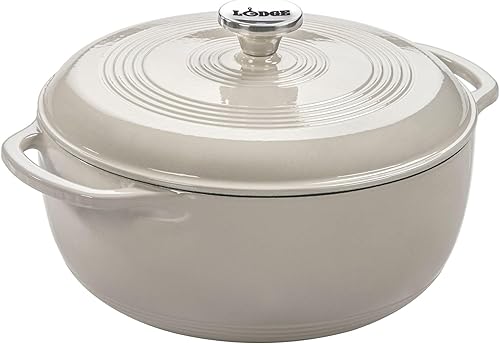
Lodge Essential Enamel Cast Iron Dutch Oven, 6 Quart, Oyster White
Cast iron skillet vs Dutch oven: the quick verdict
Pick the skillet if your week centers on eggs, burgers, vegetables and seared meat. Pick the Dutch oven if your week centers on soup, stew, chili, braised chicken and bread.
The Lodge 12-inch skillet scores 9.7 for searing and frying. The Lodge 6-quart enameled Dutch oven in Oyster White scores 9.6 for braising and soups.
Size explains most of the gap. The skillet holds 1.89 liters in a shallow pan.
The Dutch oven holds 6 quarts in a deep pot.
If you can buy only one, a cast iron skillet is the safer first buy for most kitchens. It handles more daily tasks, from breakfast to oven finishing.
Add a Dutch oven when deep liquid or covered baking becomes a weekly habit. That order reduces wasted money.
The two side by side
The skillet is wide and shallow; the Dutch oven is tall and deep. That single difference shapes every recipe you can cook.
| Feature | 12-Inch Skillet | 6-Quart Dutch Oven |
|---|---|---|
| Best use | Searing, frying, sautéing | Braising, simmering, bread |
| Capacity | 1.89 liters | 6 quarts |
| Weight | 7.5 pounds | 14.9 pounds in Oyster White |
| Surface | Pre-seasoned cast iron | Enamel coated cast iron |
| Lid | None | Cast iron lid |
| Oven limit given | 260 °C maximum | 500 degrees Fahrenheit |
The skillet in this group is 12 inches across and includes a red silicone handle holder. For electric cooktop fit, see cast iron electric skillet guidance.
It is made for stovetop, oven, grill and campfire use.
The Dutch oven is round, about 10.9 inches in diameter in Oyster White. For sizing details, see 12-inch cast iron Dutch ovens.
It has dual handles and a lid that seals in moisture.
Both are cast iron, so both hold heat well. The difference is how that heat meets your food: open surface versus enclosed pot.
Searing, frying and sautéing
A skillet wins for searing because food sits exposed on a flat, wide surface. You can press meat down, flip it easily and let moisture escape.
The 12-inch skillet gives room to sear several pieces without crowding. Crowding lowers pan temperature and steams food instead of browning it.
The 10.25-inch skillet suits smaller batches. It weighs 5.4 pounds, so it is easier to move on a small stovetop.
A Dutch oven can sear before a braise, and many cooks do that in one pot. Its tall walls, however, make flipping fish, eggs and burgers awkward.
For fried eggs, corn bread and roasted vegetables, the skillet is the direct tool. Its shallow walls let a spatula slide under food.
If searing is your main goal, start with a skillet. You can still braise in a skillet for short recipes, but deep braises need a pot.
Soups, stews and braising
A Dutch oven wins for any recipe with deep liquid or a long covered simmer. Its 6-quart depth keeps soup below the rim while it bubbles.
The enameled Dutch oven has a cast iron lid that traps steam. That moisture helps pot roast, chili and beans cook evenly over low heat.
Its enamel surface stands up to acidic ingredients. Tomatoes, vinegar and wine will not react with the food in the way bare metal can.
A skillet cannot hold 6 quarts, and its open shape loses heat and liquid to evaporation. A stew started in a skillet will boil over or dry out.
The Dutch oven is also made for marinating and refrigerating. The enamel coating is stain-resistant and non-toxic, and Lodge says it is PFAS free.
If beans, soups and braises fill your freezer, the Dutch oven is not a luxury. It is the right shape for the job.
Bread baking and oven cooking
The Dutch oven wins for bread because its lid traps steam for a crisp crust. The skillet wins for cornbread, frittata and oven finishing.
Both can go in the oven. The Dutch oven is oven safe to 500 degrees Fahrenheit.
The 10.25-inch skillet lists a maximum temperature of 550 °F.
For a crusty loaf, the enclosed pot creates a mini oven inside your oven. Steam from the dough stays around the loaf during the first part of baking.
For cornbread, a skillet gives crisp edges and a flat top. For pizza, compare cast iron pans and pizza stones.
You can slide the pan from stovetop to oven without moving food.
The 12-inch skillet is pre-seasoned with natural vegetable oil for a naturally nonstick finish. That seasoning improves with use, and Lodge seasons with 100% vegetable oil and no synthetic coatings.
Choose by what you bake most. Bread points to a Dutch oven.
Skillet breads and oven-finished vegetables point to a skillet.
Heat, handles and safe lifting
Both hold heat well, but the Dutch oven is much heavier when full. Plan your lifting before you buy either one.
The 12-inch skillet weighs 7.5 pounds empty. The 10.25-inch skillet weighs 5.4 pounds empty.
The Dutch oven weighs 14.9 pounds empty in Oyster White and 13.5 pounds in Island Spice Red.
A full 6-quart pot of soup will be hard to pour with one hand. Its dual handles help, but you will want two hands and a clear path to the table.
The skillets include a silicone handle holder to protect your hands after cooking. The 12-inch model also has a teardrop handle for lifting and control.
Cast iron keeps cooking at a steady temperature. That helps with searing and with keeping a braise at a gentle simmer.
Do not slide a hot skillet across a glass top or set it on a wooden table without a trivet. Both pieces stay hot long after you turn off the burner.
Seasoning, enamel and care
Pre-seasoned skillets need light oil care; enameled Dutch ovens need gentle cleaning. Neither needs harsh scrubbing.
Lodge says to hand wash the skillet, dry it and rub it with cooking oil. That routine keeps the natural seasoning in good shape.
Both skillets are PFAS free and made without PFOA or PTFE. The seasoning is made with 100% natural vegetable oil.
The Dutch oven is dishwasher safe, but hand washing with warm, soapy water and a nylon scrub brush is recommended. For a bare iron comparison, see cast iron vs enameled Dutch ovens.
That care keeps the enamel in tip-top shape.
Enamel gives you cast iron benefits without fear of rust. It also means you do not need to season the pot.
Avoid sudden temperature shocks with enamel. Let a hot pot cool before you wash it in cold water.
Store a skillet dry, with the handle holder removed until you need it. Store a Dutch oven with its lid in place so the enamel does not chip.
Size, storage and stovetop fit
Measure your burner and cabinet before you choose between 10.25 inches, 12 inches and 6 quarts. Fit matters as much as features.
The 10.25-inch skillet fits small stovetops and heats faster for one or two servings. It is a good match for a single burner or a small kitchen.
The 12-inch skillet fits larger burners and family batches. It can sear chicken pieces, burgers and vegetables in one layer.
The Dutch oven is about 13.5 by 13.5 by 10.9 inches in Oyster White. It needs cabinet height for the pot plus its lid and handles.
Check the space above your stovetop for a Dutch oven lid. You need room to lift the lid without hitting a range hood.
If you want a set for both shapes, our best cast iron cookware set guide can help you plan. A set can cost less than buying pieces one by one.
Which Lodge skillet suits you?
Choose the 12-inch skillet for family cooking and the 10.25-inch skillet for smaller batches. Both are pre-seasoned and PFAS free.
The 12-inch skillet is the everyday pan in this group. It excels at searing, sautéing, baking, frying and campfire meals.
The 10.25-inch skillet includes an assist handle and a red silicone hot handle holder. It is at home in the oven, on the stove, on the grill or over the campfire.
Lodge says the seasoning improves with use. The more you cook in it, the better the natural easy-release finish gets.
If you are comparing Lodge models, our lodge cast iron vs victoria guide gives more context. It helps you weigh seasoning, handles and price tier.
Which Dutch oven suits you?
Choose by color and table use, since both Dutch ovens hold 6 quarts. The shape and capacity are the same.
Oyster White suits a light kitchen and shows less wear at the table. It is ideal for bread baking, braising, marinating and slow cooking.
Island Spice Red adds color and matches a cook-and-serve style. The enamel surface stands up to acidic ingredients and will not react with food.
Both Dutch ovens work on gas, electric, ceramic and induction cooktops. Both are stovetop compatible and oven safe to 500 degrees Fahrenheit.
If you are unsure between bare iron and enamel, read our cast iron skillet vs enameled cast iron comparison. It explains rust, seasoning and cleaning in plain terms.
Who should buy which?
Buy a skillet first if you cook fast meals most nights; buy a Dutch oven first if you cook slow meals most nights. Your weekly menu is the best guide.
Choose the 12-inch skillet if you sear meat, fry eggs, roast vegetables and finish dishes in the oven. It is the most used pan for many households.
Choose the 10.25-inch skillet if you cook for one or two, have a small stovetop or want lighter lifting. It still sears well, with less room for crowding.
Choose the Oyster White Dutch oven if you want a neutral pot for bread, beans and braises. Choose Island Spice Red if you serve from the pot at the table.
Consider a japanese cast iron skillet only if you want a different style of pan. For Lodge cast iron, the sizes above cover most needs.
Outdoor cooks should note that the skillets work over a campfire and on a grill. The Dutch oven also suits outdoor cooking, but its weight makes it harder to pack.
Final verdict: cast iron skillet vs dutch oven
Pick the skillet for searing and frying, and the Dutch oven for deep covered cooking. In this cast iron skillet vs dutch oven choice, shape decides the winner.
If you buy one piece now, buy the 12-inch Lodge skillet. It handles breakfast, dinner and oven finishing with one pan.
Add the 6-quart Dutch oven when you regularly make soup, stew, chili, braised meat or bread. Its depth and lid do work a skillet cannot do.
For other cast iron sizes, see our 12 inch cast iron tortilla press guide for a different tool. It shows how size changes the job.
You do not need both on day one. Buy for the meals you cook this week, then add the second shape when your menu calls for it.
Frequently asked questions
Is a cast iron skillet or a Dutch oven more versatile?
A skillet is more versatile for searing, frying, sautéing and baking, while a Dutch oven is more versatile for simmering, braising and bread. Most cooks use a skillet more often for daily tasks, but a deep pot handles covered cooking that a shallow skillet cannot.
Can a Dutch oven replace a cast iron skillet?
A Dutch oven can sear and fry, but its deep walls make flipping eggs, fish and burgers harder. A skillet gives open access for turning food and a flat surface for crust.
If you fry or sear often, a skillet remains the better first pan.
Can a skillet replace a Dutch oven for soup?
A skillet is too shallow for large soups, stews and braises. The 12-inch skillet holds 1.89 liters, while the Dutch oven holds 6 quarts.
Deep liquid needs the taller pot to simmer without boiling over.
Which is easier to clean?
The enameled Dutch oven is easier to clean because its porcelain surface resists staining and does not need seasoning. A pre-seasoned skillet needs hand washing, drying and a light oil rub.
Both benefit from warm water and a nylon brush.
Which should a beginner buy first?
Start with a 12-inch cast iron skillet if you sear, fry and sauté most nights. Add a Dutch oven next if you make soups, stews, braises or bread.
The skillet covers more everyday meals for most households.


