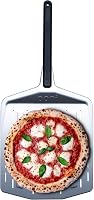
Are Nutuni Pizza Peels Good?
Nutuni pizza peels may suit you if their material, blade edge, and handle fit your oven and routine. Check those details before buying, since the name alone doesn't tell you how a peel will handle.
On this page (6 sections)
Nutuni pizza peels may be a good fit if their material, blade edge, and handle suit your oven and how you prepare pizza. Check the exact model's dimensions and design before choosing, because the brand name alone doesn't tell you how it will handle.
A peel can help with dough prep, launching, turning, and retrieving, but one design may not do each job equally well. For tools covering more oven-side tasks, see pizza oven accessories.
Compare those tasks with the peel's surface, edge, and reach.
Are Nutuni pizza peels good for your pizza routine?
Nutuni can be a reasonable choice when a specific model fits your oven and the jobs you need it to do. Check whether its blade is wood or metal, whether the edge is tapered, and whether the handle gives you enough reach.
Look for clear dimensions for the blade and full peel. Measure your oven opening and storage space, then compare those measurements with the model you're considering.
A brand name doesn't guarantee that a peel will slide under every pizza. Dough moisture, flour, toppings, and how long the pizza rests on the peel can also affect the launch.
What should you check on a Nutuni pizza peel?
Start with the blade material, edge shape, dimensions, and handle. These details affect whether the peel works for prep, launching, turning, and retrieving in your setup.
Does the blade material fit the job?
Wood can provide a surface for stretching dough and adding toppings. A wooden peel may also suit you if you want one tool for prep and serving.
Metal is often chosen for moving pizza into or out of an oven. A thin edge can help slip beneath a baked crust, while perforations can let loose flour fall away.
The tradeoff is that a smooth prep surface and an oven-focused surface may serve different needs. See How Do You Choose Between Wooden or Metal Pizza Peel? for a closer look at those roles.
Is the edge thin enough to slide under pizza?
A tapered or thin edge can make it easier to get beneath a pizza. Check that the blade's front edge is shaped for the task, and don't assume every model from a brand uses the same design.
For launching, dust the peel lightly with flour and check that the dough moves before adding toppings. Work quickly after topping so the base doesn't sit on the peel longer than needed.
Is the handle long enough for your oven?
Match the handle reach to the depth and heat of your oven. A longer handle can keep your hands farther from a hot cooking area, while a shorter or folding handle may be easier to store.
Check the full length, not only the blade. Also make sure you have room to angle and turn the peel without hitting walls, shelves, or nearby cookware.
Which peel designs can you compare with Nutuni?
Compare the Nutuni model with peels that publish useful construction and handling details. These options show how wood, perforated aluminum, and a foldable handle can serve different routines.
Who should consider the New Star Foodservice wooden peel?
The New Star Foodservice peel may suit you if you want a wooden prep surface and a tapered blade. Its pinewood construction, 16 x 14 in blade, and 8 in handle are listed in the product name and features.
Its handle is designed for maneuvering around ovens and prep stations. Choose it if a wood surface is useful for stretching dough or serving, and measure your counter and oven opening before buying.
Who should consider the Ooni perforated peel?
The Ooni peel may suit you if you want a perforated aluminum blade and long handle. It has a 14 in blade, lightweight aluminum construction, and a glass-reinforced nylon handle.
Ooni says the perforations let excess flour fall away and steam evaporate. If you're comparing tools for a high-heat oven, start with the best pizza peel for Ooni.
Who should consider the Chef Pomodoro aluminum peel?
The Chef Pomodoro peel may suit you if drawer storage matters. Its 12 x 14 in aluminum blade has a foldable wood handle, and the handle folds flat for storage.
The brand describes its blade as ultra-thin and says light flour helps prevent sticking. Compare the best wooden pizza peels for pizza ovens and best metal pizza peels for pizza ovens if material is your main decision.
What matters for Neapolitan and home pizza?
For Neapolitan pizza, prioritize a peel that fits your oven and makes quick launches and turns manageable. A compact oven opening may favor a narrower blade, while frequent turning may call for a light metal peel.
For dough prep, a wooden surface can be useful before launch. For the oven itself, a thin metal edge or a dedicated turning peel may make more sense, depending on the tool's shape and your technique.
See the best pizza peel for Neapolitan pizza for options shaped around that style. If you mainly cook in a kitchen oven, compare the best pizza peel for home pizza and check total length against your counter space.
How can you judge whether a peel will handle well?
Use the peel's dimensions and features to predict how it will fit your routine. Blade width affects how much pizza it supports, handle length affects reach, and the surface affects prep and launch.
A larger blade can support a larger pizza, but it also needs enough clearance through the oven opening. A long handle offers reach but may need more storage room.
Before launching, make sure the dough moves freely. If it sticks, lift an edge and add a little flour, rather than jerking the peel and risking a misshapen pizza.
What should you decide before choosing Nutuni?
Choose a Nutuni peel only after checking the exact model's materials, blade size, edge, and handle. Pick wood if prep surface matters, perforated metal if you want flour to fall away, and a folding design if storage is tight.
If the Nutuni model doesn't show the details you need, compare those features with the New Star, Ooni, and Chef Pomodoro designs above. Measure your oven opening and storage spot before deciding.
Frequently asked questions
Are Nutuni pizza peels good?
They may be a fit if the peel's material, blade dimensions, edge, and handle suit your oven and how you move pizza. Check those details for the specific Nutuni model, since names alone don't show how it will handle.
Compare a wood peel for prep with aluminum options for launching or turning.
Is a wooden or metal pizza peel better?
Wood gives you a work surface for shaping or topping dough, while metal can make launching and retrieving easier when its edge is thin. The better choice depends on the task, oven opening, and storage space.
Some cooks use a wooden peel for prep and a metal one for the oven.
What size pizza peel should I choose?
Choose a blade that can support the pizza you make and still fit through the oven opening. Check both blade width and total length, including the handle, against your oven and storage space.
A peel that is too wide can be awkward to maneuver, even if it holds the pizza.
Do perforations help on a pizza peel?
Perforations can let excess flour fall away and allow steam to escape while moving a pizza. They don't replace flouring the surface or checking that dough slides before launch.
Consider a solid blade if you also want a smooth prep surface for stretching and topping.