
Can You Learn to Turn Pizza in a Pizza Oven?

Yes, you can definitely learn to turn pizza in a pizza oven, and it’s a skill many home pizza makers master with a little practice. You’ll quickly get the hang of rotating your pizza for an even, perfectly cooked crust. It’s all about timing and a good pizza peel!
Many people worry about burning their pizza, especially in a super hot oven. But with the right tools and technique, turning your pizza becomes second nature. We found that a good turning peel makes a huge difference, helping you avoid sticky situations and achieve that beautifully browned crust.
- You can learn to turn pizza in a pizza oven.
- It requires practice and the right tools.
- A turning peel is essential for easy rotation.
- Learning helps you get an evenly cooked pizza.
- Don’t be afraid; it’s easier than you think!
Ready to perfect your pizza turning skills and impress your friends and family? Let’s walk through exactly how this works step by step.
Mastering the Pizza Turn in Your Hot Oven
Yes, you absolutely can learn to master turning your pizza in a hot oven. It’s a skill that elevates your homemade pizzas from good to gourmet. With a bit of patience and the right tools, you’ll be rotating pizzas like a pro, ensuring that perfect, even crust every time.
Why Turning Your Pizza Matters So Much
You might be wondering, “Why bother turning it at all?” It’s a great question! When you cook pizza in a very hot oven, like a wood-fired or gas pizza oven, heat isn’t always uniform. The back of the oven is often hotter, or one side might get more direct flame. Turning your pizza helps it cook evenly.
Imagine one side bubbling beautifully while the other stays pale, or worse, burns. Turning prevents these culinary disasters. It ensures your crust is golden brown all around, your cheese is melted consistently, and your toppings are perfectly cooked without any burnt edges. It’s the secret to a professional-looking and tasting pizza.
Essential Tools for a Successful Pizza Turn
Before you even think about turning, you need the right gear. Trying to turn a hot pizza with the wrong tool is like trying to eat soup with a fork – messy and frustrating. We found that having the correct equipment makes all the difference in your pizza-making journey.
The Turning Peel: Your Best Friend
The turning peel is your most important tool for this job. It’s different from your launching peel. A turning peel is typically smaller, rounder, and has a much thinner blade. This design lets you easily slide it under a partially cooked pizza and rotate it gently.
- Smaller Head: Fits into tight spaces in a hot oven.
- Thin Blade: Slides smoothly under delicate crusts.
- Long Handle: Keeps your hands safely away from intense heat.
Many home pizza makers initially try a standard peel, but it’s often too large and clunky for precise rotations (University of Gastronomic Sciences).
Other Helpful Tools
While the turning peel is king, a few other items can make your life easier:
- Infrared Thermometer: Helps you know the exact temperature of your pizza stone or oven floor. This is key for consistent results.
- Oven Mitts: Always have good, heat-resistant oven mitts. Safety first!
- Bench Scraper: Useful for cleaning your counter and handling dough, though not directly for turning.
Understanding Your Pizza Oven’s Hot Spots
Every pizza oven has its quirks. Your job is to learn them. Most ovens have hotter and cooler spots. For example, in many wood-fired ovens, the area closest to the flame will be the hottest. In gas ovens, it might be the back.
We recommend doing a “biscuit test” or “toast test” if you’re new to your oven. Place some bread slices or biscuits around your oven floor and watch how they brown. This will quickly reveal where your oven’s hot zones are. Knowing this helps you decide exactly when and how much to turn your pizza.
The Step-by-Step Guide to Turning Your Pizza
Okay, you’ve got your tools, and you know your oven. Now for the main event! Turning a pizza is more about finesse than force. Here’s a simple breakdown:
1. Launching Your Pizza
First, launch your pizza into the oven using your launching peel. Place it in the center or slightly towards the cooler side if you know your oven has a very hot spot immediately (Culinary Institute of America).
2. The Initial Bake (The “Leopard Spot” Phase)
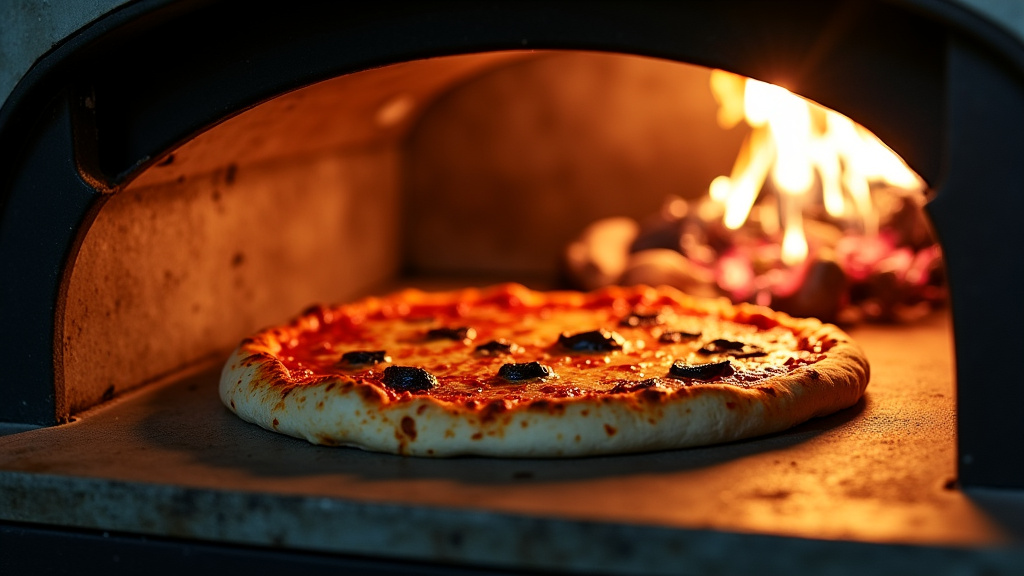
Let your pizza cook for about 30-60 seconds, or until the crust starts to firm up and you see the first signs of browning or “leopard spots” on the rim. This means the dough has set, and it’s less likely to stick or tear when you try to move it.
3. The First Turn
Now, grab your turning peel. Gently slide the thin blade under the edge of the pizza that’s closest to you, about an inch or two in. Lift it slightly and rotate the pizza a quarter turn (90 degrees). You’re aiming for small, precise movements, not a full spin.
Lower the pizza back onto the stone. You’ll repeat this process a few times during cooking.
4. Subsequent Turns and Monitoring
Wait another 30-60 seconds, then repeat the turning process. Keep an eye on the crust. Is one side browning faster? Turn it more frequently or rotate it away from the direct heat source. You’re constantly adjusting, like a chef tending to multiple pans on a stove.
We found that small, frequent turns are better than one big, rushed turn. It gives you more control.
5. The Final Adjustment and Retrieval
As your pizza finishes cooking, you might need one last small rotation to get that perfect, even char. Once it looks ready—golden brown crust, melted cheese, cooked toppings—use your launching peel to retrieve it from the oven.
Common Pizza Turning Mistakes to Avoid
Everyone makes mistakes when learning something new. It’s part of the process! Here are a few common pitfalls we’ve seen, and how you can avoid them:
| Mistake | How to Avoid It |
|---|---|
| Using the Wrong Peel | Invest in a dedicated turning peel. It’s a game-changer. |
| Turning Too Early | Wait until the crust firms up (30-60 seconds). A soggy crust will tear. |
| Turning Too Forcefully | Be gentle! Small lifts and rotations work best. Don’t jab or push hard. |
| Not Knowing Your Oven | Test your oven for hot spots. Adjust placement and turning frequency. |
| Forgetting Safety | Always wear oven mitts. Pizza ovens are extremely hot! |
Checklist for Your Next Pizza Night
Before you fire up that oven, run through this quick checklist. It’ll help ensure you have everything you need for a smooth pizza-turning experience.
- Dedicated turning peel is clean and ready.
- Oven is preheated to the correct temperature.
- Infrared thermometer is handy for quick checks.
- Oven mitts are on and easily accessible.
- Pizza dough is properly proofed and not too sticky.
- Toppings are prepped and ready for assembly.
With these steps and tools, you’re well on your way to perfectly turned, evenly cooked pizzas every time. Don’t be afraid to experiment and have fun with it!
Conclusion
Learning to turn pizza in your oven is a skill that truly transforms your homemade pies. You’ve seen that with the right tools, especially a dedicated turning peel, and a clear understanding of your oven’s hot spots, you can achieve that perfectly even, golden crust every time. It takes a little practice and patience, but the results are incredibly rewarding.
Don’t be intimidated; it’s easier than you might think. Now, go grab your turning peel and start making those restaurant-quality pizzas right in your backyard!
Frequently Asked Questions
How long does it take to learn to turn a pizza effectively?
Most home pizza makers can get the hang of basic turning within 2-3 pizza-making sessions. Achieving true finesse and consistent results might take a few more, but you’ll see significant improvement quickly. Practice is key, and each pizza you make helps refine your technique.
Can I use a regular pizza peel to turn the pizza?
While you technically can, it’s much harder and less effective. Regular peels are larger and thicker, making precise movements difficult in a hot, confined space. We highly recommend investing in a smaller, rounder turning peel for safety and better results.
What if my pizza sticks to the turning peel?
If your pizza sticks, it usually means the dough wasn’t firm enough, or you might have hesitated. Ensure your crust has started to set for about 30-60 seconds before the first turn. A light dusting of flour or semolina on your turning peel can also help prevent sticking.
Should I turn the pizza clockwise or counter-clockwise?
The direction doesn’t matter as much as consistency and small movements. Many people find it natural to turn the pizza towards them, so if you’re rotating it by quarters, it often ends up being a consistent direction. Focus on even rotation, not a specific direction.
How often should I turn my pizza during cooking?
For most high-temperature pizza ovens, you’ll turn your pizza every 30-60 seconds after the initial crust sets. This ensures even cooking and browning across the entire crust. Keep a close eye on it, as hotter ovens might require more frequent, smaller turns.
