
What Is the Safest Way to Cook Bread in a Pizza Oven?

The safest way to cook bread in a pizza oven is by maintaining a For more on this, our guide to the safest way to preheat explains the process.moderate temperature and using a pizza stone or steel. This prevents burning while ensuring a crispy crust. Proper heat management is key for delicious, evenly cooked bread.
Pizza ovens get incredibly hot, making them perfect for quick pizzas but tricky for longer bakes like bread. You need to control the heat to avoid a burnt exterior and an undercooked interior. Understanding your oven’s heat patterns will make all the difference for achieving perfect artisan loaves.
- Use a pizza stone or steel for even heat.
- Manage oven temperature carefully.
- Practice to understand your oven’s behavior.
- Watch for visual cues of doneness.
Let’s walk through exactly how to get that perfect loaf from your pizza oven. We’ll cover everything you need to know to bake bread safely and deliciously.
“`htmlBaking Bread Safely in Your Pizza Oven
Your pizza oven is a fiery beast, perfect for quick, crispy pizzas. But when it comes to bread, it requires a gentler touch. The main goal is to create a stable, moderate heat. This stops your beautiful loaf from turning into a charcoal briquette on the outside while staying doughy within. Think of it like controlling a campfire; you need glowing embers, not roaring flames.
The secret is heat management and the right cooking surface. You’ll want to aim for a temperature zone that allows the bread to cook through. This is often lower than you might think for pizza. We’ll guide you through the steps to achieve that perfect, crispy crust and a wonderfully soft interior.
Understanding Your Pizza Oven’s Heat for Bread
Pizza ovens are designed for high-heat, fast cooking. Bread, on the other hand, needs a more even, sustained heat. This means you can’t just crank it up and toss your dough in. You need to learn your oven’s personality.
Preheating Properly: The First Key Step
Preheating is absolutely critical. You want to get your oven up to temperature, but then you need to let it stabilize. For bread, you’re not looking for that screaming hot, 800°F+ environment. Many pizza oven bakers suggest preheating to around 400-500°F (200-260°C) for most lean doughs. This temperature range ensures the oven is hot enough to create steam and a good crust without instantly burning the bottom.
You’ll need to monitor the temperature closely. Using an infrared thermometer is a good idea. You’ll want to check the temperature of your cooking surface as well as the ambient air. We found that letting the oven and your cooking surface sit at the target temperature for at least 30-45 minutes after reaching it helps create a more consistent bake.
Managing the Fire for Consistent Heat
The type of fire you maintain makes a big difference. For bread, you want an oven that has passed its peak flame and settled into a bed of glowing embers. You’re looking for radiant heat from the dome and hearth, not direct flame licking your loaf. If you see active flames, you’re likely too hot.
You might need to strategically move coals or wood to one side of the oven. This creates a cooler zone for baking. Some ovens have a flue or vent that you can adjust to help control airflow and temperature. Experimenting with how much fuel you use and where you place it is part of the learning process. It’s a bit of an art form!
Essential Tools for Safe Bread Baking
Having the right equipment is just as important as controlling the heat. These tools help ensure your bread bakes evenly and safely.
The Mighty Pizza Stone or Steel
This is non-negotiable for baking bread in a pizza oven. A pizza stone or steel acts as a heat reservoir. It absorbs and distributes heat evenly across the bottom of your loaf. Without one, the intense heat from the oven floor would scorch your bread’s crust before the inside is cooked.
Pizza stones are typically made from ceramic or cordierite. They offer a porous surface that can absorb moisture, contributing to a crispier crust. Pizza steels, on the other hand, are highly conductive. They transfer heat very quickly, leading to an excellent crisp. Many bakers find steel gives a slightly better oven spring due to the rapid heat transfer. Both are excellent choices, so pick the one that best suits your preference.
Make sure to preheat your stone or steel along with the oven. It needs to be thoroughly heated to perform its magic. If you put cold dough on a cold stone, you’ll ruin the crust.
Using a Pizza Peel and Other Accessories
A pizza peel A good pizza peel is essential for safely launching your bread into the hot oven. is your best friend for safely launching your bread into the hot oven. It’s a flat tool, usually made of wood or metal, with a handle. You’ll assemble your dough on it, usually with a bit of cornmeal or flour to prevent sticking.
You’ll also want a good long-handled oven brush for sweeping away ash and debris before and after baking. And don’t forget a reliable oven thermometer or an infrared thermometer to check those temperatures accurately. A good pair of heat-resistant gloves is also a must for handling anything near the oven’s opening.
The Baking Process: Step-by-Step Safety
Once your oven is preheated and your tools are ready, you’re almost there. Following these steps will help you bake your bread safely and successfully.
Prepping Your Dough for the Oven
Prepare your dough on a lightly floured or cornmeal-dusted pizza peel. Ensure the bottom of your dough is smooth and free of excess flour. This helps it slide off easily. Some bakers like to score their dough before it goes into the oven. This allows for controlled expansion during baking, preventing blowouts.
Think of scoring as giving your bread a little roadmap to follow as it bakes. It’s not just for looks; it’s functional! A sharp blade or a lame works best for this task. Make sure your cuts are deliberate and not too shallow.
Launching Your Loaf Safely
This is where the peel comes in handy. Gently slide your dough from the peel onto the hot pizza stone or steel in your oven. A quick, confident push is usually best. Avoid jerky movements that could deform your loaf. If it sticks a little, a slight wiggle and another push might do the trick.
Work efficiently to minimize heat loss from the oven. Once your bread is in, close the oven door or adjust any covers as needed. You want to trap that heat and steam inside.
Managing the Bake and Avoiding the Burn
Now comes the waiting game, but with attention! For the first part of the bake, keep the oven door mostly closed. This traps steam, which is vital for a good crust and oven spring. Many bread recipes call for an initial steaming period.
After about 10-15 minutes, you’ll want to check on your bread. Is it browning too quickly? If the top is getting dark too fast, you can strategically move some embers closer to the front of the oven or lightly tent the top with foil. Many seasoned pizza oven bakers found that rotating the bread about halfway through the bake ensures even cooking.
Temperature Guidelines for Different Bread Types
The ideal temperature can vary depending on the type of bread you’re baking. Lean doughs, like baguettes or basic country loaves, often do well in the 400-475°F (200-245°C) range. Enriched doughs, which have fats and sugars, might require a slightly lower temperature, perhaps 375-425°F (190-220°C), to prevent burning.
We found that for a typical 1-1.5 lb loaf, a total bake time of 30-45 minutes is common. However, this depends heavily on your oven’s heat retention and the dough itself. Always rely on visual cues and internal temperature for doneness.
Checking for Doneness: The Final Step
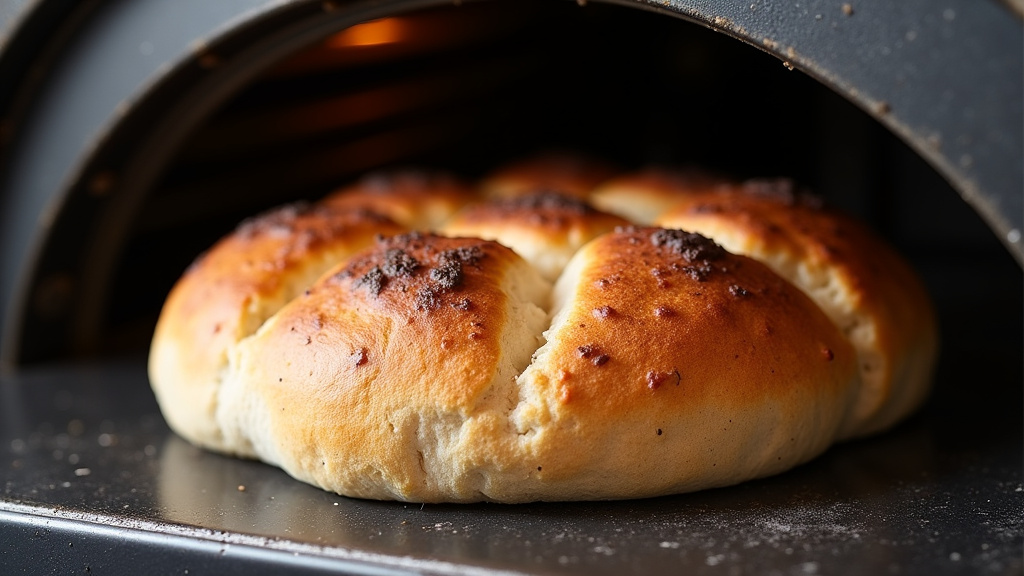
How do you know your bread is perfectly baked? You’re looking for a deep golden-brown crust. The bottom should also be nicely browned and sound hollow when tapped. You can carefully remove the bread using your peel or tongs.
The most reliable method is using an internal thermometer. Insert it into the center of the loaf. For most breads, an internal temperature of 190-210°F (88-99°C) indicates it’s fully baked (National Center for Home Food Preservation). This is the most accurate way to ensure your bread is cooked through and safe to eat.
Safety Checklist for Your Pizza Oven Bread Bake
Before you even think about firing up your oven for bread, run through this quick checklist to ensure everything is set for a safe and successful bake.
- Confirm your pizza oven is clean of debris and ash from previous fires.
- Ensure you have a stable, moderate temperature zone ready (400-500°F recommended).
- Your pizza stone or steel is preheated thoroughly to match the oven temperature.
- Your dough is prepared and ready on a lightly floured or cornmeal-dusted peel.
- Have heat-resistant gloves and your internal thermometer within easy reach.
- Plan for how you’ll manage the heat if the bread starts to brown too quickly.
Conclusion
Baking bread in your pizza oven might seem daunting, but with the right approach, it’s entirely achievable and incredibly rewarding. You’ve learned that mastering the moderate temperature and utilizing a preheated pizza stone or steel are your most important tools for success. By managing your fire to create a bed of glowing embers and watching for visual cues, you can avoid burnt crusts and achieve that perfect artisan loaf. Now, take what you’ve learned and get ready to bake your best loaf yet!
Frequently Asked Questions
What temperature should my pizza oven be for baking bread?
For most lean doughs, aim for a stable temperature between 400-500°F (200-260°C). This range allows the bread to cook through evenly while developing a beautiful, crispy crust without burning.
Can I use a pizza stone or steel directly on the oven floor?
Yes, you absolutely should! A preheated pizza stone or steel is essential. It absorbs and distributes heat evenly, preventing your bread’s bottom from scorching while ensuring a consistent bake.
How do I know when my bread is fully baked in a pizza oven?
Look for a deep golden-brown crust and tap the bottom to ensure it sounds hollow. The most reliable method is to use an internal thermometer; the bread is done when it reaches 190-210°F (88-99°C) in the center.
What if my bread’s crust is browning too quickly?
If the top is browning too fast, you can strategically move some glowing embers closer to the oven’s front or lightly tent the top of the loaf with aluminum foil. Rotating the bread about halfway through the bake also helps ensure even browning.
Do I need to preheat my pizza stone or steel for bread?
Yes, preheating your pizza stone or steel along with the oven is critical. It needs to be thoroughly heated to at least 400°F to properly cook the bottom of your loaf and contribute to good oven spring.
