
Why Is My Pizza Sticking to the Peel?
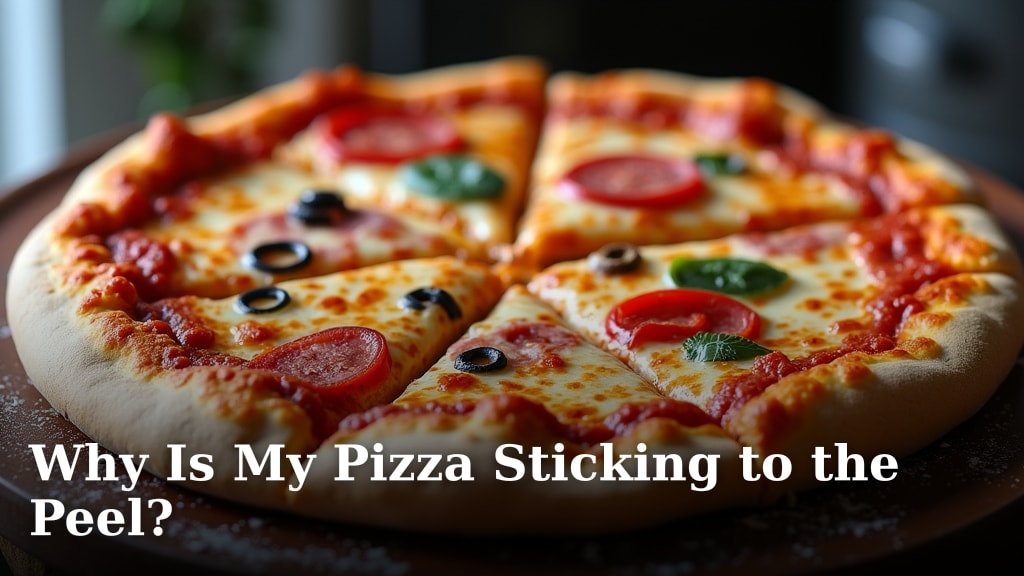
Your pizza is sticking to the peel mainly because there isn’t enough flour or cornmeal underneath the dough. It can also happen when your dough is too wet, or it plain sits too long on the peel.
There’s nothing more frustrating than a delicious pizza dough that just won’t slide into the oven. We know the struggle. Many home pizza makers deal with this messy problem, turning a fun event into kitchen chaos. Don’t worry, we’ve all been there.
TL;DR:
- Not enough flour or cornmeal on the peel.
- Dough might be too sticky or wet.
- Dough sat for too long on the peel.
- The peel itself might not be right for the job.
- You need a quick, confident launch.
Let’s dive into why your pizza might be refusing to leave the peel and exactly what you can do to fix it. We’ll help you get that pizza from peel to oven every time.
Understanding Why Your Pizza Gets Stuck
When your pizza dough refuses to budge from the peel, it’s usually because of too little lubrication, too much moisture, or simply a lack of speed. Let’s break down these common culprits.
The Role of Flour and Cornmeal: Your Pizza’s Best Friends
Think of flour or cornmeal as tiny ball bearings for your pizza. They create a friction-reducing layer between your delicate dough and the peel’s surface. Without enough of these, you’re essentially trying to slide a sticky piece of paper across a dry table.
Too Little Flour/Cornmeal
This is probably the most common reason for sticking. When you don’t use enough flour or cornmeal, the moist dough makes direct contact with the peel. Once that happens, adhesion takes over, and your pizza is glued in place.
- Solution: Be generous! Don’t be afraid to sprinkle a good amount of flour or cornmeal onto your peel before laying down the dough. You want a visible, thin layer.
- Technique: Gently shake your peel after adding the flour/cornmeal to ensure an even coating across the entire surface where your pizza will rest.
The Cornmeal Advantage
Many pizza makers prefer cornmeal, especially fine-ground cornmeal, over just flour. Why? Cornmeal’s gritty texture provides more “ball bearings” and is less likely to absorb moisture from the dough as quickly as flour. This gives you a little more time.
However, too much cornmeal can burn in the oven, leaving a bitter taste. A balanced approach is key.
Dough Issues: Too Wet or Too Sticky?
Sometimes the problem isn’t the peel itself, but the dough you’re working with. A dough that’s too wet or inherently sticky can be a challenge.
High Hydration Doughs
High hydration doughs (those with a higher water content) are known for producing a beautiful, airy crumb. But they are also inherently stickier and harder to handle. They love to cling to surfaces.
If you’re using a high hydration recipe (above 70% water to flour ratio), you’ll need extra flour or cornmeal. You’ll also need a quicker hand.
Over-Proofed Dough
When dough over-proofs, its structure can weaken. It becomes slack and more prone to tearing and sticking. Imagine a balloon that’s been overfilled; it loses its tight surface tension.
- Sign: Your dough might feel extremely soft and tear easily when you try to stretch it.
- Solution: Pay close attention to your proofing times and temperature. If your kitchen is warm, dough will proof faster. A slightly under-proofed dough is often easier to handle on the peel than an over-proofed one.
Time is Against You: Don’t Let it Sit Too Long
This is a big one. Even with a perfectly floured peel, time is a factor. The longer your raw pizza sits on the peel, the more moisture from the dough will be absorbed by the flour/cornmeal layer. Eventually, that protective layer breaks down, and sticking begins.
Think of it like a freshly baked cookie on a cooling rack. Initially, it’s easy to move. But if it sits too long, it might fuse to the metal (maybe not, but you get the point!).
- Golden Rule: Once your pizza is built on the peel, it’s a race against the clock. Aim to get it into the oven within 1-2 minutes, maximum.
Your Peel Matters: Material and Technique
Not all pizza peels are created equal. The type of peel you use and how you use it can make a big difference.
Wooden vs. Metal Peels
Many home cooks start with a wooden peel. They are excellent for launching because wood naturally absorbs some moisture from the dough, making it less sticky. They have a slightly rougher surface that can “grip” the flour/cornmeal better.
Metal peels (aluminum or stainless steel) are thinner and easier to slide under a cooked pizza. However, they are more prone to sticking on the launch if not properly prepped, as metal doesn’t absorb moisture. They require a more generous dusting and a quicker launch.
| Peel Type | Pros | Cons for Launching | Best For |
|---|---|---|---|
| Wooden Peel | Moisture-absorbing, good for prep | Thicker, harder to clean thoroughly | Prepping and launching raw pizza |
| Metal Peel | Thin, durable, easy to clean | Non-absorbent, higher sticking risk without prep | Retrieving cooked pizza, quick launches |
The Wiggle Test
Before you ever try to slide that pizza into the oven, do the wiggle test. Once your pizza is fully topped, give the peel a gentle shake side to side and forward/backward. Does the pizza move freely?
If not, carefully lift an edge of the dough and sprinkle a little more flour or cornmeal underneath. Repeat until it wiggles freely. This simple step can save your pizza from disaster.
Mastering the Launch: Speed and Confidence
Even with perfect dough and a perfectly floured peel, a hesitant launch can cause sticking. You need a quick, decisive motion.
Many experts say to think of it like pulling a tablecloth out from under dishes. You need speed and confidence, not slow dragging. (University of Maine Extension, food safety guidelines often note the importance of speed in food prep to minimize risk, a similar principle applies here for physics!)
Here’s a checklist for a successful launch:
- Ensure your oven and stone/steel are preheated to a very high temperature.
- Dust your peel generously with flour or cornmeal.
- Build your pizza quickly on the prepared peel.
- Do the wiggle test to confirm free movement.
- Position the peel close to the back of your hot oven element.
- Use a single, swift, forward-and-backward motion to slide the pizza off.
- Don’t be afraid to jostle it slightly to get it off cleanly.
Troubleshooting Common Scenarios
What if you’ve done everything right and it’s still stuck? Don’t panic! Here are a few last-ditch efforts.
The “Lift and Dust” Method
If your pizza isn’t wiggling, you can carefully lift one edge of the dough with a thin spatula or your fingers. Sprinkle more flour or cornmeal directly underneath the problem area. Gently lower the dough and try the wiggle test again. Repeat as needed, working your way around the stuck spots.
The “Paper Trick” for Desperate Measures
If the pizza is truly glued, and you’re contemplating throwing in the towel, try this: Carefully slide a piece of parchment paper (cut to just larger than your pizza) underneath the entire pizza. Now, the pizza is resting on parchment paper, which will peel away easily in the oven. You can then launch it with the parchment paper into the oven. Just be sure the parchment paper is rated for high oven temperatures.
Prepping Your Workspace: A Sticky Situation Preventer
Prevention starts before the dough even touches the peel. Imagine a surgeon preparing their tools; you should prepare your pizza station with the same care.
- Keep all your toppings ready and within reach.
- Ensure your oven is fully preheated.
- Have your peel clean and properly dusted before you start stretching the dough.
- Work efficiently from stretching to loading toppings.
By taking a few extra moments to set up, you’ll save yourself a lot of frustration when it’s time for the grand finale. We find that a smooth workflow significantly reduces the chances of a sticky situation.
Conclusion
Preventing your pizza from sticking relies on a few core principles. You need ample flour or cornmeal as a barrier and a well-behaved dough that isn’t too wet or over-proofed. Remember, time is your enemy on the peel; work quickly and confidently. By mastering a swift launch and using the wiggle test, you’ll ensure your pizza makes a smooth transition to the oven every time. Now go forth and bake some amazing, non-sticking pizzas!
Frequently Asked Questions
How much flour or cornmeal should I really use on my pizza peel?
You should use enough to create a visible, thin, and even layer across the entire surface where your pizza will rest. Think like a light dusting of snow, not a thick pile. You can always add a little more if needed.
Can I use semolina flour instead of cornmeal or all-purpose flour?
Yes, many pizzaiolos prefer durum wheat semolina flour. It has a slightly coarser texture similar to fine cornmeal, which helps with lubrication, and it imparts a lovely golden color to the crust. It’s an excellent choice for preventing sticking.
What if my dough is just naturally very sticky, even with enough flour?
If your dough is very high-hydration or naturally sticky, consider reducing the water slightly in your next batch. For immediate handling, use more flour or cornmeal than usual. Also, try stretching your dough *less* before transferring to the peel to minimize its stickiness until the very last moment.
My pizza always sticks in the same spot on my peel. Why?
This could indicate an uneven application of your dusting agent or a slight warp in your peel. Make sure you gently shake the peel to evenly distribute your flour or cornmeal. Check your peel for any rough spots or dips where flour might collect unevenly.
Is there anything I can put on my wooden peel to make it less sticky over time?
A well-seasoned wooden peel naturally becomes less sticky with use. Avoid washing it with soap, as this can strip its natural non-stick properties. Instead, scrape off any residue and wipe it clean with a damp cloth, allowing it to air dry completely. Some people lightly sand and oil their wooden peels occasionally with food-grade mineral oil, but ensure it’s fully absorbed and dry before use.
